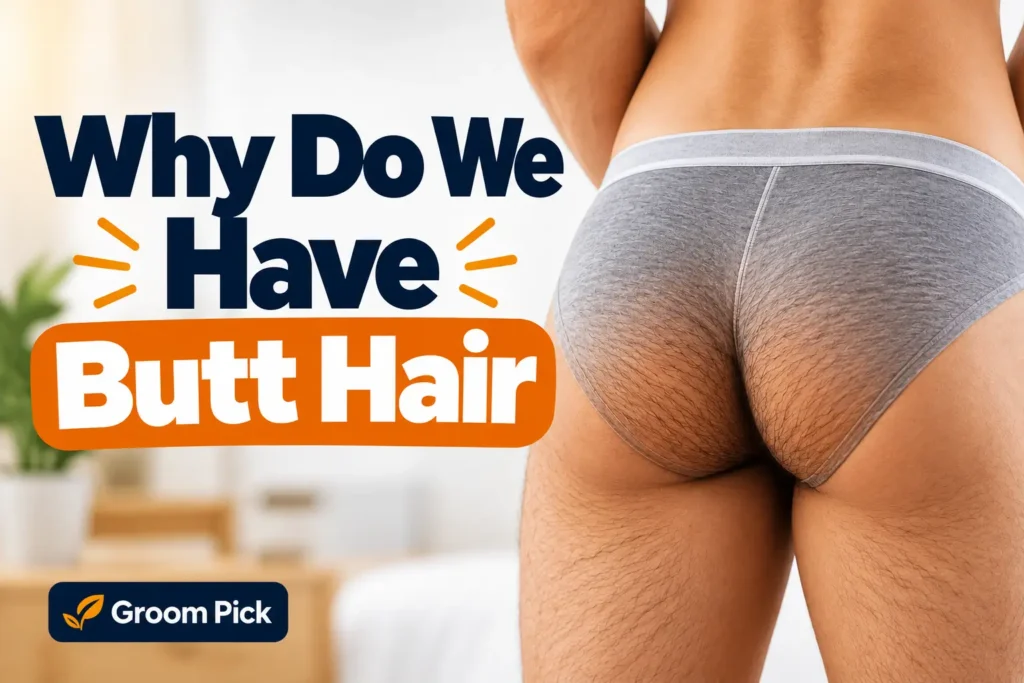
Why Do We Have Butt Hair? It is a common question about a natural part of human biology. Butt hair develops because of genetics, hormones, and normal hair growth patterns. Although scientists have not established its exact purpose, it may help reduce friction between the skin.
Some people have thick, coarse hair between their buttocks, while others have very little. Both are normal, and the amount of hair you have does not determine your health or personal hygiene.
Table of Contents
What Is Butt Hair and Where Does It Grow?
Butt hair is the natural hair that grows on the buttocks, in the crease between the cheeks, and around the anus. Its thickness, color, and distribution vary from person to person.
There are two main types of hair in this area:
- Fine hair: Soft, thin hair that may cover parts of the buttocks.
- Coarse hair: Thicker, darker hair that often becomes more noticeable during puberty, particularly around the anus.
Hair follicles are tiny structures in the skin that produce hair. The follicles in this area respond to genetics and hormones, which influence how much hair grows.
Why Do We Have Butt Hair? The Main Reasons
We have butt hair because of inherited body hair patterns and hormonal changes. It may also serve some practical functions, although its exact biological purpose remains uncertain.
1. Does Butt Hair Reduce Friction?
The skin between your buttocks rubs together when you walk, run, sit, or exercise. Hair may help reduce direct skin-to-skin contact in some situations.
However, scientists have not firmly established how much butt hair actually reduces friction. Its role in this area is still not fully understood.
2. How Do Hormones Affect Butt Hair Growth?
Hormones called androgens influence body hair growth, especially during puberty. These hormones can cause some fine hairs to become thicker, darker, and coarser.
Androgens are present in people of all sexes, although hormone levels and hair-growth patterns differ. This is one reason butt hair becomes more noticeable during adolescence.
3. How Does Genetics Affect Butt Hair?
Genetics play a major role in determining how much body hair you grow. Your inherited traits influence hair thickness, color, density, and distribution.
For example, one person may have thick hair between the buttocks, while another may have almost none. Both patterns are normal and usually do not indicate a health problem.
4. Does Butt Hair Protect the Skin?
Hair can provide some protection to the skin in general, but its specific protective role around the buttocks and anus is uncertain. There is not enough evidence to claim that butt hair evolved primarily to protect this area.
Hair can also retain sweat and debris, especially when the area stays warm and moist. Gentle cleaning and thorough drying help maintain healthy skin.
Is Butt Hair Normal for Men and Women?
Yes, butt hair is normal for people of all sexes. The amount varies because of genetics, hormones, age, and individual differences in hair growth.
Some people have visible hair around the anus, while others have only fine hair or very little growth. Neither pattern is inherently better or healthier.
Can Butt Hair Cause Itching or Irritation?
Yes, butt hair can sometimes contribute to discomfort, particularly when sweat, moisture, friction, or hair removal irritates the skin. However, itching does not necessarily mean the hair itself is the problem.
Common causes include:
- Sweat and trapped moisture.
- Friction from tight clothing or exercise.
- Ingrown hairs after shaving or waxing.
- Irritation from soaps, wipes, or fragranced products.
- Skin conditions or infections unrelated to the hair itself.
If itching persists or occurs with pain, bleeding, swelling, a rash, or unusual discharge, consult a healthcare professional.
Is Butt Hair Unhygienic?
No, butt hair is not inherently unhygienic. Proper cleaning and drying matter more than whether you have hair in this area.
For everyday hygiene:
- Wash the external area gently with water and mild, fragrance-free soap.
- Rinse thoroughly to remove soap residue.
- Dry the area carefully, including the crease between the cheeks.
- Change out of sweaty clothing when possible.
- Avoid aggressive scrubbing and products that cause irritation.
For more practical advice, see the NHS guide to personal hygiene.
Should You Remove Butt Hair or Leave It Alone?
You do not need to remove butt hair for health or cleanliness. Removing it is a personal preference, and leaving it untouched is completely normal.
If you prefer less hair, consider the benefits and drawbacks of common removal methods.
| Hair removal method | Potential benefits | Potential drawbacks |
|---|---|---|
| Trimming | Reduces hair length without a close shave | Requires regular maintenance |
| Shaving | Provides a smooth finish temporarily | Can cause razor bumps, cuts, and itching |
| Waxing | Removes hair from the root | Can be painful and irritate sensitive skin |
| Depilatory creams | Dissolve hair without a razor | May cause chemical irritation or burns |
| Laser hair removal | Can provide long-term hair reduction | Requires professional assessment and multiple sessions |
How Can You Remove Butt Hair Safely?
If you decide to remove butt hair, take steps to reduce irritation and injury.
- Choose a suitable method. A guarded electric trimmer may be a practical option for shortening hair.
- Use clean equipment. Never share razors or trimmers that contact the skin.
- Avoid rushing. Use good lighting and handle tools carefully around sensitive areas.
- Protect sensitive skin. Do not apply hair removal creams near the anus unless the product specifically states that the area is safe to treat.
- Watch for irritation. Stop if you experience significant pain, burning, or bleeding.
You do not need to achieve completely smooth skin. Choose the option that feels comfortable and works for you.
Does Butt Hair Change as You Get Older?
Yes, butt hair can change with age. It often becomes more noticeable during puberty as hormones affect hair follicles, but its development varies widely.
Hormonal changes later in life may also affect hair thickness and distribution. However, butt hair does not necessarily become thicker throughout adulthood, and sudden changes in hair growth may warrant medical advice if accompanied by other symptoms.
What Are the Most Common Myths About Butt Hair?
Several common misconceptions can make normal body hair seem unusual or unhealthy. Understanding the facts can help you make informed decisions about personal care.
| Myth | Fact |
|---|---|
| Butt hair means poor hygiene | Hair is normal and does not automatically make someone dirty |
| Everyone has the same amount | Hair growth varies considerably between individuals |
| Shaving makes hair grow back thicker | Shaving cuts hair bluntly, which can make regrowth feel coarser |
| Butt hair must be removed | Removal is optional and not medically required |
| Butt hair always causes itching | Itching may result from moisture, irritation, skin conditions, or other causes |
Key Takeaways About Butt Hair Growth
Butt hair is a natural feature of the human body, influenced mainly by genetics and hormones. Its precise evolutionary purpose is not fully established, although reducing friction is one possible function.
Remember these important points:
- Butt hair is normal for people of all sexes.
- Genetics and hormones influence its thickness and distribution.
- It does not automatically indicate poor hygiene.
- Removing it is optional and can sometimes cause irritation.
- Persistent itching, pain, bleeding, or unusual skin changes deserve medical attention.
Final Thoughts on Why Do We Have Butt Hair
Why Do We Have Butt Hair? The answer comes down to natural hair growth, genetics, and hormonal development. Although butt hair may help reduce friction, scientists have not identified one definitive reason for its presence in this specific area.
There is generally no reason to worry about ordinary butt hair. Keep the area clean, avoid irritating the skin, and remove hair only if you prefer to. Having butt hair is normal, and you do not need to change your body to meet anyone else’s expectations.
Frequently Asked Questions
Why do humans have hair between their butt cheeks?
Hair grows there because the skin contains follicles that respond to hormones and genetics. It may help reduce friction, but its precise evolutionary purpose remains uncertain.
Is butt hair normal for women?
Yes, butt hair is normal for women. The amount varies according to genetics, hormones, and individual hair-growth patterns, and having more or less hair is not automatically a sign of a health problem.
Can butt hair trap sweat and bacteria?
Hair can retain sweat, moisture, and particles, but its presence does not automatically cause poor hygiene. Gentle washing, rinsing, and drying help keep the area clean.
Should you shave butt hair before exercising?
No, shaving is not necessary before exercise. If hair feels uncomfortable during workouts, trimming it may be an option, but wearing breathable clothing and changing out of sweaty clothes can also help.
Why does butt hair itch after shaving?
Itching after shaving can occur because of skin irritation, short regrowing hairs, razor bumps, or ingrown hairs. Using clean equipment and avoiding very close shaves may reduce irritation.
Does butt hair stop growing at a certain age?
There is no single age when butt hair stops growing. Growth patterns depend on genetics, hormones, and age, and hair may remain relatively stable or change over time.