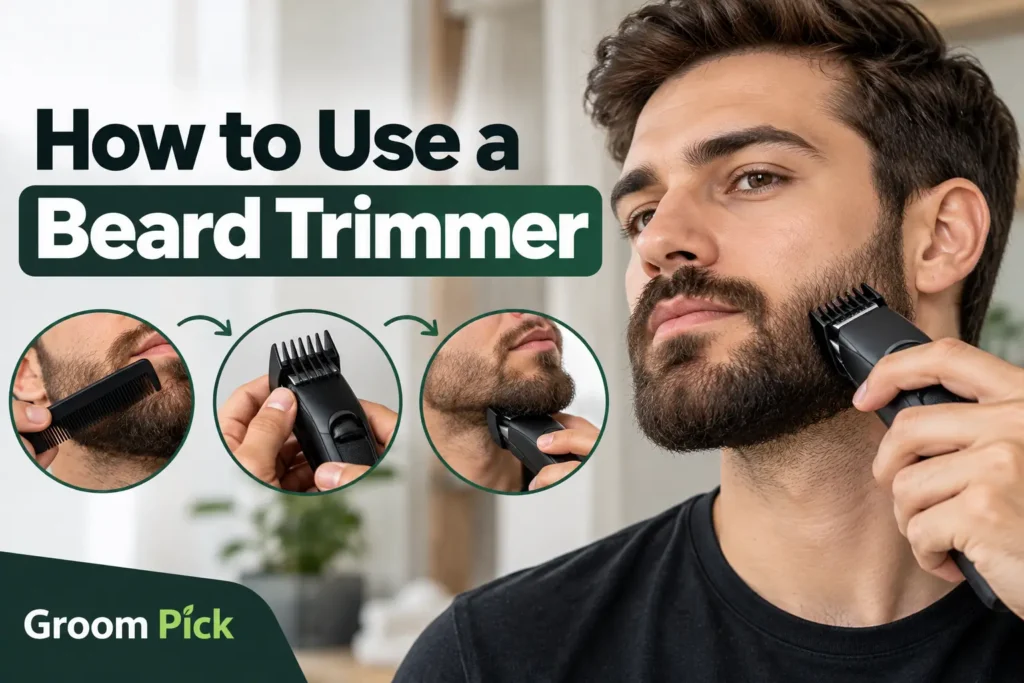
Learning how to use a beard trimmer is easier than it looks. The key is to start with a longer setting, trim slowly, and shape your beard in small steps.
A good trim does not require expensive equipment. With the right guard, a mirror, and a little patience, you can maintain a neat beard at home.
Table of Contents
Beard Trimmer Guide for Beginners
A beard trimmer is an electric grooming tool that cuts facial hair to a controlled length. Guards or adjustable combs determine how much hair remains.
It can be used for:
- Short stubble
- Medium beards
- Long beards
- Mustaches
- Sideburns
- Necklines
- Cheek lines
- Stray hairs
For beginners, the safest approach is to start longer than your target length. You can always remove more hair, but you cannot quickly put it back.
| What you need | Why it helps |
|---|---|
| Beard trimmer | Cuts and shapes facial hair |
| Guard | Controls beard length |
| Beard comb | Straightens hairs before trimming |
| Mirror | Helps you see the shape |
| Towel | Catches loose hair |
| Moisturizer | Helps soothe the skin afterward |
Beard Trimmer Settings You Should Know
Beard trimmer settings control how short or long your beard will be. The exact numbers vary between trimmers, so check the markings on your device before cutting.
As a general guide, shorter settings create stubble while longer settings create a fuller beard.
| Approximate setting | Result |
|---|---|
| 1 to 2 mm | Very short stubble |
| 3 to 5 mm | Short stubble |
| 6 to 10 mm | Short beard |
| 11 to 15 mm | Medium beard |
| 16 mm or more | Longer beard |
If you are unsure, choose the longest useful setting first. Trim one small area and check the result before continuing.
Do not assume the same guard number produces the same result on every trimmer. Different models use different guard designs and cutting systems.
How to Trim a Beard Step by Step
The easiest way to trim a beard is to work in sections rather than cutting everything at once. Start with the main beard, then refine the edges and mustache.
Follow these steps:
- Wash your face and beard.
- Dry the beard according to your trimmer’s instructions.
- Comb the beard in the direction it grows.
- Attach a longer guard.
- Trim the cheeks, jaw, chin, and sideburns.
- Check for longer hairs.
- Make another gentle pass if needed.
- Shape the neckline.
- Clean the cheek line.
- Trim the mustache.
- Check both sides in the mirror.
- Clean the trimmer.
Move slowly and use light pressure. Holding the guard steadily against the skin helps keep the length more consistent.
Some beard hairs grow sideways or in different directions. If you notice uneven areas, change the direction of your pass instead of repeatedly pressing harder.
How to Shape a Beard for a Clean Look
A beard looks cleaner when its overall shape follows your natural facial hair pattern. You do not need perfectly straight lines or identical sides.
Start by deciding how much fullness you want around the cheeks, jaw, and chin. Then remove only the hairs outside that general shape.
For a natural style:
- Keep most of the cheek growth.
- Remove obvious stray hairs.
- Keep the chin slightly fuller if it suits your face.
- Blend the sideburns into your haircut.
- Keep the neckline controlled.
- Avoid cutting deep into sparse areas.
If your beard is patchy, do not automatically shorten everything to the shortest area. Sometimes keeping a little more length can make nearby hairs cover sparse sections.
Your natural growth pattern matters too. Genetics influence where facial hair is thick, thin, or patchy, so a style that works with your growth pattern is often easier to maintain.
How to Trim a Beard Neckline Correctly
The neckline can change the entire appearance of your beard. A line that is too low can make the beard look untidy, while a line that is too high can make it look unnaturally thin.
A useful starting point is just above the Adam’s apple, with the line curving naturally toward each side of the jaw.
To trim the neckline:
- Stand straight in front of a mirror.
- Find your Adam’s apple.
- Imagine a line just above it.
- Remove the hair below that line.
- Follow the natural curve toward each side.
- Check the left and right sides.
- Make small corrections rather than cutting deeply.
Do not create a sharp horizontal line across the entire neck. A gentle curve usually looks more natural.
Beard Trimming Tips for Better Results
Small technique changes can make a big difference in the final result. The goal is controlled trimming, not removing as much hair as possible in one pass.
Keep these tips in mind:
- Start with a longer guard.
- Use good lighting.
- Comb the beard before trimming.
- Keep the trimmer moving.
- Use light pressure.
- Check both sides regularly.
- Make small corrections.
- Clean the trimmer after use.
If your skin becomes irritated easily, avoid making repeated passes over the same area. Dermatologists also recommend careful shaving and grooming techniques for people who develop ingrown hairs or razor bumps.
A useful skin-care rule
Your beard sits on top of your skin, so beard grooming should not ignore the skin underneath. Gentle cleansing and moisturizing can help keep the area comfortable.
For more dermatologist-backed advice on beard care, see the American Academy of Dermatology’s related guide on maintaining a healthy beard.
How to Use a Beard Trimmer Without a Guard
You can use a trimmer without a guard if the device is designed for guardless trimming. This is useful when you need more precise control around the edges.
A bare blade can remove hair much more quickly, so use it carefully around the neckline, cheek line, sideburns, and mustache.
Use short movements and very light pressure. Do not repeatedly scrape the same section of skin.
If you are new to trimming, use a guard for the main beard and reserve the bare blade for small cleanup areas.
How to Trim the Mustache
Your mustache should look balanced with the rest of your beard. It can be the same length as the beard or slightly longer, depending on the style you want.
Start by combing the mustache downward. Then remove hairs that extend too far over the upper lip.
For a neat mustache:
- Close your mouth naturally.
- Comb the hair downward.
- Trim the hairs covering too much of the upper lip.
- Work from one side to the other.
- Check the center carefully.
- Make small corrections.
Do not keep trimming the center just because one side looks slightly different. Facial hair is naturally uneven.
How to Prevent Irritation After Trimming
Trimming can irritate the skin, especially when you make many passes or cut hair extremely close.
To reduce irritation, use a clean trimmer, avoid pressing hard, and moisturize after grooming. If you regularly get ingrown hairs, consider leaving slightly more length rather than cutting as close as possible.
The American Academy of Dermatology explains that short, curly hairs can curve back into the skin and cause ingrown hairs or razor bumps. It recommends avoiding excessive pressure and paying attention to the direction of hair growth when removing facial hair.
If bumps become painful, persistent, or infected-looking, stop aggressive grooming and consider speaking with a dermatologist.
Common Beard Trimming Mistakes
Most bad trims come from a few simple mistakes. Avoiding them can make your beard look better without requiring more equipment.
Starting too short
A short guard may remove far more hair than expected. Start long and reduce the setting gradually.
Pressing too hard
Pressure does not make the trimmer work better. It can increase irritation and make it harder to move smoothly.
Ignoring the neckline
Untrimmed neck hair can make an otherwise neat beard look messy.
Cutting the cheek line too low
Removing too much hair from the upper cheek can make the beard look thinner.
Trying to make both sides perfect
Your face and hair growth are not perfectly symmetrical. Aim for balance rather than mathematical perfection.
Skipping cleaning
Hair and product residue can build up around the cutting head. Clean the trimmer according to the manufacturer’s instructions.
A Simple Beard Trimming Checklist
Use this checklist every time you trim your beard. It keeps the process simple and helps prevent accidental over-trimming.
Before trimming
- Wash your face and beard
- Dry the beard as recommended for your trimmer
- Comb the beard
- Choose a longer guard
- Check the lighting and mirror
While trimming
- Trim the main beard first
- Work in small sections
- Check the length
- Shape the neckline
- Clean the cheek line
- Trim the mustache
- Compare both sides
After trimming
- Remove loose hair
- Rinse or cleanse the face if needed
- Apply moisturizer
- Clean the trimmer
- Store the device somewhere dry
How Often Should You Trim a Beard?
There is no universal trimming schedule. Your ideal routine depends on how quickly your beard grows, how short you keep it, and how sharp you want the edges.
Short stubble usually needs more frequent trimming than a medium or long beard. A longer beard may need less frequent full trimming but still benefit from regular neckline and mustache cleanup.
Instead of following a fixed schedule, trim when your beard starts losing its preferred shape.
How to Clean and Maintain a Beard Trimmer
Regular cleaning keeps the cutting head free from hair and product buildup. It can also help the trimmer perform more consistently.
After trimming:
- Turn the trimmer off.
- Remove the guard.
- Brush away loose hair.
- Clean the cutting head as instructed.
- Wash removable parts only if they are designed to be washed.
- Dry wet components completely.
- Store the trimmer in a dry place.
Never assume a trimmer is waterproof. Check the manufacturer’s instructions before exposing it to water.
The Best Way to Trim Your Beard
The best beard trim comes from patience and consistency. Start with a longer setting, work slowly, and shape the beard a little at a time.
How to use a beard trimmer well is not about getting everything perfect in one pass. It is about choosing the right length, keeping the edges controlled, protecting your skin, and making small adjustments until the beard looks balanced.
Frequently Asked Questions
What is the best beard trimmer setting for beginners?
Start with a longer setting, such as 6 to 10 mm, if you want a short beard. If you prefer stubble, begin around 3 to 5 mm and adjust gradually.
Is it better to trim a beard wet or dry?
Use a dry beard unless your particular trimmer is designed for wet trimming. Dry hair also makes it easier to judge the final length and shape.
Can I use a beard trimmer without a guard?
Yes, if your trimmer supports guardless use. It is useful for detailing, but the bare blade cuts much closer, so use light pressure and short movements.
Should I trim my beard against the grain?
It depends on the result and your skin. A guarded trimmer may give an even cut against hair growth, but people prone to ingrown hairs may prefer less aggressive trimming.
Why does my beard look uneven after trimming?
Beard hair naturally grows in different directions and at different rates. Comb it first, use consistent movements, and make small corrections instead of repeatedly cutting one area.
When should I trim my beard?
Trim when the beard loses its preferred length or shape. Shorter styles usually need more frequent maintenance, while longer beards can go longer between full trims.