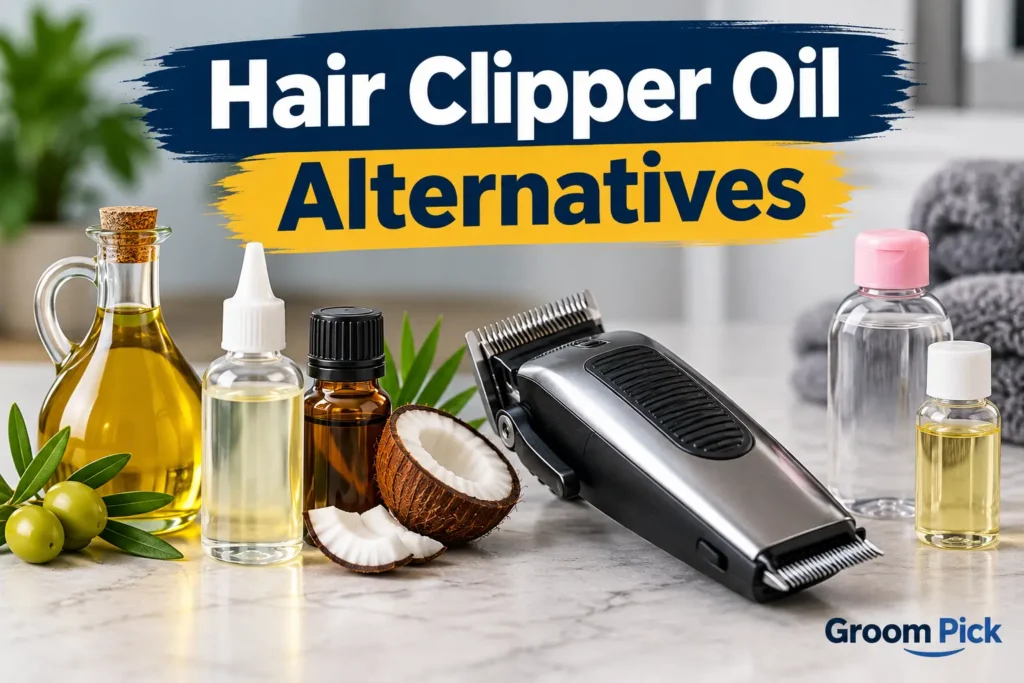
Hair Clipper Oil Alternatives can help when you run out of clipper lubricant at home. The right oil reduces friction, helps control blade heat, and keeps your hair clippers working smoothly.
However, not every household oil is suitable for electric clippers. Some oils leave sticky residue, collect hair, or interfere with blade movement. Choosing a compatible lubricant is the safest way to protect your grooming equipment.
Table of Contents
Key Facts About Hair Clipper Oil Alternatives
Hair clipper oil alternatives vary in thickness, ingredients, and suitability for moving metal blades. Always check your clipper manual before using a substitute.
| Oil or product | Recommendation |
|---|---|
| Approved light machine oil | Best substitute when permitted |
| Sewing machine oil | Possible option if compatible |
| Precision instrument oil | Check product specifications |
| Mineral oil | Use only if approved |
| Olive oil | Avoid |
| Coconut oil | Avoid |
| Vegetable oil | Avoid |
| Baby oil | Not recommended |
| WD-40 Multi-Use Product | Not for regular blade lubrication |
| Motor oil | Avoid |
Best Hair Clipper Oil Substitute Options
The best hair clipper oil substitute is a lightweight lubricant designed for small moving metal parts. The product must also be compatible with your clipper’s blades and manufacturer instructions.
1. Light Machine Oil
Light machine oil may work if it is designed for precision mechanisms and approved for your clipper. Avoid thick oils or products containing unsuitable additives.
Pros:
- Helps reduce friction between moving blades.
- Can support smooth blade movement.
- May be available at hardware stores.
Cons:
- Some formulas are too thick.
- Compatibility varies between products.
- Certain oils may leave unwanted residue.
2. Sewing Machine Oil for Hair Clippers
Sewing machine oil is often lightweight and designed for small moving parts. It may be suitable for some hair clippers, but it is not automatically interchangeable with dedicated clipper oil.
Check the label and your clipper manual before applying it.
Pros:
- Often made for precision mechanisms.
- Usually easy to find at sewing supply shops.
- May provide suitable lubrication when approved.
Cons:
- Formulas differ by brand.
- Not approved for every clipper.
- May be unsuitable for certain blade materials.
3. Precision Instrument Oil
Precision instrument oil is designed for small mechanical components. Some formulations may be suitable for clipper blades, but you should confirm their intended use before applying them.
Do not assume that watch oil, camera lubricant, or other specialty products will work equally well.
4. Mineral Oil for Hair Clippers
Mineral oil comes in different formulations and thicknesses. A product intended for skin care or general household use is not necessarily suitable for fast-moving clipper blades.
Only use mineral oil if the manufacturer confirms that the specific formulation is compatible with your clipper.
Household Oils to Avoid for Hair Clipper Lubrication
Household oils may seem convenient, but many are not designed for precision blade mechanisms. They can leave residue, collect debris, or become unsuitable as temperatures change.
Can You Use Olive Oil on Hair Clippers?
No, olive oil is not a recommended clipper lubricant. It is a cooking oil and may leave deposits that make cleaning more difficult over time.
Can You Use Coconut Oil on Hair Clippers?
Coconut oil is also a poor choice. It can become more solid at cooler temperatures, making it less suitable for blades that need consistent lubrication.
Can You Use Vegetable Oil?
Avoid vegetable and canola oils. These cooking oils can oxidize and leave sticky residue on metal parts, which may interfere with blade movement.
Is Baby Oil Safe for Hair Clippers?
Baby oil is formulated primarily for skin care. It may contain fragrance and other ingredients that are not intended for clipper blade lubrication, so a dedicated lubricant is preferable.
Can You Use WD-40 on Hair Clippers?
WD-40 Multi-Use Product should not replace dedicated clipper oil. It is not intended to serve as the regular blade lubricant for electric grooming clippers.
Andis discusses the limitations of spray lubricants for blade lubrication on its official website.
How to Lubricate Hair Clippers Without Clipper Oil
If you have run out of clipper oil, cleaning the blades and waiting for a suitable lubricant is safer than experimenting with cooking oil. Running dry blades for extended periods can increase friction and heat.
Follow these steps to prepare your clippers for proper lubrication.
- Switch off the clippers. Unplug corded models and turn off cordless models before cleaning.
- Remove trapped hair. Use the supplied cleaning brush to clear hair from the blade teeth and accessible gaps.
- Clean the blades correctly. Use only cleaning products and methods approved for your model.
- Dry the blades completely. Moisture can contribute to corrosion and damage electrical components.
- Apply approved clipper oil. Once you have a compatible lubricant, follow the manual for the amount and application points.
- Distribute the oil. If instructed, run the blades briefly, switch the clipper off, and wipe away excess oil.
Do not pour oil into the motor housing or immerse the clipper unless the manufacturer explicitly allows it.
For additional guidance on keeping grooming tools clean, read the CDC’s cleaning and disinfecting guide. Always follow your clipper manufacturer’s instructions because cleaning and lubrication requirements differ by model.
Hair Clipper Maintenance Tips to Prevent Blade Problems
Regular maintenance helps clippers cut smoothly and reduces unnecessary wear. A simple cleaning routine can also help you spot problems before they affect performance.
- Clean after use: Brush away loose hair after each haircut.
- Lubricate as directed: Follow the schedule in your clipper manual.
- Avoid excess oil: Too much lubricant can collect dirt and enter areas where it does not belong.
- Watch for overheating: Stop using the clipper if the blades become unusually hot.
- Store in a dry place: Protect the blades from moisture and corrosion.
- Inspect the teeth: Damaged or worn blades may need replacement.
- Disinfect appropriately: Use products approved for your equipment and follow their label instructions.
If your clippers pull hair after cleaning and lubrication, check for dull blades, trapped hair, or incorrect blade alignment. Oil alone will not fix every cutting problem.
Hair Clipper Oil Substitute: Common Mistakes
Choosing the wrong oil is not the only maintenance mistake that can affect your clippers. Applying too much lubricant or ignoring blade damage can also lead to poor performance.
Avoid these common errors:
- Using cooking oil because it is readily available.
- Assuming every sewing machine oil has the same formulation.
- Applying lubricant while ignoring the manufacturer’s safety instructions.
- Mixing different oils without checking compatibility.
- Spraying products directly into the motor housing.
- Continuing to use blades that are damaged or unusually hot.
If you have already applied an unsuitable oil, switch off the clipper and remove visible residue with a soft cloth and brush. Use an approved blade cleaner if necessary, allow the blades to dry, and apply compatible lubricant before using the clipper again.
If oil has entered the motor or the clipper behaves unusually, stop using it and seek qualified service.
The Best Hair Clipper Oil Alternative for Safe Maintenance
The safest hair clipper oil alternative is a lightweight lubricant approved for your specific grooming equipment. Light machine oil or sewing machine oil may be suitable in some cases, but compatibility must be confirmed.
Avoid cooking oils, baby oil, automotive lubricants, and other products not designed for clipper blades. If no suitable substitute is available, clean the blades, keep them dry, and wait until you can obtain the recommended lubricant.
A small bottle of compatible clipper oil is usually the simplest way to maintain smooth cutting, reduce friction, and help your clippers last longer.
Frequently Asked Questions
What is the best substitute for hair clipper oil?
A lightweight machine oil approved for electric clippers or precision grooming tools is a suitable substitute when the manufacturer permits it. If compatibility is uncertain, use the recommended clipper oil instead.
Is sewing machine oil safe for hair clippers?
It may be suitable for some models because it is often designed for small moving parts. However, formulations vary, so check the product specifications and your clipper manual before use.
Can I use coconut oil on my hair clippers?
Coconut oil is not recommended because it can become more solid at cooler temperatures and leave residue. Choose a compatible clipper lubricant instead.
Should I oil my clippers after every haircut?
Follow the manufacturer’s maintenance schedule. Some clippers require oil before use or after cleaning, while others need lubrication less frequently. Professional equipment may require more frequent maintenance.
Why do my clippers pull hair even after oiling?
Hair pulling can result from trapped hair, dull blades, incorrect alignment, or insufficient lubrication. Clean the blades and inspect them if the problem continues.
Does WD-40 work as hair clipper oil?
WD-40 Multi-Use Product is not a replacement for dedicated clipper blade oil. Use a lubricant specifically approved for your grooming equipment.