There is something appealing about a grooming tool that does not need a charger.
No battery icon. No buzzing motor. No cable getting in the way. Just your hand, a spring, and two blades doing a simple job.
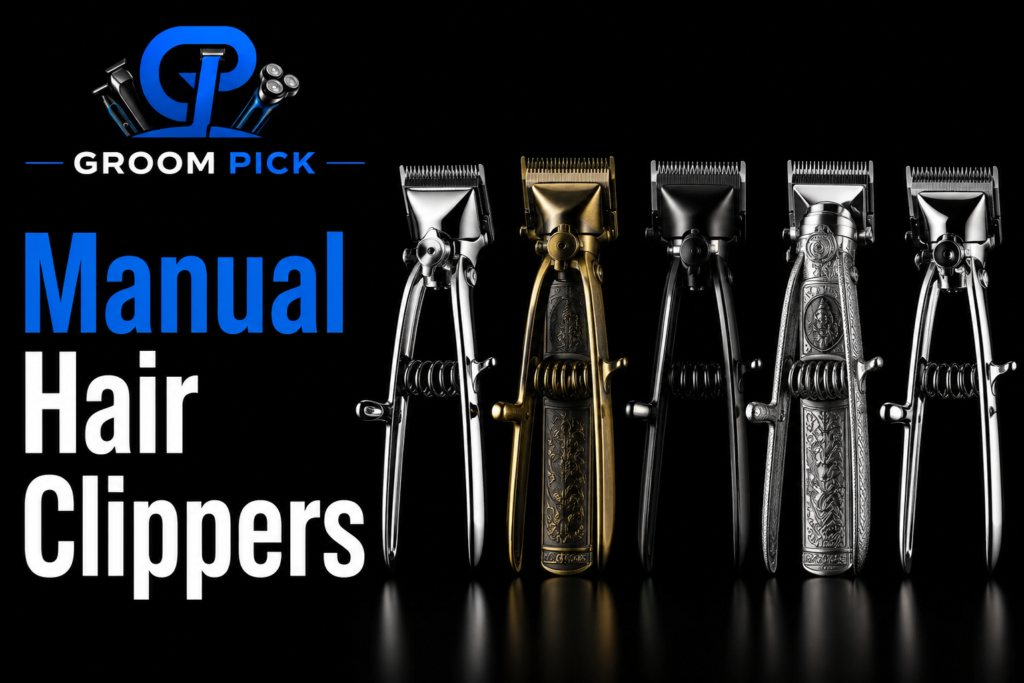
That is the appeal of Manual Hair Clippers.
But shopping for one can be surprisingly confusing. Search results often mix genuine hand-operated clippers with electric trimmers, nose-hair cutters, pet clippers, and complete grooming kits.
So what should you actually buy?
This guide looks at genuine manual models, including KALLORY, Mobestech, PIAOPIAONIU, and the JRL OG-1855. It also explains when an electric option such as the Remington Shortcut Pro makes more sense.
The goal is simple: help you choose the right tool for the haircut you actually want.
Table of Contents
Disclosure
Disclosure: This post contains affiliate links. If you purchase through these links, I may earn a small commission at no extra cost to you.
TL;DR: The Best Manual Hair Clippers
If you want the short version, these are the main choices worth considering.
- Best Overall: KALLORY Manual Hair Clippers for buyers who want a basic, hand-operated grooming tool.
- Best Budget: Mobestech Manual Hair Clippers for simple home or occasional grooming.
- Best Traditional Option: PIAOPIAONIU Manual Hair Clipper for a classic, non-electric design.
- Best Premium Option: JRL OG-1855 Manual Clipper for short trims, beard edging, touch-ups, and traditional grooming.
- Best Electric Alternative: Remington Shortcut Pro for easier and faster self-haircuts.
One important point: not every product returned for this keyword is a manual hair clipper.
The ROYAL, CNDNO, MIVZO, and Wulthus products in the supplied results are nose-hair trimmers. GOOAD is a dog-grooming clipper, while Ufree is an electric grooming kit.
They should not be presented as alternatives to a genuine manual scalp-hair clipper.


Manual Hair Clippers Comparison Table
The table below separates genuine manual options from products that only happen to appear for the search term.
| Product | Best For | Key Features | Pros | Cons | Recommendation |
|---|---|---|---|---|---|
| KALLORY Manual Hair Clippers | General manual grooming | Hand-operated design | Quiet, no electricity | Requires effort | Worth considering for basic grooming |
| Mobestech Manual Hair Clippers | Budget use | Manual operation, stainless-steel blade | Simple and quiet | Can require more effort | Good for occasional use |
| PIAOPIAONIU Manual Hair Clipper | Traditional grooming | Manual push design, stainless-steel blade | Battery-free, low noise | Learning curve | Good old-school option |
| JRL OG-1855 Manual Clipper | Premium traditional grooming | Spring-powered, steel construction | Quiet, sturdy, traditional | Best for short trims and edging | Strong premium choice |
| Remington Shortcut Pro | Self-haircuts | Cord/cordless, nine fixed combs | Fast and convenient | Electric | Best alternative to manual |
| ROYAL Manual Nose Hair Trimmer | Nose grooming | Manual nose-hair design | Battery-free | Not for scalp hair | Do not use as a hair clipper |
What Are Manual Hair Clippers?
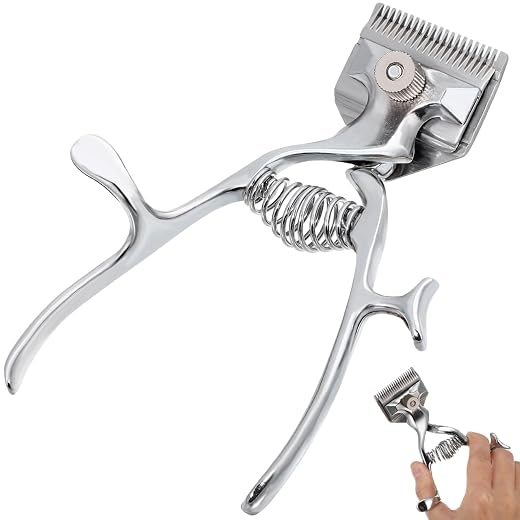
Manual hair clippers are hair-cutting tools that use hand power instead of an electric motor.
The basic idea is simple. You squeeze the handles, the moving blade travels against the fixed blade, and the cutting teeth shear the hair.
It is a little like using scissors repeatedly, except the blades are built into a mechanical clipper.
Traditional hair clippers became common long before modern electric clippers. Their biggest advantages were simplicity and independence from electricity. Today, those same qualities appeal to people who want quiet grooming, travel-friendly tools, or an old-fashioned barbering experience.
A manual clipper can also be useful when you simply do not want another rechargeable device in your bathroom.
There is no battery to replace. There is no charging cable to lose. There is no motor to maintain.
But there is one obvious trade-off.
Your hand supplies the power.
That means a manual clipper can feel slow if you are used to an electric model. It can also become tiring when you are cutting a lot of thick or long hair.
That is why the right buyer matters more than the longest feature list.
How Do Manual Hair Clippers Work?
A manual clipper uses two blades that work together.
One blade remains relatively fixed while the other moves across it. Hair enters the teeth, and the movement between the blades cuts it.
The handles and spring mechanism create that movement.
The PIAOPIAONIU instruction information, for example, describes a hand-push mechanism and recommends keeping the blades clean and lubricated. It also instructs users to use a steady squeeze-and-release motion while moving through the hair.
The JRL OG-1855 follows the same basic idea. JRL describes it as a spring-powered, hand-operated clipper with a heavy-duty steel frame and precision-ground blades.
The important thing to remember is that a manual clipper does not have a motor hiding inside it.
If a product needs USB charging, a lithium battery, or a power cord, it is an electric clipper.
For more background on how the cutting mechanism works, see this Hair Clipper guide.
Manual Hair Clippers vs Electric Hair Clippers
The biggest difference between Manual Hair Clippers vs Electric Hair Clippers is where the cutting power comes from.
A manual model uses your hand.
An electric model uses a motor powered by a battery or electrical connection.
That difference affects almost everything else.
Manual clippers are quieter. They do not need charging. They are simple to carry and can work without an outlet.
Electric clippers are faster. They are generally easier for beginners and more practical when you need to remove a large amount of hair.
This is why manual clippers vs electric is really a question about your priorities.
Want a fast buzz cut? Electric is usually the easier choice.
Want a quiet, battery-free tool? Manual makes more sense.
Want to create fades? A modern professional electric clipper is normally much better equipped because it can offer adjustable blades, taper controls, and guide combs.
Want a traditional grooming experience? A manual clipper has something an electric device cannot copy.
KALLORY Manual Hair Clippers
KALLORY is one of the names that appears prominently in the current manual hair clipper search results.
Its appeal is straightforward: a traditional hand-operated design without the need for electricity.
For a buyer who wants something simple, that is a useful starting point. You are not buying a digital grooming device with multiple settings. You are buying a mechanical tool that depends on your hand and the movement of its blades.
That can work well for short trims, touch-ups, and people who enjoy traditional grooming.
The biggest thing to understand is that manual operation changes the pace of the haircut.
You cannot simply turn the tool on and run it across your head.
You squeeze, move, release, and repeat.
That makes technique important.
It also means thick hair can be more demanding. If you have a dense head of hair and want to remove several inches, an electric clipper will usually be less tiring.
KALLORY therefore makes more sense for someone who specifically wants the manual experience rather than someone who simply wants the fastest haircut possible.
Pros
- Hand-operated design
- No charging required
- Quiet compared with motorized clippers
- Simple mechanical operation
- Suitable for buyers interested in traditional grooming
Cons
- Requires repeated hand movement
- More technique than an electric clipper
- Not the obvious choice for heavy bulk cutting
- Less versatile for complex modern hairstyles
KALLORY Manual Hair Clippers, Hand Operated Hair Cutter
Mobestech Manual Hair Clippers
Mobestech is another manual model that appears in the search landscape.
Available product information identifies it as a manually powered clipper with a stainless-steel blade, quiet operation, and an ergonomic design. Some listings also describe it for personal and pet grooming.
That makes it an interesting budget-oriented option, but buyers should pay attention to the intended use.
Manual clippers are sometimes marketed as universal grooming tools. That does not mean every model is equally good for every type of hair.
For simple human-hair trimming, the basic mechanical design is the main attraction.
There is no motor noise.
There is no battery.
There is no charging routine.
That can be useful if you travel frequently or simply want a backup grooming tool that works without power.
The downside is familiar.
The more hair you cut, the more work your hand has to do.
Mobestech therefore makes more sense for someone who values simplicity and low noise than for a professional barber who needs to move through several clients quickly.
Pros
- Manual power
- Stainless-steel blade listed
- Quiet operation
- No battery needed
- Simple design
Cons
- Hand fatigue can become an issue
- Not as fast as an electric clipper
- Some listings include pet grooming as a use
- Not ideal for buyers who need modern fade controls
PIAOPIAONIU Manual Hair Clipper
PIAOPIAONIU is one of the clearest examples of an old-school manual clipper in this category.
Available product information describes a non-electric, hand-push design with a stainless-steel blade, spring mechanism, and low-noise operation. The listed handle is approximately 12 cm long, with a blade measuring about 4 by 2.5 cm.
The design is simple.
That is both the strength and the weakness.
There are no electronic controls to learn. You simply hold the clipper, squeeze the handles, and move through the hair.
The manufacturer information also recommends cleaning after use and applying a small amount of light oil to keep the blades moving smoothly.
For someone who likes traditional tools, this can be part of the appeal.
For a beginner expecting the same speed as a modern cordless clipper, it may be a surprise.
The product information also indicates use for both human hair and pet grooming. That makes it versatile on paper, but it is still important to choose a tool based on the specific job you need to perform.
For a short, simple haircut or quiet grooming session, the manual design is easy to understand.
For thick hair, complex fades, or fast professional work, a modern powered tool is likely to be more practical.
Pros
- Genuine non-electric design
- Stainless-steel blade listed
- Low-noise operation
- Compact hand-operated mechanism
- No battery or charger
Cons
- Requires hand effort
- Needs regular cleaning and lubrication
- Not designed around modern fade controls
- Technique matters
1 Pcs Old Fashion Manual Clipper Haircut Hand Push Low Noise Non-Electric Hair Cutter by Team-Management
JRL OG-1855 Manual Clipper
The JRL OG-1855 is the most clearly documented premium option in this group.
JRL describes it as a spring-powered, hand-operated clipper made from heavy-duty steel with precision-ground blades. The company lists short trims, beard edging, touch-ups, vintage grooming, demonstrations, and collecting among its intended uses.
That intended use is important.
This is not simply an inexpensive electric clipper with a different label.
It is deliberately built around the old-school hand-operated concept.
There is no cord.
There is no battery.
There is no motor noise.
The cutting action comes from squeezing the handles.
That makes the OG-1855 particularly interesting for someone who enjoys the craft of traditional barbering.
It also has a clear limitation.
JRL does not position it as a universal replacement for modern professional clippers. Its stated uses focus on short trims, edging, touch-ups, and vintage grooming.
That means you should buy it for those jobs.
If you regularly perform fades, remove large amounts of thick hair, or need to work quickly all day, an electric professional clipper remains the more practical choice.
The JRL is better understood as a specialist manual grooming tool.
It is a bit like choosing a mechanical watch when your phone already tells the time.
The modern device is more convenient.
The mechanical tool is about the experience as well as the result.
Pros
- Genuine spring-powered manual operation
- Heavy-duty steel construction
- Precision-ground blades
- No electricity or battery
- Silent operation
- Suitable for short trims and edging
- Strong choice for traditional grooming enthusiasts
Cons
- Requires hand and wrist effort
- Not intended as a universal full-haircut replacement
- Less versatile than modern electric clippers
- Premium pricing may not suit casual users
Amazon Series JRL OG-1855 Professional Hair Manual Clipper, No Power Needed for Silent Cutting, Vintage Barber Tool for Head & Beard Trimming, Barbershop...
Remington Shortcut Pro
The Remington Shortcut Pro is included because it answers an important question.
What if you like the idea of a simple self-haircut but do not actually need the clipper to be manual?
The HC4250 is an electric model. Remington lists lithium power, 40 minutes of runtime, a four-hour charge time, nine fixed combs, stainless-steel blades, corded and cordless operation, and a washable design.
That makes it a completely different type of grooming tool.
Instead of squeezing the handles hundreds of times, you turn on the motor and guide the clipper.
For a beginner, that can be a huge difference.
Imagine cutting your own hair for the first time.
With a manual clipper, you have to think about your hand rhythm while also watching what the blades are doing.
With the Shortcut Pro, the motor keeps the blades moving while you concentrate on the path.
That is why an electric self-haircut clipper can be the smarter purchase even when someone originally searches for manual hair clippers.
It is not the right choice if your goal is zero electricity.
It is the right choice if your real goal is an easy home haircut.
Pros
- Corded and cordless operation
- Nine fixed combs
- Stainless-steel blades
- Washable design
- Designed for self-haircuts
- Easier for beginners
Cons
- Not a manual clipper
- Requires charging for cordless use
- Produces motor noise
- Less suitable for someone specifically avoiding electronics
Manual Hair Clippers vs Electric Hair Clippers: Which Is Better?
The answer depends on what you value.
Manual clippers win on simplicity, quietness, and independence from electricity.
Electric clippers win on speed, convenience, and versatility.
For a simple short haircut, either can work.
For thick hair, an electric clipper is usually easier.
For fades, an electric professional clipper is normally the better tool.
For travel without charging, a manual model has an obvious advantage.
For professional barbers serving several clients, the hand effort of a manual tool can quickly become tiring.
The best choice is therefore not about declaring one technology superior.
It is about matching the tool to the job.
Manual Hair Clippers vs Hair Scissors
Manual clippers and scissors both work without electricity, but they offer different kinds of control.
Scissors are better for picking up small sections and changing individual lengths.
A manual clipper is better suited to repeated cutting across a larger area.
Think of scissors as drawing with a pencil.
You can make tiny changes.
A clipper is more like using a small rake.
It covers more area, but you need to guide it carefully.
For trimming a few long hairs, scissors may be simpler.
For maintaining a short haircut, a manual clipper can make more sense.
Manual Hair Clippers vs Manual Nose Trimmers
These two tools should not be confused.
A manual nose trimmer is designed to cut nose hair safely.
A manual scalp-hair clipper is designed to cut larger sections of hair.
The blades, size, shape, and intended use are different.
That is why the ROYAL, CNDNO, MIVZO, and Wulthus products from the supplied search results should remain outside the main ranking.
A product can be manual without being a manual hair clipper.
That small distinction can prevent a very frustrating purchase.
Manual Hair Clippers vs Beard Trimmers
Beard trimmers are generally designed around shorter facial hair and detail work.
Hair clippers are generally designed to handle larger areas of scalp hair.
A beard trimmer may be excellent around a mustache or jawline but frustrating when you try to use it for an entire head.
Some manual clippers can also help with beard edging.
JRL specifically lists beard edging among the uses for its OG-1855.
Still, check the intended use before buying.
Do not assume that a tool designed for one part of the body will perform equally well everywhere else.
Vintage Hair Clippers vs Modern Manual Hair Clippers
Vintage hair clippers have obvious charm.
They remind you of old barber shops, metal tools, and a time when a haircut did not involve a charging cable.
But age is not automatically an advantage.
An old clipper may have worn blades, corrosion, a damaged spring, or missing parts.
A modern manual clipper can give you the same basic mechanical experience with a newer product design.
The JRL OG-1855 is a good example. It takes the traditional spring-powered idea and builds it into a current product made from heavy-duty steel.
Collectors may prefer authentic vintage equipment.
Regular home users should care more about condition, blade quality, maintenance, and availability.
How to Choose the Best Manual Hair Clippers
Buying a manual clipper requires a different mindset from buying an electric one.
You can forget about motor RPM and battery percentage.
Instead, focus on the parts that your hand actually controls.
Manual Hair Clippers for Men
Men looking for manual hair clippers should begin with the intended haircut.
Do you want a buzz cut?
A neckline cleanup?
A short beard trim?
A travel backup?
Or do you simply enjoy traditional barber equipment?
That answer should guide the purchase.
Someone maintaining a very short style may be perfectly happy with a basic manual clipper.
Someone who wants skin fades every week should probably look at a professional electric clipper instead.
Best Manual Hair Clippers
The best manual hair clippers should feel predictable.
The handles should move smoothly.
The blades should meet correctly.
The tool should not feel excessively rough or awkward when you squeeze it.
Also look at maintenance.
A manual clipper that needs regular cleaning and lubrication is not necessarily a bad product. That is simply part of owning a mechanical grooming tool.
Hand Operated Hair Clippers
With hand operated hair clippers, the handle and spring mechanism are critical.
Imagine opening and closing scissors hundreds of times.
If the hinge is smooth, the motion feels natural.
If it is stiff, your hand gets tired.
The same principle applies to a manual clipper.
Smooth operation matters because every haircut requires repeated movement.
A comfortable grip can make a bigger difference than a fancy-looking body.
Non Electric Hair Clippers
Non electric hair clippers are useful when you do not want to depend on a power source.
They can make sense for travel, camping, emergency grooming kits, or simply keeping a backup tool in a drawer.
There is also something reassuring about a device that cannot suddenly stop because its battery is empty.
But remember that non-electric does not mean maintenance-free.
The blades still need care.
The metal still needs protection from moisture.
The mechanism still needs to move smoothly.
Manual Hair Cutter
The term manual hair cutter can sound more complicated than it is.
In most cases, it simply describes a hand-operated clipper.
When shopping, look at how the product actually works instead of relying on the title.
If the listing talks about USB charging, lithium batteries, motors, or RPM, it is not a manual clipper.
A genuine manual model should use your hand as the power source.
Old Fashioned Hair Clippers
Old fashioned hair clippers appeal to buyers who like simple mechanical tools.
They are also useful when you want quiet grooming.
Imagine trimming your hair early in the morning while everyone else in the house is asleep.
A motorized clipper makes that difficult.
A manual tool is much quieter.
The trade-off is that you need more time and patience.
That is the central bargain with old-fashioned grooming tools.
Manual Haircut Machine
A manual haircut machine is simply another way of describing a hand-powered clipper.
The phrase can be confusing because modern grooming machines are normally electric.
Again, check the actual mechanism.
The important features are manual operation, moving blades, a spring or handle mechanism, and no requirement for electrical power.
Hand Clippers for Hair
When choosing hand clippers for hair, pay attention to the blade system.
The blades are the heart of the tool.
A shiny metal body cannot compensate for poor cutting action.
Also check whether the product has clear care instructions.
If the manufacturer explains how to clean and lubricate the clipper, that is useful because maintenance directly affects how smoothly a manual tool works.
Manual Hair Trimmer
The phrase manual hair trimmer covers several different products.
Some are for scalp hair.
Others are designed for the nose, ears, eyebrows, or beard.
That is why you should always read the intended use before purchasing.
The ROYAL product from the supplied search results is a good example.
It is manual, but it is designed for nose hair.
It is not a substitute for a scalp-hair clipper.
Traditional Hair Clippers
Traditional hair clippers are ideal for buyers who like mechanical simplicity.
They can be quiet, portable, and independent of electricity.
But they are not magic.
If your hair is thick, your style is complicated, or you need to finish a haircut quickly, a powered clipper will probably be easier.
Traditional clippers are best when you appreciate the process as much as the result.
How to Use Manual Hair Clippers
The first mistake beginners make is trying to work too quickly.
Manual clippers reward a steady rhythm.
Clean and Oil the Blades
Start with clean blades.
Remove old hair and debris before cutting.
If the manufacturer recommends lubrication, use a small amount of suitable clipper oil.
The PIAOPIAONIU instructions specifically recommend lubricating the blades and working the mechanism to spread the oil before use.
Comb and Prepare the Hair
Comb your hair before you begin.
Know how long it is and where it naturally sits.
For a simple short haircut, working through small sections makes it easier to see what you have already cut.
Hold the Clipper Correctly
Hold the clipper firmly without crushing the handles.
The motion should feel controlled.
You want a steady squeeze-and-release rhythm.
Think of using a hand pump.
Smooth repetition is easier than frantic movement.
Use Short, Controlled Strokes
Start slowly.
Move the clipper through a small section, release the handles, reposition, and repeat.
Do not immediately try to cut large amounts of thick hair.
If the clipper begins pulling instead of cutting, stop and check the blades.
The problem may be dirt, poor lubrication, alignment, or blade condition.
Check the Cut Frequently
Use a mirror and check your progress.
Comb the hair again.
Look from the front, sides, and back when possible.
A manual clipper gives you more responsibility for the result because you control both the cutting rhythm and movement.
Clean the Clipper Afterward
Brush away loose hair after each session.
Keep the blades dry.
If the manufacturer recommends oiling after use, follow those instructions.
A few minutes of care can make the next haircut smoother.
Are Manual Hair Clippers Worth Buying?
For the right buyer, they can be.
For everyone else, probably not.
The strongest reason to buy a manual clipper is not that it is automatically better.
It is that it solves a specific problem.
You want quiet operation.
You do not want batteries.
You want a tool that works without electricity.
You enjoy traditional grooming.
You need a simple backup tool.
Those are all reasonable reasons.
But if you want to remove a lot of thick hair quickly, manual clippers can become tiring.
The same is true if you want detailed fades or several haircuts in one day.
A powered motor keeps the blades moving continuously. Your hand does not have to repeat the same squeezing motion.
That is a major advantage.
The JRL OG-1855 shows where manual clippers fit best. JRL lists short trims, beard edging, touch-ups, vintage grooming, and demonstrations as its uses rather than presenting it as a replacement for every professional electric clipper.
So ask yourself one simple question.
Do you want a manual clipper because it is genuinely useful for your situation, or because it sounds interesting?
If it is the first, buy one.
If it is the second, consider whether an electric alternative would actually make your life easier.
Maintenance and Long-Term Ownership
A manual clipper is mechanically simple, but that does not mean you can ignore it.
Good maintenance keeps the blades moving properly and helps protect metal parts from wear and corrosion.
Cleaning
Brush loose hair from the blades after every use.
Pay attention to the spaces around the teeth and moving mechanism.
Do not leave damp hair or moisture sitting on exposed metal.
Oiling
A small amount of oil can reduce friction between the blades.
Do not flood the clipper.
Too much oil can attract dust and hair.
Follow the manufacturer’s care instructions when they are available.
Sharpening and Blade Care
Do not assume you should sharpen the blades yourself.
Some clipper designs are better serviced by a professional.
If the tool starts pulling hair, first check for dirt, dry blades, misalignment, or damage.
A dull blade is only one possible cause.
Storage and Corrosion Prevention
Store the clipper somewhere dry.
This is especially important with steel tools.
If you are not going to use it for several months, clean it thoroughly, dry it, and protect the metal according to the manufacturer’s recommendations.
A damp bathroom cabinet is not the best place for long-term storage.
Key Takeaways
Manual hair clippers are simple tools with one major advantage: they work without electricity.
They are quiet, portable, and mechanically straightforward.
They also require more effort and technique than electric clippers.
For short trims, touch-ups, travel, quiet grooming, and traditional barbering, that trade-off can make sense.
For thick hair, complex fades, fast full-head cuts, or professional workloads, an electric clipper is normally easier.
The most important buying lesson is to check the product category carefully.
A manual nose-hair trimmer is not a manual scalp-hair clipper.
A pet clipper is not a men’s haircut tool.
And an electric grooming kit is not manual simply because the word appears in a marketplace search.
Are Manual Hair Clippers Worth It? Our Honest Buying Advice!
Manual hair clippers make sense when you want quiet, battery-free grooming and enjoy having direct control over the cutting process.
KALLORY and Mobestech are worth investigating if you want simple manual options. PIAOPIAONIU offers a traditional hand-push design with documented maintenance instructions. For a more premium manual experience, the JRL OG-1855 stands out because JRL clearly identifies its spring-powered operation, steel construction, precision-ground blades, and intended uses.
But do not buy one expecting it to behave like a modern electric clipper.
It will not.
An electric model will usually be faster and easier for thick hair, fades, and self-haircuts. The Remington Shortcut Pro, for example, is specifically built around convenient self-haircutting, with cordless operation, guide combs, and washable construction.
A manual clipper is different.
It is quieter.
It is simpler.
It does not need charging.
And for someone who enjoys old-school grooming, that simplicity is exactly the point.
Choose manual when you want the experience as well as the haircut.
Frequently Asked Questions
Are manual hair clippers better than electric clippers?
Manual hair clippers are better when quiet, battery-free operation is the priority. Electric clippers are usually better for speed, thick hair, fades, self-haircuts, and professional workloads. The better choice depends on the haircut and the reason you want a clipper.
Can manual hair clippers cut thick hair?
Some manual clippers can cut thicker hair, but the process may require more effort and patience. Because your hand supplies the cutting action, removing a large amount of dense hair can become tiring. For very thick hair, a powerful electric clipper is usually the easier option.
Are manual hair clippers good for self-haircuts?
They can work for simple, short styles, but they have a steeper learning curve. You must control the cutting rhythm while also checking the mirror. Beginners who want fast, repeatable self-haircuts will usually find a compact electric clipper easier to use.
Do manual hair clippers need oil?
Yes, lubrication is commonly important for mechanical clippers because the blades move against each other. Follow the product’s care instructions and use suitable clipper oil. PIAOPIAONIU’s instructions specifically recommend regular blade lubrication to maintain smooth operation.
Can you use manual hair clippers on a beard?
Some can be used for beard edging and short facial-hair work, but you should check the manufacturer’s intended use. JRL specifically lists beard edging and touch-ups for the OG-1855. A scalp clipper should not automatically be assumed to be suitable for every type of facial grooming.
Are manual hair clippers still worth buying?
Yes, for buyers who value quiet, battery-free, traditional grooming. They are less attractive for people who want fast haircuts, complex fades, or easy self-cutting. Think of manual clippers as a specialist tool rather than a universal replacement for electric models.