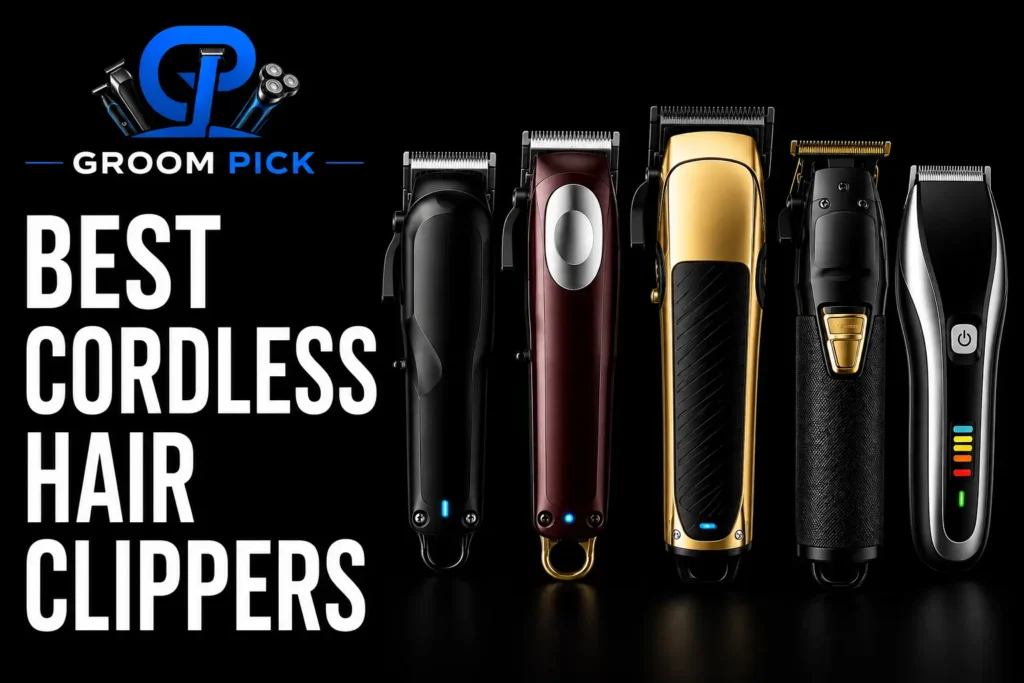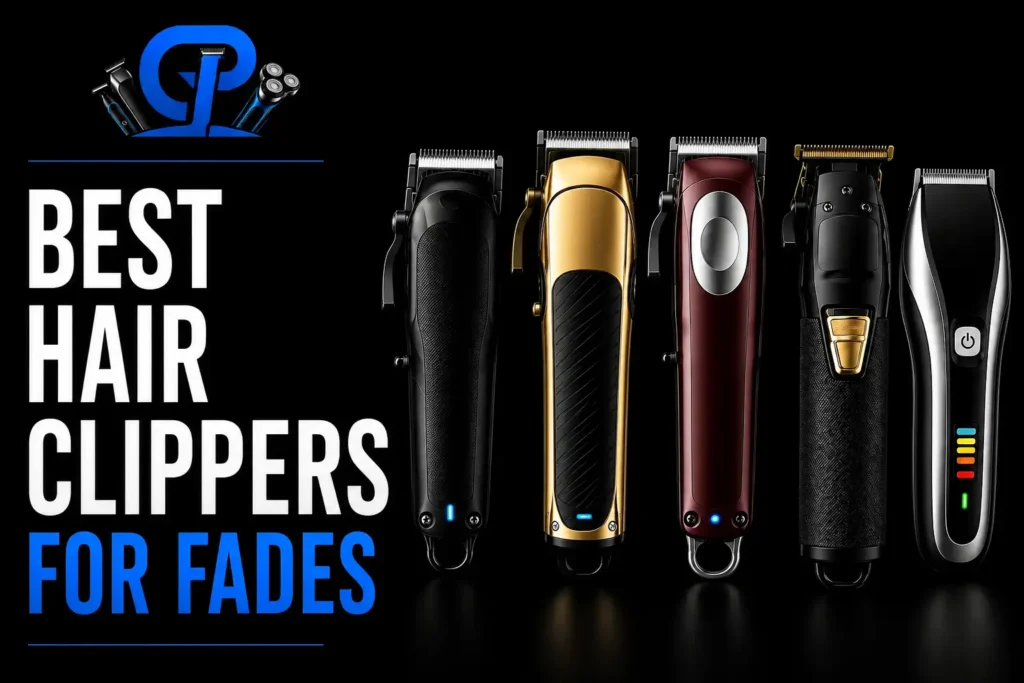
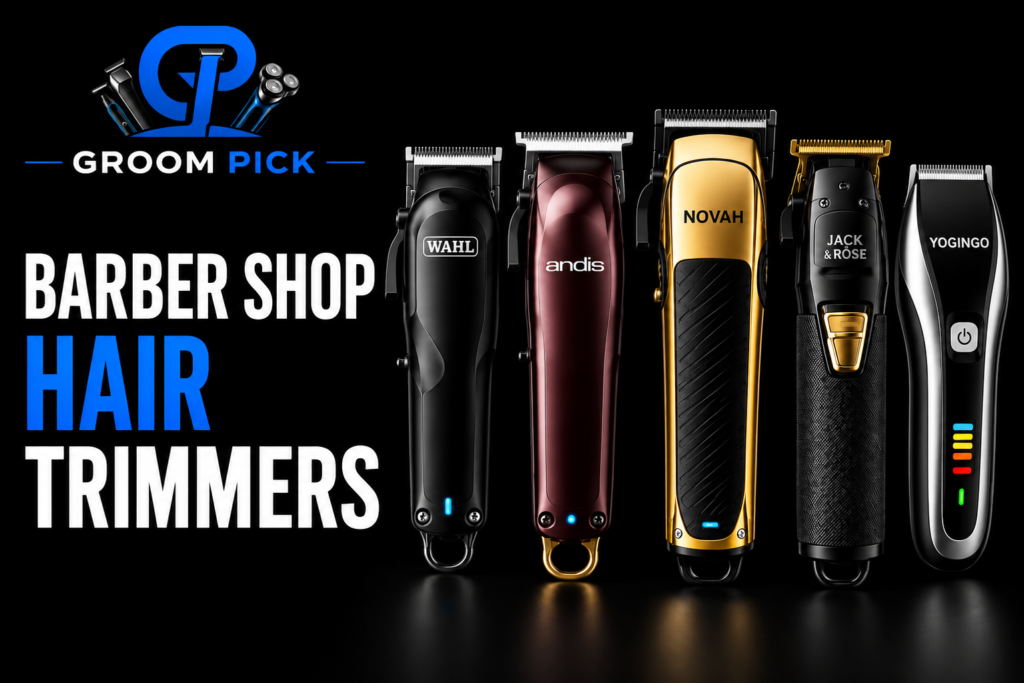
A busy barbershop needs tools that can keep up with real work. The right barber shop hair trimmers should deliver clean lines, controlled detailing, comfortable handling, and dependable performance.
Whether you are shaping a beard, cleaning a neckline, finishing a fade, or creating a sharp lineup, your trimmer has one important job: make the final details easier.
Disclosure: This post contains affiliate links. If you purchase through these links, I may earn a small commission at no extra cost to you.
Table of Contents
TL;DR: The Best Barber Shop Hair Trimmers at a Glance
The best trimmer depends on the work you do most often. A lineup specialist may need a T-blade, while a new barber may prefer a complete clipper and trimmer set.
- Best for precision: Andis 04780 T-Outliner
- Best for versatile haircutting: Wahl Color Pro Cordless
- Best for hair and beard grooming: Wahl Rechargeable Cord/Cordless Kit
- Best for cordless flexibility: Wahl Lithium Ion Pro
- Best complete set: Novah Professional Hair Clippers and Trimmer Set
- Best budget combination: Jack & Rose Clippers and Trimmers Set
- Best budget detail option: YOGINGO Professional Hair Trimmer
For professional use, pay close attention to blade design, motor performance, ergonomics, battery life, replacement parts, and maintenance rather than simply choosing the tool with the longest feature list.


Comparison Table for Barber Shop Hair Trimmers
This table gives you a quick way to compare the seven products before reading the detailed reviews.
The models serve different purposes, so the “best” option depends on your barbering workflow.
| Product | Best For | Main Type | Key Strength | Main Limitation |
|---|---|---|---|---|
| Andis 04780 T-Outliner | Lineups, edging, detailing | T-blade trimmer | Precision | Corded |
| Wahl Color Pro Cordless | General haircutting | Cordless clipper/trimmer | Guard versatility | Less specialized for detailing |
| Wahl Rechargeable Cord/Cordless Kit | Hair and beard grooming | Combination kit | Versatility | Less specialized |
| Wahl Lithium Ion Pro | Cordless haircutting | Cordless clipper | Mobility | Home-focused positioning |
| Novah Professional Set | Complete barber setup | Clipper + trimmer set | Broad coverage | More components to maintain |
| Jack & Rose Set | Budget buyers | Clipper + trimmer set | Affordable combination | Professional durability needs checking |
| YOGINGO Professional | Budget detailing | Cordless trimmer | Low-cost cordless design | Long-term shop support needs checking |
The supplied research shows strong marketplace activity and customer ratings for several of these products, but those figures should not be treated as proof of professional performance.
How We Chose Professional Hair Trimmers for Barbers
A trimmer can look impressive on a product page and still be the wrong tool for your station.
We focus on the features that matter when the tool is being used repeatedly throughout a working day.
The main areas to consider are blade precision, motor performance, fade work, lineup control, battery performance, ergonomics, heat, noise, maintenance, and replacement parts.
A barber who mainly performs sharp lineups has different needs from someone who mostly cuts full heads of hair.
That distinction matters.
The blade is one of the first things to examine. T-blades are popular for outlining and detailing because they give the barber a broad cutting edge and clear visibility around the work area.
The Andis 04780 T-Outliner, for example, uses a carbon-steel T-blade and a magnetic motor rated at 7,200 strokes per minute according to Andis. The manufacturer positions it for outlining, fading, and dry shaving.
Motor power matters too, but numbers alone do not tell the whole story.
Think about a car. A powerful engine is useful, but how the car handles matters too. A trimmer needs the right combination of motor, blade, balance, and cutting control.
Battery performance is another major consideration.
Cordless tools make it easier to move around the client. Corded tools remove the need to think about battery percentage. Some professional barbers keep both types available.
Ergonomics are easy to underestimate.
A tool may feel comfortable for five minutes. Your opinion can change after several hours of repetitive work. Weight, balance, grip, and blade visibility all matter.
Maintenance also affects value.
Hair, skin oils, disinfectant, and friction can wear down blades over time. Regular cleaning, disinfection, oiling, and proper storage help keep grooming equipment ready for work.
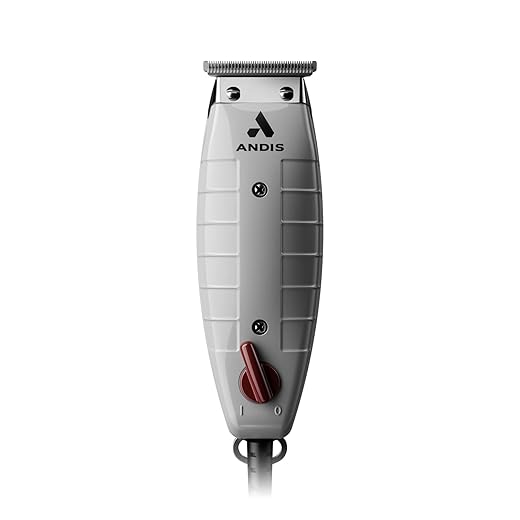
Andis 04780 T-Outliner and Barber Trimmers for Lineups
The Andis 04780 is designed around precision work, making it especially relevant to barbers who spend much of the day creating clean edges.
Its T-blade design is particularly useful for outlining, beard detailing, necklines, and finishing work.
The Andis 04780 Professional T-Outliner uses a carbon-steel T-blade and a magnetic motor rated at 7,200 SPM. Andis describes it as suitable for outlining, fading, and dry shaving.
The corded design is worth considering.
There is no battery to recharge during the day, which can be useful in a busy shop. You plug it in and keep working.
The trade-off is movement.
A cable can be annoying when you move around a client’s chair. You need to manage where it sits while working.
The T-blade also makes this model more focused than a general haircutting kit.
If your station already has a strong clipper for removing bulk, a dedicated trimmer like this can fill the finishing role.
Think of it as the pencil you use after painting the wall. The clipper does the larger job. The trimmer defines the edges.
Pros
- Carbon-steel T-blade
- 7,200 SPM magnetic motor
- Designed for outlining and detailing
- Useful for fades and dry shaving
- Corded operation eliminates battery concerns
- Replacement blades are available
Cons
- Cord restricts movement
- Heavier than some compact cordless tools
- Less convenient for barbers who strongly prefer cordless equipment
- Requires regular blade maintenance
Andis 04780 Professional T-Outliner Beard & Hair Trimmer for Men
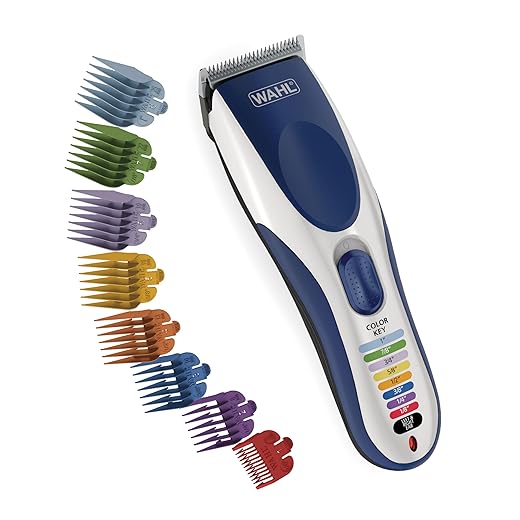
Wahl Color Pro Cordless for Barber Clippers and Trimmers
The Wahl Color Pro Cordless takes a broader approach than a dedicated detail trimmer.
It makes more sense for general haircutting where guards and cordless convenience are important.
The supplied product research identifies the Color Pro as a cordless rechargeable hair clipper and trimmer with color-coded guards.
That design can be helpful for straightforward haircutting.
Imagine a customer asks for a short back and sides. You can work through the appropriate guard lengths without reaching for several different tools.
It is also useful for people who want one tool for regular grooming rather than a specialist instrument for professional detailing.
But there is a difference between versatility and specialization.
A general-purpose clipper or trimmer may handle many jobs well without being the ideal choice for extremely precise lineup work.
If your shop is built around fades, beard shaping, and sharp hairline work, you may want a dedicated detail trimmer alongside a general clipper.
For simpler cuts, however, the Color Pro approach is easier to understand.
Pros
- Cordless convenience
- Color-coded guards
- Useful for general haircutting
- Flexible for different hair lengths
- Simple option for home and lighter-duty use
Cons
- Less specialized for precision edging
- Not primarily a dedicated T-blade detailing tool
- Professional shop durability should match your workload
- May overlap with tools you already own
Wahl Color Pro Cordless Rechargeable Hair Clipper & Trimmer, Color Guards
Wahl Rechargeable Cord/Cordless Kit for Beard and Hair Trimmer Work
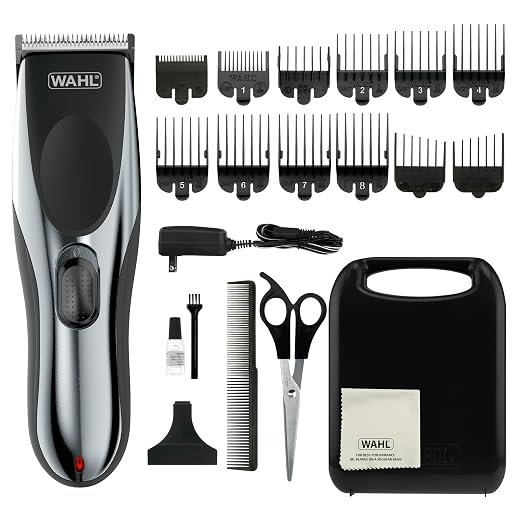
The Wahl Rechargeable Cord/Cordless Haircutting & Trimming Kit is designed for people who want broader grooming coverage.
It can make sense when one purchase needs to handle haircutting, trimming, and beard work.
The supplied research describes this as a rechargeable cord/cordless haircutting and trimming kit intended for haircuts, longer beards, and broader grooming.
The big advantage is versatility.
You might start a service by removing bulk hair and then move to beard trimming or finishing work. Having a broader kit can reduce the number of separate products you need.
The downside is specialization.
A kit designed to handle many tasks may not give you the same focused experience as a dedicated detail trimmer.
Think about a toolbox.
A large toolbox gives you many tools. But if you spend all day tightening one particular type of screw, you may still prefer having a specialist tool that fits your hand perfectly.
That is the trade-off here.
If you want flexibility, this type of kit is attractive. If precision edging is your entire business, look closely at the blade design before choosing it.
Pros
- Corded and cordless flexibility
- Broad haircutting and trimming use
- Useful for hair and beard grooming
- Good choice for mixed grooming tasks
- Can reduce the need for multiple purchases
Cons
- Less specialized than a dedicated detail trimmer
- More accessories require more storage and maintenance
- May be unnecessary if you already own a good clipper
- Check the current package contents before buying
Wahl Clipper Rechargeable Cord/Cordless Haircutting & Trimming Kit
Wahl Lithium Ion Pro and Cordless Barber Trimmer Options
The Wahl Lithium Ion Pro is built around cordless convenience.
It is particularly relevant to buyers who want freedom of movement during haircutting.
The supplied research identifies it as a rechargeable cordless hair clipper designed for home haircuts.
Cordless operation can make a noticeable difference.
You can move from the back of the chair to the side without thinking about the cable. You can change hand positions more easily. There is simply one less thing to manage.
But professional barbers should look beyond the word “cordless.”
Battery capacity, charging time, replacement parts, blade availability, and warranty support matter when a tool is being used frequently.
A cordless tool that works well for occasional home haircuts may not necessarily be the right primary tool for a busy barbershop.
This is why the Lithium Ion Pro is best considered according to workload.
For flexible personal grooming and lighter cutting duties, cordless operation is convenient. For high-volume professional work, make sure the tool’s specifications and support match your schedule.
Pros
- Cordless operation
- Easy to move around the client
- Rechargeable design
- Convenient for flexible haircutting
- Useful for home and lighter-duty grooming
Cons
- Positioned toward home haircutting
- Not a specialist professional detailing trimmer
- Battery requires charging
- High-volume barbers should verify suitability
Wahl Lithium Ion Pro Rechargeable Cordless Hair Clippers for Home Haircuts
Novah Professional Barber Clippers for a Complete Setup
The Novah Professional Hair Clippers and Trimmer Set is aimed at people who want several tools in one package.
That can be useful when building a first barber station or replacing several older tools at once.
The supplied research describes the Novah product as a professional clipper and trimmer set designed for men’s grooming and barber-style haircuts, including fades.
The biggest advantage is coverage.
A clipper can remove bulk and establish the haircut. A trimmer can then clean the edges and finish the details.
That creates a more complete workflow.
For a beginner, this can be easier than trying to choose every piece separately.
However, do not assume every component in a bundle will perform like a specialist professional tool.
Look at the individual clipper and trimmer. Check replacement blades. Check battery information. Check warranty support. Check exactly what comes in the current package.
A box full of accessories can look impressive.
What matters is whether the tools inside solve the problems you face at the chair.
Pros
- Clipper and trimmer combination
- Useful for complete haircut workflows
- Suitable for buyers building a grooming station
- Covers cutting and detailing tasks
- Convenient all-in-one approach
Cons
- More components to maintain
- Individual tool performance should be evaluated separately
- Package contents can change
- May be unnecessary for barbers who already own a clipper
Novah® Professional Hair Clippers for Men, Professional Barber Clippers and Trimmer Set, Mens Cordless Hair Clipper for Barbers Haircut Kit Fade
Jack & Rose Barber Clippers and Trimmers for Budget Buyers
The Jack & Rose set combines a clipper and trimmer in one package.
It is aimed at buyers who want broader grooming coverage without buying two separate products.
The supplied research lists it as a cordless clipper and trimmer set for men’s grooming and barber-style use.
For a beginner, the appeal is obvious.
You have one set that can cover bulk cutting and finishing.
That makes it easier to build a basic workstation.
The important question is long-term professional use.
A product title can use terms such as “professional” without telling you how well the tool will perform under heavy daily workload.
Before using a budget set as your primary shop equipment, investigate replacement blades, battery performance, warranty coverage, and parts availability.
Budget does not have to mean bad.
It simply means you should be more careful about what you are getting.
For occasional use, personal grooming, or a starter setup, a combination set can be practical.
Pros
- Clipper and trimmer in one set
- Cordless design
- Useful for beginners
- Broad grooming coverage
- Budget-friendly positioning
Cons
- Long-term professional durability needs verification
- More components to clean and store
- May not match specialist trimmers for detailed work
- Current specifications should be checked before purchase
Jack & Rose Hair Clippers for Men Set Professional, Cordless Men Hair Trimmer, Electric Shavers, Barber kit, 4 in 1,LED Display, for Nose, Body, Bald Head
YOGINGO Professional Hair Trimmer for Detail Work
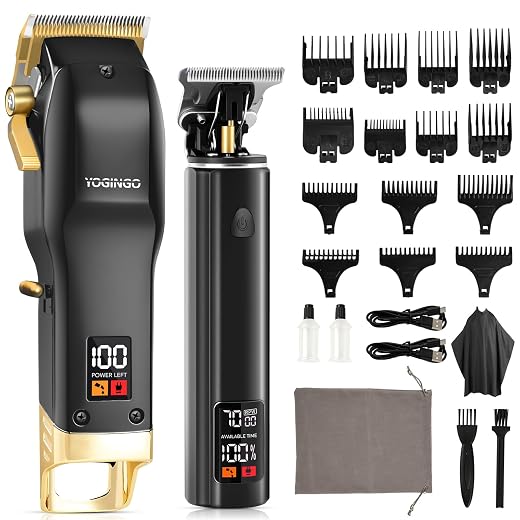
The YOGINGO Professional Hair Trimmer is the budget-focused standalone trimmer in this comparison.
Its cordless rechargeable design and metal-body construction make it interesting for buyers who want a compact grooming tool.
The supplied research describes it as a professional hair trimmer for men with a rechargeable cordless design and metal body, positioned for hair, beard, and barbershop grooming.
The metal body may give the tool a solid feel.
But appearance should not be confused with long-term durability.
For professional use, you need to think beyond the outside of the machine.
Can you replace the blade?
Can you get parts?
How does the battery perform after repeated charging?
What support does the manufacturer provide?
Those questions matter when the tool is earning money for you.
A low-cost trimmer can be useful as a secondary tool, backup, or entry-level option. But a busy barber should verify its support and durability before relying on it as the only trimmer in the shop.
Pros
- Cordless rechargeable design
- Metal-body construction
- Suitable for hair and beard grooming
- Compact design
- Budget-friendly positioning
Cons
- Long-term professional durability needs verification
- Replacement-part availability should be checked
- Battery performance should match your workload
- Less established as a high-volume professional tool
YOGINGO Professional Hair Clippers for Men, Barber Hair Cutting Kit Cordless, Rechargeable Grooming Set Gifts for Men
Best Detail Trimmer and T-Blade Trimmer Features for Fades
Fades require patience, control, and the right sequence of tools.
A trimmer normally handles the finishing work rather than removing all the bulk.
When choosing a detail trimmer, look for good blade visibility and comfortable handling.
You want to see exactly where the blade is touching the hair.
For a T-blade trimmer, the wider blade can be useful for outlining and defining edges.
The Andis T-Outliner is a good example of this design. Andis describes its T-blade as suitable for close lines, fades, and dry shaving.
For fade work, do not expect the trimmer to replace the clipper.
The clipper creates the main transition.
The trimmer helps clean the bottom edge and finish the look.
It is like sanding wood after cutting it. The main cut creates the shape. The finishing step makes it cleaner.
Professional Grooming Tools for Lineups and Beard Detailing
Good barbering is often decided by the last few minutes of the service.
That is when small details turn an ordinary haircut into a clean-looking finish.
For lineups, control matters more than having dozens of accessories.
For beard detailing, blade visibility is important because you are working close to the skin.
For sideburns and necklines, a balanced tool can make repeated short movements easier.
A trimmer should feel predictable.
When you move the blade, you should know what it is going to do.
That is why professional grooming tools should be selected based on the actual work performed at your station.
A barber who spends most of the day doing beard designs may choose differently from a barber who mainly performs traditional short haircuts.
There is no reason to pay for features you will never use.
What to Look for in Barber Trimmers Before Buying
The right tool should match your cutting style, client volume, and station setup.
Before buying, focus on the features that will affect you every working day.
Blade design should come first.
If you do a lot of outlining, look closely at T-blade options. If you mostly need general trimming, a broader clipper/trimmer setup may make more sense.
Motor performance matters too.
The Andis 04780, for example, uses a magnetic motor rated at 7,200 SPM according to the manufacturer.
But do not compare motors using speed alone.
Cutting performance also depends on blade design and how the motor drives it.
Battery performance matters for cordless tools.
A battery indicator can be helpful, but what matters most is whether the runtime suits your normal workload.
Ergonomics also deserve attention.
A trimmer should sit comfortably in your hand. You should be able to see the blade. The switch should be easy to reach.
Then think about heat.
A tool used repeatedly can become warm. If you work all day, even a small amount of extra heat can become noticeable.
Noise matters as well.
You are working close to someone’s ears and face. A noisy machine can affect the client’s experience.
Finally, check replacement blades and parts.
A trimmer is an investment in your business. You want to know that you can maintain it instead of throwing it away when the blade wears out.
Best Trimmers for Barbers: Cordless vs Corded
Cordless trimmers give you freedom.
Corded trimmers give you continuous access to power.
Neither option automatically wins.
A cordless barber trimmer is convenient when you move around the chair frequently.
You can work around the back of the head, switch sides, and shape a beard without managing a cable.
A corded model can be reassuring in a busy shop.
There is no battery percentage to watch. As long as you have power, you can keep working.
Some barbers therefore keep one of each.
The cordless tool handles movement.
The corded tool becomes the dependable backup.
This approach can be especially useful during busy periods when one tool may need cleaning or maintenance while another is in use.
Hair Trimmer for Barbershop Maintenance and Ownership
A good tool still needs good care.
Cleaning and maintenance can affect cutting performance, blade life, and the overall ownership cost.
Start by brushing loose hair from the blade after use.
Follow the manufacturer’s instructions for cleaning and disinfection. Different tools can have different requirements.
Oil the blade as recommended.
Oil helps reduce friction between moving parts. Lower friction can help reduce unnecessary heat and wear.
Do not flood the blade with oil.
A few drops in the correct places are generally enough when following the manufacturer’s instructions.
Store the trimmer somewhere clean and dry.
Do not leave it buried under loose tools.
Keep replacement blades and accessories organized so you know what you have.
If the blade becomes dull, damaged, or rusty, replace it.
Continuing to use a damaged blade can make the haircut harder and may affect client comfort.
For professional ownership, also keep an eye on battery condition.
If a cordless tool no longer provides the runtime you need, it may be time to investigate a replacement battery, service option, or replacement tool depending on the model.
External Guide for Barber Tool Care
Tool maintenance becomes much easier when you have a simple routine rather than waiting until a trimmer starts performing poorly.
A short care checklist can also help new barbers develop good habits from the beginning.
For broader workplace hygiene and cleaning guidance, the CDC Guide to Infection Control in the Dental Health-Care Setting provides general background on infection-control principles. Follow the specific cleaning and disinfection instructions supplied by your trimmer manufacturer and your local shop requirements.
The basic idea is simple.
Clean the tool after use. Disinfect it correctly. Oil it when required. Store it safely.
Five minutes of routine care is easier than dealing with a neglected tool later.
Barber Clippers and Trimmers for a Complete Barber Setup
A barber station works best when each tool has a clear purpose.
You do not necessarily need the most expensive equipment. You need equipment that works together.
Your clipper handles bulk cutting.
Your trimmer handles edging and finishing.
A shaver can take care of very short stubble when the service requires it.
A comb controls the hair while you cut.
A brush removes loose hair.
Disinfectant keeps the tools ready for the next client.
That is the basic system.
If you already own an excellent clipper, buying another clipper-and-trimmer bundle may not make sense.
You might get more value from buying a dedicated trimmer.
If you are starting from nothing, a complete set can be more practical.
Think about what is missing from your station before you buy.
Best Trimmers for Barbers Based on Different Jobs
Different barbers need different tools.
The right choice depends on whether your priority is detailing, versatility, budget, or mobility.
For lineups, a dedicated T-blade trimmer makes sense.
For beard detailing, look for blade visibility, control, and comfortable handling.
For fades, consider how the trimmer works alongside your clipper rather than expecting it to do everything.
For home use, a versatile cordless kit may be more practical than a specialist professional trimmer.
For a beginner, a clipper-and-trimmer set can simplify the buying process.
For a busy professional, replacement blades, parts, battery performance, and warranty support deserve extra attention.
The best choice is therefore not simply the tool with the highest rating or biggest motor.
It is the tool that fits your daily work.
Which Barber Shop Hair Trimmer Should You Buy Today?
The best choice starts with the type of barbering you do most often.
A specialist detailer, a cordless general-use tool, and a complete clipper set can all make sense for different buyers.
If your main priority is sharp outlines, edging, fades, and detailed finishing, the Andis 04780 T-Outliner is the most focused option in this group. Andis documents its carbon-steel T-blade, 7,200 SPM magnetic motor, and use for outlining and fading.
If you want broader versatility, the Wahl haircutting and trimming kits offer a different approach.
For beginners, the Novah and Jack & Rose sets can provide a clipper and trimmer combination in one purchase.
For budget-conscious buyers, the YOGINGO offers a cordless standalone option, but professional buyers should investigate parts, warranty support, and long-term durability before making it their main shop tool.
The important thing is not to buy based on marketing language alone.
Choose the blade for your work, the motor for your workload, the battery for your schedule, and the shape of the tool for your hand.
That is how you end up with a trimmer that actually earns its place on the barber station.
Key Takeaways
- Choose your trimmer based on the work you do most.
- T-blades are useful for lineups and detailed edging.
- Cordless models offer better freedom of movement.
- Corded models eliminate battery concerns.
- Clippers and trimmers perform different jobs.
- Replacement blades are important for long-term ownership.
- A complete set can be useful for beginners.
- Dedicated trimmers make more sense when detailing is a major part of your work.
- Do not assume every product marketed as “professional” is designed for high-volume barbering.
- Maintenance is part of the cost of ownership.
Frequently Asked Questions About Barber Shop Hair Trimmers
These questions cover the practical issues most buyers face before choosing a barber trimmer.
The answers focus on real barbering tasks rather than marketing claims.
What trimmer do professional barbers use?
Professional barbers use different trimmers depending on their workflow. Andis and Wahl both offer professional grooming tools, including detail and T-blade options. The right model depends on whether the barber mainly performs lineups, fades, beard detailing, or general trimming.
Are T-blade trimmers good for lineups?
Yes. A T-blade can be useful for lineups because its shape provides a broad cutting edge and good visibility. The Andis T-Outliner is specifically designed for close outlining, fading, and dry shaving.
What is the difference between a clipper and a trimmer?
A clipper is generally used to remove larger amounts of hair and create different lengths. A trimmer is designed for shorter, more precise work, including hairlines, necklines, sideburns, beard edges, and finishing a fade.
Are cordless trimmers good enough for barbershops?
Yes, some cordless trimmers are designed for professional use. The important factors are runtime, charging, motor performance, blade quality, durability, replacement parts, and warranty support. A cordless tool should match the number of clients you normally handle.
What trimmer is best for fades?
A T-blade trimmer can be useful for finishing fades, cleaning the bottom edge, and creating sharp outlines. The Andis T-Outliner is specifically marketed for outlining and fading, but the best choice depends on the barber’s technique and preferred equipment.
How often should barbers clean and oil their trimmers?
Clean and disinfect your trimmer according to the manufacturer’s instructions and your shop’s sanitation requirements. Regular brushing, cleaning, and oiling can help reduce hair buildup, friction, heat, and blade wear.