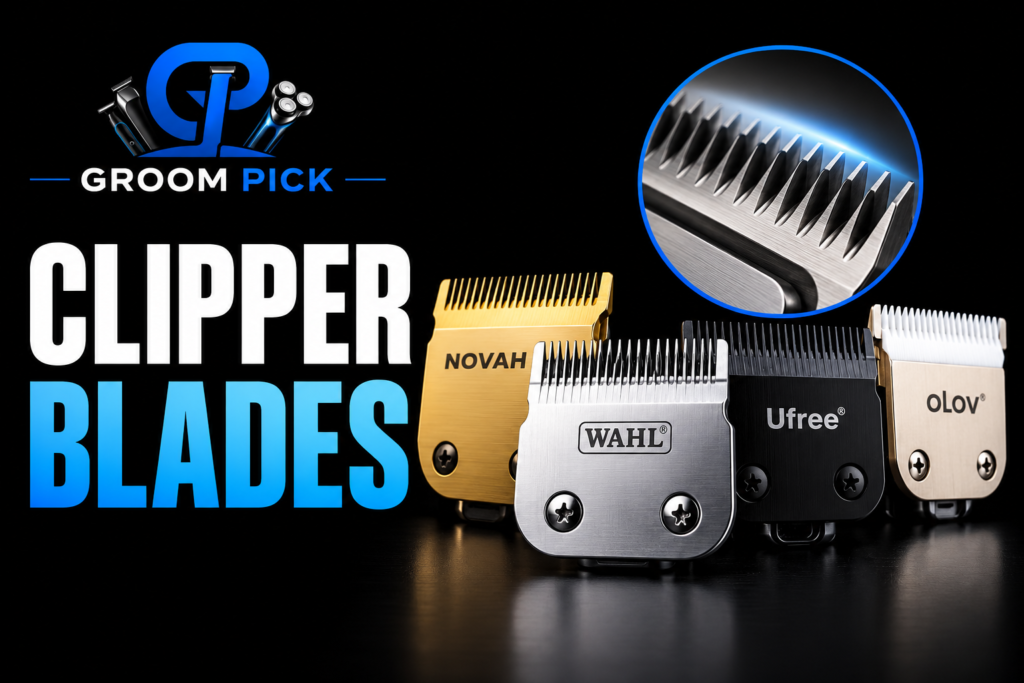
A good haircut often comes down to the small details. Your clipper blades have a big effect on how smoothly your clipper cuts, blends, and handles different types of hair.
But buying a blade is not as simple as choosing the sharpest option. The blade type, material, cutting length, clipper compatibility, and the job you want to do all matter.
Some blades are better for bulk cutting. Others are made for fades, beard shaping, or precise edging. A blade that works beautifully for one job may be completely wrong for another.
The products in this guide also cover different grooming needs. The Wahl Color Pro is designed for home haircuts, while the Ufree models focus more on beard and detail grooming. The OLOV model is designed specifically for body grooming.
Disclosure: This post contains affiliate links. If you purchase through these links, I may earn a small commission at no extra cost to you.
Table of Contents
TL;DR: Best Clipper Blades for Different Grooming Jobs
If you want the short version, these are the products that best match different grooming needs based on the supplied product information.
- Best for home haircuts: Wahl Color Pro Cordless
- Best for professional-style cutting: Novah Professional Hair Clippers
- Best for beard detailing: Ufree Professional Beard Trimmer
- Best for versatile beard grooming: Ufree Beard Trimmer
- Best for body grooming: OLOV Electric Body Hair Trimmer
- Best for beginners: Wahl Color Pro Cordless
- Best for a complete haircut kit: Novah Professional Hair Clippers
Remember, these are not all replacement blades. Several are complete clippers or trimmers. Always check compatibility before buying a separate blade.


Comparison Table: Clipper Blades and Grooming Tools
Different grooming jobs need different tools. This table gives you a quick way to see where each supplied product fits.
| Product | Best For | Key Features | Pros | Cons | Recommendation |
|---|---|---|---|---|---|
| Wahl Color Pro Cordless | Home haircuts | Cordless design, color-coded guards | Easy to use, beginner-friendly | Not a dedicated replacement blade | Great for home users |
| Novah Professional Hair Clippers | Haircuts and fades | Clipper and trimmer setup | Versatile, professional-style design | More complex than basic clippers | Good for regular haircut users |
| Ufree Professional Beard Trimmer | Beard detailing | Interchangeable blades | Precision-focused | Less suited to bulk scalp cutting | Good for beard users |
| Ufree Beard Trimmer | Beard and facial grooming | Stainless steel blades, interchangeable heads | Versatile | Multiple heads require learning | Good all-round beard tool |
| OLOV Body Hair Trimmer | Body grooming | Replaceable ceramic heads, wet/dry design | Specialized body grooming | Not a haircut clipper | Good for body hair |
The supplied listings show different ratings, prices, and purchase activity, but those details can change over time. They should not be treated as permanent product specifications.
What Are Clipper Blades?
Clipper blades are the parts of an electric clipper that actually cut the hair. They normally work as two surfaces moving against each other.
The moving blade slides across the stationary blade at high speed. Hair passes through the teeth and gets cut.
That simple action is why blade condition matters so much.
Imagine using a pair of kitchen scissors with a dull edge. You can still squeeze the handles, but the scissors may fold or pull the material instead of cutting it cleanly.
A clipper can behave in much the same way.
A good cutting blade should work smoothly with the clipper’s motor and the hair being cut. If the blade is dirty, poorly aligned, damaged, or not compatible with the clipper, performance can suffer.
Clipper Blade Types for Different Haircuts
There are several common clipper blade types, and each has a particular purpose.
A taper blade is useful for gradually changing hair length. This makes it especially useful when blending the sides of a haircut.
A fade blade is designed for close cutting and blending. It can help remove visible lines between different lengths.
A T-blade is useful for edging and detailed work. Its wider cutting edge can make it easier to create sharp lines around a beard or hairline.
A detachable blade can be removed from the clipper and replaced with another compatible blade. This design is common in professional grooming because barbers may need different blade options throughout the day.
Adjustable clipper blades provide another level of control. Instead of replacing the whole blade, the cutting position can be changed using the clipper’s adjustment system.
The important point is simple: there is no single blade that is perfect for every grooming job.
Ceramic Clipper Blades vs Stainless Steel
Blade material can affect durability, heat behavior, maintenance, and cutting performance. Two materials you will commonly see are ceramic and stainless steel.
Ceramic clipper blades are used in some grooming tools because ceramic has different heat and wear characteristics from traditional metal blades.
Stainless steel clipper blades are also common. They are durable and offer good resistance to corrosion when properly maintained.
Carbon steel is another material used in some professional grooming equipment.
Do not choose a blade only because one material sounds more premium. Look at the complete clipper, the manufacturer’s specifications, and how you plan to use it.
A home user cutting hair twice a month has very different needs from a barber using a clipper for several hours every day.
Best Clipper Blades for Hair Cutting and Beard Trimming
The best clipper blades depend on the type of grooming you actually do. A blade for a full haircut does not need to perform exactly like a blade used for a beard lineup.
For scalp hair, cutting speed and coverage are important. For beards, control and precision become more important.
This is where many buyers go wrong. They see a sharp blade and assume it will be ideal for everything.
It will not.
Replacement Clipper Blades: Check Compatibility First
Buying replacement clipper blades sounds simple until you discover that the new blade does not fit your clipper.
Blade mounting systems are not universal.
Before buying a replacement, check the exact clipper model and the manufacturer’s compatibility information. Look at the model number rather than relying only on the appearance of the blade.
Two blades can look almost identical and still use different mounting systems.
If your current blade is pulling hair, start with cleaning and oiling before assuming that it needs replacing.
Professional Clipper Blades for Barbers
Professional clipper blades need to handle frequent use. That means durability and maintenance become more important.
A barber may use a clipper dozens of times before a home user reaches the same number of haircuts.
For professional work, the blade should be easy to clean, oil, align, and replace. The clipper motor also needs to match the workload.
Barber clipper blades are not automatically better just because they are marketed toward professionals. What matters is whether the blade and clipper combination suits the job.
Zero Gap Clipper Blades for Close Cutting
Zero gap clipper blades are adjusted so the cutting surfaces sit extremely close together.
This setup can be useful for very close cutting and detailed work. However, it requires careful adjustment.
If the blades are incorrectly aligned, they can become uncomfortable against the skin.
So, should everyone use a zero-gap setup?
No.
A beginner may be better served by a normal blade position that gives a little more room for error.
Best Clipper Blades
The products below come from the supplied product list. They are reviewed according to the grooming purpose described in their listings, rather than treating every product as a standalone replacement blade.
Wahl Color Pro Cordless
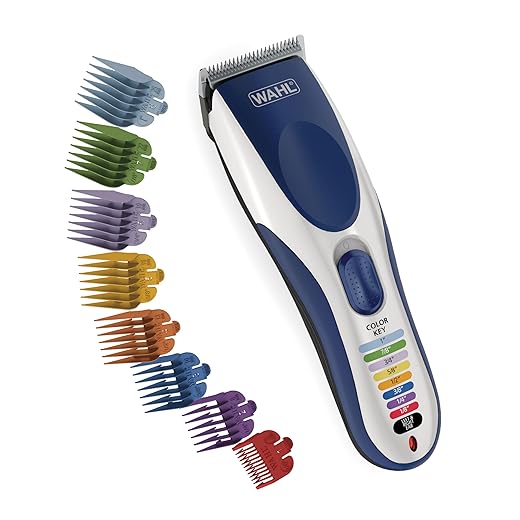
The Wahl Color Pro Cordless is aimed at home haircuts and uses color-coded guards to make length selection easier. The supplied listing describes it as a cordless rechargeable hair clipper and trimmer for at-home haircuts.
For a beginner, that simplicity can be a real advantage. You do not need to memorize every guard number immediately.
It is best viewed as a complete haircut tool rather than a replacement blade. If your main goal is cutting family members’ hair at home, its straightforward setup makes sense.
Pros
- Beginner-friendly color-coded guards
- Cordless rechargeable design
- Designed for at-home haircuts
- Established Wahl brand
Cons
- Not a standalone replacement blade
- Less specialized than professional barber equipment
- More suited to general home cutting than precision beard work
Wahl Color Pro Cordless Rechargeable Hair Clipper & Trimmer, Color Guards
Novah Professional Hair Clippers
The Novah Professional Hair Clippers are positioned as a professional-style clipper and trimmer set for haircuts and fades. The supplied listing describes it as a cordless haircut kit for barbers and fade work.
That makes it a useful option for someone who wants more than a basic home clipper.
Having both clipper and trimmer functions can make the haircut process easier. You can remove bulk with the larger clipper and switch to the trimmer for detailed areas.
It is still important to distinguish the complete kit from replacement blades. If you need a new blade for an existing clipper, check compatibility before buying.
Pros
- Designed for haircuts and fades
- Combines clipper and trimmer functions
- Cordless design
- Suitable for users wanting a more complete grooming kit
Cons
- Not simply a replacement blade
- May be more equipment than beginners need
- Replacement blade compatibility needs to be checked
Novah® Professional Hair Clippers for Men, Professional Barber Clippers and Trimmer Set, Mens Cordless Hair Clipper for Barbers Haircut Kit Fade
Ufree Professional Beard Trimmer
The Ufree Professional Beard Trimmer is designed more for facial grooming than full scalp haircuts. The supplied listing highlights replaceable blades and use for beard and facial grooming.
This makes it a better match for someone who spends more time shaping a beard than cutting an entire head of hair.
A smaller trimmer can also be easier to control around the cheeks, mustache, jawline, and neck.
Ufree also sells precision T-blade models aimed at edging and detailed grooming. That makes the brand relevant for users who want a dedicated detail tool.
Pros
- Well suited to beard detailing
- Replaceable blade design on the supplied model
- Useful for facial grooming
- Ufree offers precision-focused grooming tools
Cons
- Not designed primarily for bulk scalp cutting
- More specialized than a full-size hair clipper
- Replacement-head compatibility should be checked
Ufree Professional Beard Trimmer for Men, Electric Shaver Razor, Men Gift
Ufree Beard Trimmer
The Ufree Beard Trimmer in the supplied results is described as a waterproof electric grooming tool with stainless steel blades and multiple interchangeable heads.
That makes it interesting for someone who wants one grooming system for several facial-hair tasks.
Multiple heads can be convenient, especially if your routine changes from short stubble to a longer beard.
The trade-off is that more attachments mean more parts to store and learn. If you only need a simple beard trim, a dedicated single-purpose trimmer may be easier.
Pros
- Multiple interchangeable heads
- Stainless steel blades
- Useful for beard and facial grooming
- Versatile grooming setup
Cons
- Not primarily designed for heavy scalp-hair cutting
- Multiple attachments can add complexity
- Each replacement head needs to be compatible with the model
Ufree Beard Trimmer for Men, Waterproof Electric Razor, Grooming Kit
OLOV Electric Body Hair Trimmer
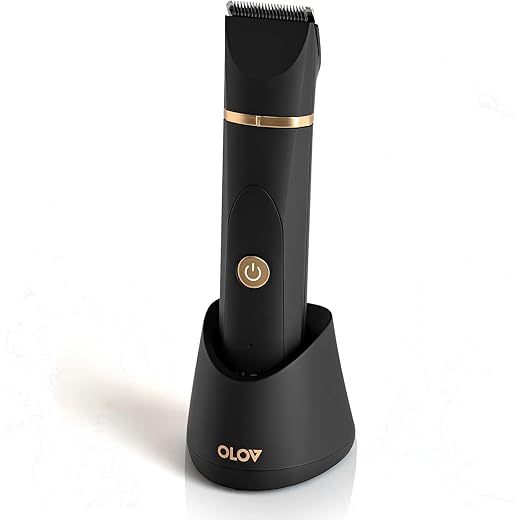
The OLOV Electric Body Hair Trimmer is different from the other products. The supplied listing describes it as a wet/dry body groomer with replaceable ceramic blade heads.
It should therefore be considered a body-grooming tool, not a traditional haircut clipper.
That distinction matters. A body trimmer is designed around a different grooming problem, where maneuverability and comfortable contact with the body are important.
It makes sense for someone who wants a dedicated body-grooming device rather than trying to use a scalp-hair clipper for every area.
Pros
- Designed specifically for body grooming
- Replaceable ceramic blade heads
- Wet/dry design according to the supplied listing
- Specialized for body-hair maintenance
Cons
- Not a replacement for a full-size haircut clipper
- Not designed specifically for professional fades
- Less suitable for bulk scalp-hair cutting
OLOV Electric Body Hair Trimmer - Groin Trimmer for Men - Bikini Trimmer Women - Wet/Dry Shaver Groomer, Replaceable Ceramic Blade Heads, USB Recharge Dock,...
Clipper Blade Replacement for Different Grooming Needs
Replacing a blade should solve a real problem. Do not replace one simply because another blade looks newer.
A blade may need attention when it pulls hair, leaves uneven patches, makes unusual sounds, or continues to perform poorly after cleaning and lubrication.
Detachable Clipper Blades for Easy Servicing
Detachable clipper blades can be convenient because you can remove the blade assembly from the clipper.
This makes cleaning and replacement easier on compatible models.
They can also be useful for professionals who need different cutting lengths. Instead of buying several complete clippers, one compatible clipper can sometimes work with several blade options.
Always confirm compatibility before ordering.
Trimmer Blades for Precision Work
Trimmer blades are usually better suited to detailed grooming than bulk hair removal.
Think about drawing a straight line with a pencil. A small pencil gives you more control than a thick marker.
The same basic idea applies to trimmers.
They are useful for beard edges, mustaches, hairlines, sideburns, and small areas where a full-size clipper may feel awkward.
Clipper Blades for Fades and Blending
Clipper blades for fades need to give you enough control to move between lengths smoothly.
The blade does not create the fade by itself.
Your guards, taper lever, technique, and motor all matter. The blade simply gives you the cutting platform you work with.
A good fade is more like painting than mowing a lawn. You are gradually changing the length rather than removing everything at once.
How to Choose the Right Clipper Blades
Start with the haircut or grooming job you perform most often. Then work backward to the blade and clipper.
If you mostly cut your hair short at home, simplicity matters more than having every possible blade option.
If you create fades, look for a clipper with good adjustment control.
If you maintain a beard, prioritize precision.
Clipper Blades for Thick Hair
Clipper blades for thick hair should be considered alongside motor strength.
Dense or coarse hair puts more demand on the clipper. A sharp blade helps, but the motor also needs to keep the blade moving efficiently.
Curly hair can create another challenge because the hair may sit differently against the cutting surface.
If your clipper slows down or repeatedly catches the hair, the problem may not be the blade alone.
Adjustable Clipper Blades and Cutting Length
Adjustable clipper blades can give you more control over small changes in cutting length.
This is especially useful during fades.
Imagine adjusting a dimmer switch instead of flipping a light on or off. A taper system gives you more steps between longer and shorter settings.
That extra control can make blending easier.
Replacement Blade Compatibility
Before ordering clipper blade replacement parts, find your exact clipper model.
Check:
- Blade mounting system
- Compatible blade models
- Cutting length
- Manufacturer instructions
- Whether the blade is adjustable or fixed
- Whether the blade is detachable
This five-minute check can prevent an expensive mistake.
How to Clean and Maintain Clipper Blades
Good maintenance can extend the useful life of your blades. It can also help prevent pulling and uneven cutting.
After each use, brush away loose hair from the blade. Follow the manufacturer’s instructions for oiling and cleaning.
For example, Wahl’s guide to oiling hair clippers explains why regular lubrication is important for its clippers.
Do not assume every blade is washable. Some grooming tools are designed for wet cleaning, while others should be kept dry.
Blade alignment is also important. If the moving and stationary blades are positioned incorrectly, the clipper may cut poorly or feel rough against the skin.
For long-term ownership, think beyond the purchase price. A cheaper clipper that needs frequent replacement parts may not always be the cheaper option.
Why Blade Maintenance Affects Cutting Performance
A clean blade has an easier job. A dirty blade has to work through hair, oil, dust, and debris at the same time.
That can increase friction.
Oil helps the blade surfaces move smoothly. Cleaning removes hair and debris that can interfere with movement.
You should also inspect the blade for damage. Bent teeth, rust, chips, or obvious wear are reasons to stop using it until the problem is resolved.
Good maintenance is not complicated. A quick brush, proper lubrication, and safe storage can go a long way.
Clipper Blades vs Trimmer Blades: Which Should You Use?
Clipper blades and trimmer blades are built for different priorities.
A clipper is usually larger and designed to remove more hair. It works well with guards and is useful for full haircuts.
A trimmer is usually smaller and gives you more control around edges and facial hair.
For a simple haircut, start with a clipper.
For a beard lineup, reach for a trimmer.
For a fade, you may need both.
What Makes a Good Clipper Blade Worth Buying?
Price is only one part of the decision. A good blade should match your clipper and your grooming routine.
Look at cutting performance, compatibility, maintenance, durability, and the type of hair you cut.
Stainless Steel Clipper Blades and Durability
Stainless steel clipper blades are common because they provide a durable cutting surface and good corrosion resistance when cared for properly.
However, the steel itself does not tell you everything.
Blade geometry, tooth design, adjustment, and the quality of the clipper also affect performance.
Professional Clipper Blades and Ownership Cost
A professional user may benefit from a blade system with readily available replacement parts.
That is because downtime costs more when a clipper is used every day.
For a home user, replacement availability is still useful. You do not want to replace an entire clipper simply because its blade becomes worn.
Best Clipper Blades for Everyday Home Use
For everyday home use, convenience is often more important than maximum customization.
A beginner may prefer a clipper with simple guards and easy adjustments.
Someone who already knows how to cut hair may prefer detachable blades, more adjustment options, or a dedicated trimmer for finishing work.
How to Choose Clipper Blades That Match Your Grooming Needs.
The right clipper blade should make your normal grooming routine easier, not more complicated.
For home haircuts, the Wahl Color Pro Cordless is the clearest beginner-focused choice from the supplied products. For a more complete haircut and fade setup, the Novah kit is worth considering.
For beard detailing, Ufree’s beard-focused options make more sense. For body grooming, the OLOV tool belongs in its own category because it is designed specifically for that purpose.
The biggest buying lesson is simple: do not buy a blade based only on sharpness or price.
Check what it fits. Check what you want to cut. Then choose the blade and clipper combination that matches your routine.
Frequently Asked Questions
The questions below cover the problems buyers commonly face when choosing or maintaining blades.
How often should I replace clipper blades?
There is no universal replacement schedule. Usage, hair type, cleaning, lubrication, and blade quality all affect lifespan. If cleaning and oiling do not restore cutting performance, the blade may need sharpening, servicing, or replacement.
Are ceramic clipper blades better than stainless steel?
Neither material is automatically better for everyone. Ceramic and stainless steel have different properties. Your decision should depend on the clipper design, intended use, maintenance requirements, and availability of compatible replacement parts.
Are zero gap clipper blades good for fades?
A close blade setup can help with very short cutting and detailed fade work. However, it requires careful adjustment. An incorrectly adjusted blade can be uncomfortable against the skin, so beginners should avoid making aggressive adjustments without knowing how to align the blade properly.
Can I put a clipper blade on a trimmer?
Only if the manufacturer specifically says the blade is compatible. Clippers and trimmers can use different mounting systems and blade dimensions. Always check the exact model number before buying a replacement or interchangeable blade.
How do I know if my clipper blade is dull?
Hair pulling, snagging, uneven cutting, and needing several passes over the same area can indicate a problem. Clean and oil the blade first. If performance remains poor, inspect it for damage or consider sharpening or replacement.
Do clipper blades need oil?
Many traditional clipper blades need regular lubrication. Oil reduces friction between the moving and stationary blades and can help reduce heat and wear. Always follow the maintenance instructions provided for your specific clipper.