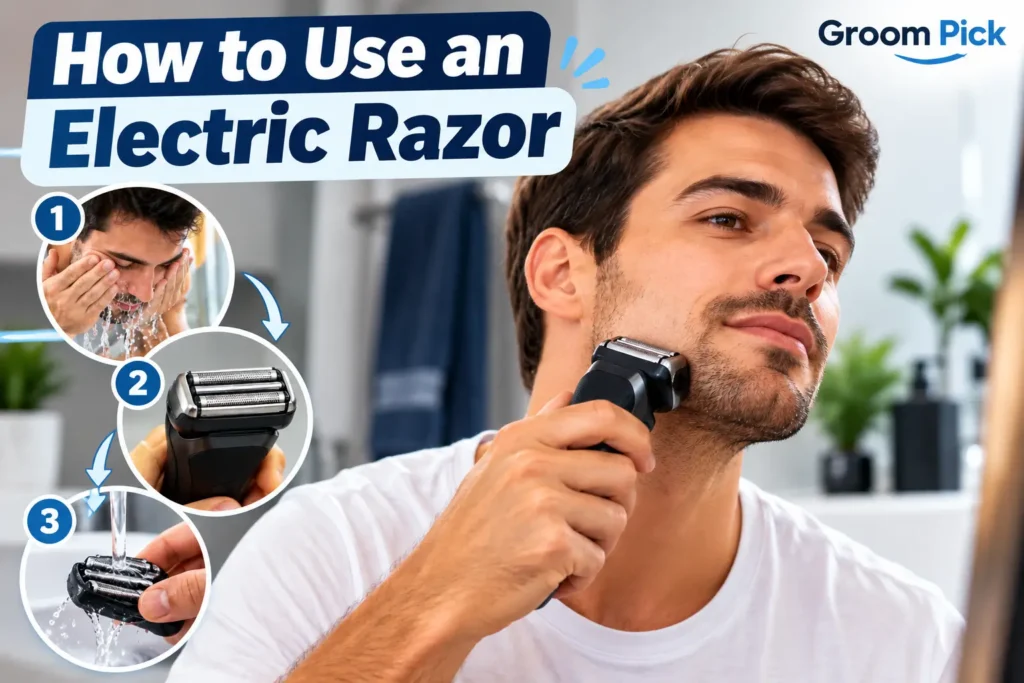
Learning how to use an electric razor is easier than it may seem. With the right technique, you can get a comfortable, neat shave while reducing missed hairs, skin irritation, and unnecessary passes.
An electric razor can save time and make daily grooming simple. The key is knowing how to prepare your skin, move the razor correctly, and clean the device after shaving.
Table of Contents
What Is an Electric Razor?
An electric razor is a grooming device that uses powered cutting elements to trim hair close to the skin. Unlike a traditional razor, the cutting blades are usually protected by a foil or shaving head.
There are two common types: foil razors and rotary razors. Each requires a slightly different shaving technique.
| Feature | Electric Razor |
|---|---|
| Main types | Foil and rotary |
| Shaving method | Dry or wet, depending on model |
| Learning difficulty | Easy for most beginners |
| Maintenance | Regular cleaning required |
| Best use | Quick facial and body grooming |
| Main concern | Irritation from pressure or repeated passes |
Always check your manufacturer’s instructions before using water, shaving cream, or cleaning products with your device.
Electric Razor Tips for a Better Shave
Good preparation can make a noticeable difference in comfort and shaving results. A clean razor, prepared skin, and light pressure are more useful than simply shaving faster.
Before you begin:
- Charge the razor if the battery is low.
- Clean the shaving head.
- Wash your face.
- Dry your skin if you are dry shaving.
- Check whether your model supports wet shaving.
- Inspect the foil or cutting heads for damage.
If your skin is sensitive, avoid rushing into repeated passes. Give your skin time to adjust if you have recently switched from a traditional razor.
How to Shave With an Electric Razor
The basic technique is simple, but your movements should match the type of electric razor you use. Foil models and rotary models are designed to move differently across the skin.
Follow these steps:
- Turn the razor on before placing it against your skin.
- Hold it lightly against the surface.
- Start with your cheeks.
- Move slowly across each area.
- Work around your jaw and chin.
- Pay extra attention to the neck.
- Check for missed hairs.
- Make another light pass only where needed.
Do not press the razor hard into your skin. Extra pressure can increase friction and irritation without necessarily giving you a closer shave.
The American Academy of Dermatology recommends paying attention to hair-growth direction and using gentle shaving techniques to help reduce irritation and razor bumps.
Foil Razor Technique for Smooth Results
A foil razor has a thin metal foil covering the cutting elements. It generally works best with short, straight movements across the skin.
Place the foil gently against your face and move it back and forth. Keep the razor relatively flat against the skin instead of twisting it from side to side.
For difficult areas such as the jawline:
- Stretch the skin gently if needed.
- Use shorter strokes.
- Slow down around curves.
- Avoid repeatedly shaving the same spot.
Foil razors can be useful when you prefer a straightforward shaving motion. However, the exact technique can vary between models, so follow the instructions supplied with your razor.
Rotary Razor Technique for Curved Areas
A rotary razor usually has several circular shaving heads. These heads are designed to follow the contours of your face.
Instead of using long straight strokes, move the razor in small, gentle circular motions.
Start with your cheeks and then work toward your chin, jaw, and neck. Keep the pressure light and let the shaving heads do the work.
The neck may require several different directions because facial hair does not always grow uniformly. Avoid repeatedly going over one area simply to achieve an extremely close finish.
Electric Shaving Tips for Sensitive Skin
Sensitive skin often reacts more strongly to friction, pressure, and repeated shaving. A gentler routine can help make electric shaving more comfortable.
Try these habits:
- Use light pressure.
- Avoid too many passes.
- Keep the shaving head clean.
- Replace worn cutting parts.
- Moisturize after shaving.
- Stop if the skin becomes painful or severely irritated.
If your razor supports wet shaving, you may prefer using it with a suitable shaving product. Do not use water or shaving cream with a model that is designed only for dry shaving.
For additional dermatologist-backed advice, see the American Academy of Dermatology’s related guide on how to shave and reduce skin irritation.
How to Avoid Razor Burn When Shaving
Razor burn can happen when shaving causes excessive friction or irritation. Using too much pressure and making repeated passes can make the problem worse.
To help reduce irritation, prepare your skin before shaving and avoid trying to make every area perfectly smooth in one session.
If your razor supports wet shaving, warm water can help soften facial hair. Dermatologists also recommend shaving in the direction of hair growth for people who are prone to razor bumps.
After shaving, rinse or clean your skin as appropriate and apply a gentle moisturizer. If a particular aftershave stings or burns, stop using it.
How to Shave the Neck and Jawline
The neck and jawline are often the hardest areas to shave because hair can grow in several directions. The shape of the face also makes it harder for the shaving head to maintain consistent contact.
Start by looking closely at the direction your hair grows. Then use short, controlled movements that follow the contours of your face.
For the neck, avoid pressing hard or repeatedly moving against the grain if that causes irritation. If you regularly develop razor bumps, changing your shaving direction and reducing pressure may help.
The AAD notes that shaving against the direction of hair growth can contribute to irritation and razor bumps, particularly for people who are prone to them.
How to Clean an Electric Razor
Cleaning your electric razor helps remove hair, skin particles, and shaving residue. It also keeps the shaving head ready for the next use.
Follow your manufacturer’s cleaning instructions because not every model can be rinsed with water.
For a washable model:
- Turn the razor off.
- Disconnect it from power when required.
- Remove the shaving head if instructed.
- Rinse the appropriate parts.
- Remove trapped hair.
- Let the components dry as directed.
- Reassemble the razor.
For a dry-only model, use the supplied cleaning brush or another method approved by the manufacturer.
Keep the device and charging connections dry when required. Do not assume that a razor is waterproof simply because it looks sealed.
Common Electric Razor Mistakes
Most shaving problems come from a few simple habits. Correcting these mistakes can improve both comfort and shaving results.
Pressing too hard
Electric razors do not usually shave better when you push harder. Heavy pressure can create more friction and irritation.
Moving too quickly
Fast movements can leave hair behind. Slow down around the chin, jaw, and neck.
Using the wrong motion
Use straight movements with most foil razors and circular movements with most rotary razors.
Ignoring maintenance
A dirty or worn shaving head can reduce performance. Clean your razor regularly and replace worn parts according to the manufacturer’s instructions.
Making too many passes
If one small area is difficult to shave, repeatedly going over it can irritate the skin. Make a light second pass only when necessary.
Electric Razor Maintenance Checklist
Regular maintenance can help your razor remain comfortable and effective. A few simple habits can also make your shaving routine faster over time.
Use this checklist:
- Clean the shaving head regularly.
- Remove trapped hair.
- Check foils and cutters for damage.
- Keep washable parts properly dried.
- Lubricate parts if the manufacturer recommends it.
- Replace worn foils or cutting heads.
- Store the razor in a clean, dry location.
- Keep charging equipment dry when required.
If the razor starts pulling hair, making unusual sounds, or requiring many more passes, inspect the shaving head and check whether replacement parts are due.
When Should You Replace an Electric Razor Head?
Replacement timing depends on the model, how often you shave, and the condition of the cutting parts. Always follow the manufacturer’s recommended replacement schedule.
You may need replacement parts sooner if:
- The razor pulls hair.
- Shaving becomes uncomfortable.
- The foil is damaged.
- The device requires repeated passes.
- Performance drops even after cleaning.
- The cutting head appears worn.
Do not continue using a visibly damaged foil against your skin.
Pros and Cons of Using an Electric Razor
Electric razors offer convenience, but they are not perfect for every person or every shaving preference. Understanding the trade-offs can help you set realistic expectations.
Pros
- Quick and convenient
- Easy to use after a little practice
- Many models work without shaving cream
- Some models support wet and dry shaving
- Less direct blade contact than traditional shaving
- Useful for regular grooming
Cons
- May not feel as close as a traditional blade for some users
- Requires cleaning
- Replacement heads cost money
- Cordless models need charging
- Incorrect technique can still cause irritation
The best results come from choosing a shaving method that fits your skin, hair type, and grooming routine.
Key Takeaways for Electric Razor Beginners
Using an electric razor does not require a complicated routine. The most important things are preparation, gentle pressure, correct movement, and regular maintenance.
Remember these points:
- Identify whether you have a foil or rotary razor.
- Check whether it is designed for wet or dry shaving.
- Keep your skin and shaving head clean.
- Use straight strokes with a foil razor.
- Use circular movements with a rotary razor.
- Avoid heavy pressure.
- Pay attention to hair-growth direction.
- Give the neck extra attention.
- Clean the razor after use.
- Replace worn or damaged shaving parts.
A Simple Electric Shaving Routine
A consistent routine makes shaving easier and reduces guesswork. You do not need a long process to get good results.
Start by preparing your skin and checking your razor. Shave the cheeks first, then move toward the chin, jaw, and neck. Use the movement recommended for your razor type.
When you finish, inspect your face for missed hairs. Make only the extra passes you need. Clean the razor and apply a gentle moisturizer if your skin feels dry.
If you continue to experience painful bumps, severe irritation, or skin problems after changing your technique, consider speaking with a dermatologist.
How to Use an Electric Razor: Key Points
Using an electric razor correctly comes down to simple technique and regular care. Start with clean skin and a clean device, use light pressure, and follow the correct movement for your razor type.
How to use an electric razor is not about pressing harder or making endless passes. A controlled routine usually gives you a more comfortable experience and helps protect your skin.
Frequently Asked Questions About Using an Electric Razor
What is the best way to use an electric razor?
Use light pressure and slow movements. Foil razors generally work with straight strokes, while rotary razors generally work with small circular movements.
Is it better to use an electric razor wet or dry?
It depends on your model and personal preference. Use wet shaving only when your electric razor is specifically designed for water and shaving products.
Can you use shaving cream with an electric razor?
Yes, but only when the manufacturer allows it. Some electric razors are designed for wet shaving, while others should be used on dry skin.
Should you shave against the grain with an electric razor?
You can, but it may increase irritation for some people. If you experience razor bumps, shaving in the direction of hair growth may be more comfortable.
Why does my electric razor leave hair behind?
Possible causes include moving too quickly, using the wrong technique, hair growing in different directions, or having dirty or worn cutting parts.
When should you replace an electric razor head?
Follow the manufacturer’s replacement schedule. Replace it sooner if the foil or cutting head becomes damaged, pulls hair, feels uncomfortable, or performs poorly.