If you are looking for Oster clippers, the real choice is not simply “Which model is best?” It is about matching the clipper to your haircut style, hair type, experience, and how often you plan to use it.
Oster Professional has a relatively focused clipper lineup, but the models are built for different jobs. The Classic 76 is a heavy-duty detachable-blade workhorse. The Fast Feed is easier to handle for fades and everyday cutting. The Model 10 offers a more compact professional design, while the Primo adds multiple speeds and a lighter-feeling build.
I researched Oster’s current product information alongside independent reviews and grooming-community discussions. The goal here is not to repeat generic “best clipper” lists. Instead, this guide explains which Oster clipper makes sense for which buyer, what you give up with each model, and where the Classic 76, Fast Feed, cordless models, and other Oster options fit.
Table of Contents
TL;DR: The Best Oster Clippers at a Glance
These are the Oster models worth considering based on the job you need them to perform.
There is no single winner for every haircut.
- Best Overall: Oster Classic 76
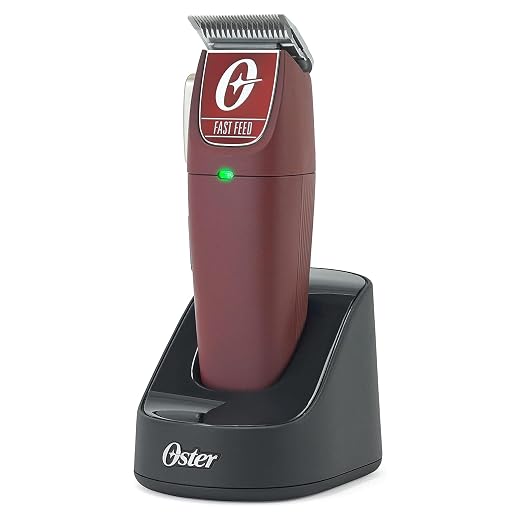
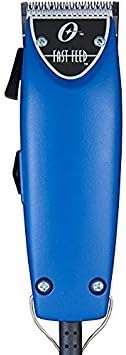
- Best for Fades: Oster Fast Feed
- Best Cordless: Oster Cordless Classic 76
- Best Cordless for Fades: Oster Fast Feed Cordless
- Best for New Barbers: Oster Aspire
The biggest decision is simple: Do you want detachable blades or an adjustable lever?
If you regularly remove large amounts of hair and want to change cutting lengths by swapping blades, the Classic 76 family makes more sense.
If you mainly fade, taper, blend, and want to adjust the cutting length quickly with one lever, the Fast Feed is easier to live with.
Oster’s current lineup includes both corded and cordless versions, plus models aimed at aspiring barbers and lighter shop use.


Comparison Table
| Clipper | Best For | Blade Type | Power | Key Strength | Best For |
|---|---|---|---|---|---|
| Oster Classic 76 | Best Overall | Detachable #000 & #1 blades | Corded, 45W | Powerful motor and heavy-duty durability | Professional barbers who need an all-day workhorse |
| Oster Fast Feed | Best for Fades | Adjustable #000–#1 blade | Corded | Adjustable lever and quiet pivot motor | Fades, blending, and everyday barbering |
| Oster Cordless Classic 76 | Best Cordless | Detachable blade | Cordless + corded | Powerful brushless motor and 120-minute runtime | Barbers who want Classic 76 performance without a cord |
| Oster Fast Feed Cordless | Best Cordless for Fades | Adjustable #000–#1 blade | Cordless + corded | Adjustable blade, adaptive speed control, 120+ min runtime | Fades and blending with cordless freedom |
| Oster Model 10 | Best Compact Professional Model | Detachable blades | Corded | Compact professional design | Barbers who want a smaller, traditional Oster clipper |
| Oster Aspire | Best for New Barbers | Adjustable blade | Corded | Straightforward design and easy handling | Beginners and new barbers building their toolkit |
Oster Clippers Professional: What Makes Them Different?
Oster has built its reputation around durable professional clippers rather than a huge collection of nearly identical models.
That makes the buying decision easier, but only if you understand what separates each machine.
The Oster Clippers Professional lineup ranges from the old-school Classic 76 to lighter, more modern designs such as the Fast Feed cordless and Primo.
The Classic 76 is the easiest example of Oster’s traditional approach. Its universal motor is designed for continuous use, and the corded version uses a detachable blade system. Oster describes it as a shop tool intended for experienced cutters and all-day work.
That does not automatically make it the best choice for everyone.
Think of the Classic 76 like a heavy-duty pickup truck. It is built to work hard. But if you only need to drive around town, a smaller vehicle can be more comfortable.
The Fast Feed takes that smaller approach. It has an adjustable blade lever, a pivot motor, and a lighter, more compact design. That makes it particularly useful when you are moving between different lengths during a fade or taper.
How We Chose These Oster Clippers
The comparison focuses on the things that actually change the ownership experience.
Motor behavior, blade system, handling, maintenance, power options, and haircut versatility matter more than flashy packaging.
I gave priority to:
- Cutting performance
- Motor design
- Blade flexibility
- Fade and taper control
- Bulk hair removal
- Corded versus cordless operation
- Ergonomics
- Noise and heat considerations
- Maintenance
- Replacement-blade availability
- Warranty information
- Suitability for beginners and professionals
This is an editorial comparison based on manufacturer specifications and published independent information, not a claim of personal hands-on testing.
Oster’s official product pages were used to verify current specifications and included accessories. Independent reviews and grooming discussions were used to understand common ownership considerations, such as weight, handling, and the difference between the Classic 76 and Fast Feed.
Best Oster Clippers
Best Oster Clippers are built for reliable cutting, strong performance, and long-term grooming needs.
Whether you cut hair at home or work as a barber, the right Oster clipper can make every cut cleaner and easier.
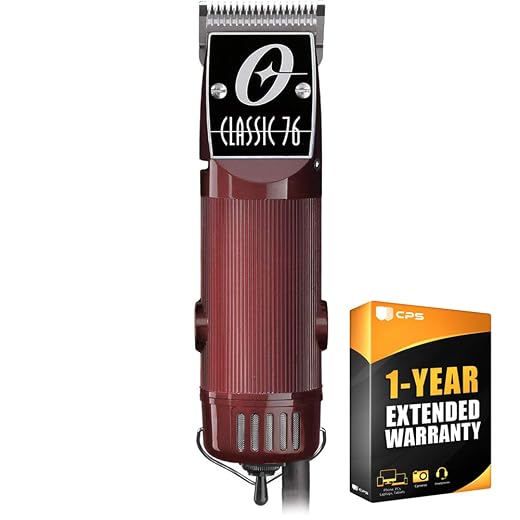
Oster Clippers 76: Oster Classic 76 Universal Motor Clipper
The Classic 76 is the Oster model to look at when raw cutting power and a detachable blade system matter most.
It is also the model that best represents Oster’s traditional professional design.
The Oster Classic 76 Universal Motor Clipper is a corded, single-speed clipper with a universal motor and detachable #000 and #1 blades. Oster lists a 45-watt rating, a 9-foot power cord, and a durable housing designed for continuous professional use.
The important point is the blade system.
Instead of moving a taper lever through a range, you can swap detachable blades. Oster’s current blade catalog includes several sizes that fit the Classic 76, giving experienced users a much wider cutting range than the basic two-blade setup suggests.
That makes the Classic 76 particularly interesting for barbers who already understand blade lengths.
It is also why this clipper can feel like overkill at home.
If you cut your own hair once every few weeks, you may never use the advantages of its professional design. If you cut several heads a day, however, its heavy-duty construction and detachable blades become much more useful.
The downside is handling.
Independent reviews commonly point to the Classic 76’s substantial weight, noise, and heat during prolonged use.
Pros
- Strong professional-oriented motor
- Detachable blade system
- Excellent flexibility with additional blades
- Designed for continuous use
- Durable housing
- Useful for bulk cutting
- Works across many hair types
- Long cord provides freedom of movement
Cons
- Heavy compared with lighter modern clippers
- No taper lever
- Can be less convenient for beginners
- Corded operation limits mobility
- Requires more maintenance than simpler models
- Additional blades increase ownership cost
For a barber, those drawbacks are easier to accept. For a casual home user, they may be the reason to choose a Fast Feed instead.
Oster Classic 76 Universal Motor Clipper (076076-010-003) w/Detachable #000 & #1 Blade Red
Oster Clippers Cordless: Oster Cordless Classic 76
The cordless Classic 76 keeps the familiar heavy-duty idea but removes the cord from most of the haircut.
For barbers who like detachable blades but want more freedom around the chair, this is the more modern Classic 76.
Oster says the Cordless Classic 76 uses a brushless motor and worm gear blade drive system. It has adaptive speed control with three speed settings and a lithium-ion battery rated for 120 minutes of runtime on a 100-minute charge. It can also operate with its 8-foot cord.
That combination is important.
You are not giving up the basic Classic 76 concept just to get cordless operation. The machine still uses a detachable blade and is designed around heavy-duty cutting.
The cordless version also includes a charging stand, blade oil, blade grease, a #000 blade, and an 8-foot cord. Oster lists a three-year limited warranty for this model.
For someone who likes the Classic 76 but hates dragging a cord around a client, this is an obvious upgrade.
But it does not magically turn the Classic 76 into a lightweight clipper.
You still have the larger professional form factor. If your biggest complaint about the original is its physical size and weight, going cordless will not completely solve that problem.
Pros
- Cordless and corded operation
- 120-minute stated runtime
- 100-minute stated charging time
- Brushless motor
- Three speed settings
- Detachable blade
- Designed for thick and dense hair
- Charging stand included
- Three-year limited warranty
Cons
- Still has the larger Classic 76 design
- More expensive ownership proposition than simpler corded models
- Detachable blades require learning and maintenance
- May be more clipper than a casual home user needs
The cordless Classic 76 makes the most sense for busy barbers who already like the Classic 76 platform but want cordless convenience.
Oster Professional Hair Clippers, Classic 76 for Barbers and Hair Cutting with Detachable Blade, Burgundy
Oster Clippers Cordless Fast Feed
The cordless Fast Feed is the better choice when you want cordless freedom and easier fade control in the same machine.
It trades the Classic 76’s heavy-duty detachable-blade approach for a lighter adjustable design.
Oster’s cordless Fast Feed uses a Whisper Quiet pivot motor, an adjustable blade, adaptive speed control, and a lithium-ion battery. Oster states that it provides more than 120 minutes of runtime from a 100-minute charge.
The adjustable lever is the star here.
Imagine making a fade and needing just a little more length. With a lever system, you can make that adjustment without stopping to replace the entire blade.
That sounds like a small detail.
During a haircut, it is not.
The cordless Fast Feed is also substantially lighter on paper than the cordless Classic 76. Oster lists the cordless Fast Feed at 0.7 lb, while the cordless Classic 76 is listed at 1.0 lb on its product page.
That difference can matter during a long day.
Oster says the cordless Fast Feed can cut and fade thick, thin, tangled, wet, or dry hair. The company also includes a charging stand, blade oil, and an adjustable blade.
Pros
- Cordless and corded use
- More than 120 minutes of stated runtime
- Adjustable blade
- Excellent fit for fades and blending
- Lighter design than the cordless Classic 76
- Whisper Quiet pivot motor
- Adaptive speed control
- Charging stand included
Cons
- Less blade flexibility than the Classic 76
- Not the same detachable-blade platform
- Still requires regular blade care
- May not be the best choice for someone who mainly removes large amounts of hair
If your typical haircut involves fades, tapers, blends, and frequent length changes, this is arguably the more practical cordless Oster.
Oster Professional Cordless Hair Clippers, Fast Feed for Barbers and Hair Cutting with Detachable Blade, Burgundy
Oster Clippers Professional: Fast Feed Adjustable Pivot Motor Clipper
The corded Fast Feed is one of the simplest recommendations in the Oster range.
It gives you professional-style control without making you carry around the weight and complexity of a Classic 76.
The standard Oster Fast Feed Adjustable Pivot Motor Clipper has a Whisper Quiet pivot motor, an adjustable #000 to #1 blade, three comb guides, an 8-foot power cord, and a 1.16-pound listed weight.
The lever is what makes this model so approachable.
For a beginner learning fades, it is easier to understand one adjustable blade than a collection of detachable blades. Start closed. Open it slightly. Blend. Open it more.
That simple process can make the learning curve less intimidating.
It is also useful for home users.
You can cut a family member’s hair without building a full barber station around your bathroom mirror. The clipper is still professional-oriented, but the design is less demanding than the Classic 76.
Independent comparisons also tend to position the Fast Feed as the more convenient choice for fades and lighter everyday use, while the Classic 76 is favored for heavy-duty bulk cutting.
Pros
- Adjustable #000 to #1 blade
- Useful for fades and tapers
- Lighter and more compact than the Classic 76
- Whisper Quiet pivot motor
- Three comb guides included
- 8-foot cord
- Straightforward operation
- One-year limited warranty on the listed corded model
Cons
- Less detachable-blade flexibility
- Corded
- Not as specialized for heavy bulk removal
- Requires cleaning and lubrication between uses
- Beginners still need practice to master fades
For many people, this is the best balance in the Oster range.
Oster Fast Feed Adjustable Pivot Motor Clipper 76023-510 (Blue)
Oster Aspire Adjustable Magnetic Motor Clipper
The Aspire is the most beginner-friendly option in this group.
It is designed for aspiring barbers and lighter professional workloads rather than constant heavy shop use.
Oster says the Aspire Adjustable Magnetic Motor Clipper is intended for aspiring barbers and stylists or shops with light to medium clipper usage. Its blade adjusts from #000, or 0.5 mm, to #1, or 2.5 mm.
It also comes with four guide combs.
That makes the Aspire easier to understand if you are still learning how clipper lengths work.
The magnetic motor is another key difference. This is not positioned as a direct replacement for the heavy-duty Classic 76.
Instead, think of it as a training ground.
You can learn basic cutting, tapering, guard work, and length control without jumping straight into one of Oster’s more specialized professional machines.
Pros
- Designed for aspiring barbers
- Adjustable #000 to #1 blade
- Four guide combs
- Contoured body
- Magnetic motor
- Suitable for light to medium clipper use
- Simple learning platform
Cons
- Not designed for heavy continuous use
- Corded
- Less powerful than Oster’s heavy-duty options
- One-year limited warranty
- Less suitable for a busy high-volume barbershop
If you are buying your first professional-style clipper, the Aspire can make more sense than spending extra on a machine you may never fully use.
Oster Aspire Adjustable Magnetic Motor Clipper
Oster Clippers Blades: Which System Should You Choose?
The blade system is one of the biggest differences between Oster clippers.
Choose the system first, and the right machine becomes much easier to identify.
Oster offers both detachable and fixed or adjustable blade designs. Its official blade catalog shows a range of detachable sizes that fit multiple professional models.
Detachable blades
Detachable blades are ideal when you want specific cutting lengths without relying entirely on guards.
The Classic 76, Model 10, and Primo use this approach.
The advantage is precision.
Want a different length? Change the blade.
The downside is cost and learning. You may eventually want several blades, and each one becomes another item to clean, oil, store, and maintain.
Adjustable blades
Adjustable blades are simpler for many everyday haircuts.
The Fast Feed and Aspire let you change the blade position with an adjustment mechanism instead of replacing the entire blade.
This is particularly useful for fades.
If you are learning to fade, an adjustable blade can feel like learning to drive with an automatic transmission. There is still skill involved, but fewer things need to be managed at once.
For official blade compatibility and current replacement options, Oster maintains a dedicated blade catalog.
Oster Professional blade guide
Oster Clippers Dog: A Important Buying Warning
The phrase Oster clippers Dog can lead shoppers into the wrong part of the Oster product range.
Human hair clippers and animal grooming clippers are not automatically interchangeable.
Oster also makes animal grooming equipment, including products such as the Golden A5. The Golden A5 is specifically marketed for small-animal grooming and is designed around animal coats and A5-style grooming blades.
That means you should not choose a clipper simply because the listing says “Oster” and looks similar.
Check the exact model.
Check the blade compatibility.
Check whether the product is intended for human hair or animal grooming.
This becomes especially important when shopping for replacement blades. A detachable blade designed for an animal grooming machine may physically resemble another blade but still be the wrong choice for your haircutting setup.
When in doubt, use the model number and Oster’s official compatibility information rather than relying on a marketplace title.
Oster Clippers Parts: What Does Ownership Really Cost?
Buying the clipper is only the beginning.
A professional clipper is more like a small tool system than a disposable gadget.
The good news is that Oster supports replacement blades and other maintenance-related items through its professional product ecosystem. Its official blade catalog lists multiple detachable blade sizes and model compatibility.
The Classic 76 family is especially interesting from a long-term ownership perspective because the detachable blade system lets you replace or expand the cutting head instead of replacing the entire machine when you need a different length.
But there is a catch.
More options can mean more spending.
If you buy a Classic 76 and then purchase several blades, guards, oil, cleaning supplies, and storage solutions, the total cost can become much higher than the initial clipper price.
That is not necessarily bad.
A barber may use those parts every week for years.
A home user might use the same machine twice a month.
The right question is therefore not “How much does the clipper cost?”
Ask:
“How much will I spend to own and maintain it for the next few years?”
Oster’s warranty also varies by model. The current warranty information lists three years for corded and cordless Classic 76 models, two years for Fast Feed models, and one year for Model 10, Primo, Aspire, and several other models.
That makes warranty length another useful factor when comparing similarly priced models.
Oster Clippers Nearby: What to Check Before Buying
Searching for Oster clippers nearby can be useful when you need a replacement quickly.
But availability is only half the decision.
A local store may have the clipper you want, but it may not have the blade size you actually need.
Before buying locally, check:
- Exact model number
- Corded or cordless version
- Included blade size
- Replacement blade compatibility
- Warranty eligibility
- Whether the seller is authorized
- Return policy
- Availability of replacement parts
This is particularly important for professional tools.
Oster’s warranty terms state that products purchased from Oster or an Oster-authorized seller in the United States or Canada are covered under the stated warranty terms.
So the cheapest listing is not automatically the best deal.
Oster Clippers Amazon: Is Marketplace Buying Safe?
Searching Oster clippers amazon is an easy way to compare listings, but marketplace shopping requires a little more attention.
The product title alone does not tell you whether you are getting the exact model you intended.
Before ordering, compare the listing against Oster’s official product page.
Look at the:
- Model number
- Blade configuration
- Cord length
- Included accessories
- Warranty
- Seller
- Return terms
This is especially important because different versions of the same Oster model can have different accessories, finishes, power systems, or warranty terms.
For example, Oster currently lists both corded and cordless Fast Feed and Classic 76 versions.
Do not assume that “Classic 76” or “Fast Feed” in a marketplace title means every specification is identical.
Oster Clippers Comparison: Classic 76 vs Fast Feed
The Classic 76 and Fast Feed are the two Oster models most buyers will probably compare.
They solve different problems, so the better one depends heavily on your haircut style.
| Feature | Classic 76 | Fast Feed |
|---|---|---|
| Motor style | Universal | Pivot |
| Blade system | Detachable | Adjustable |
| Best use | Bulk cutting, professional work | Fades, tapers, blending |
| Corded version | Yes | Yes |
| Cordless version | Yes | Yes |
| Beginner friendly | Moderate to low | Higher |
| Blade flexibility | Excellent | Moderate |
| Handling | Larger and heavier | More compact |
| Maintenance | Higher | Simpler |
| Best buyer | Experienced barber | Home user or fade-focused barber |
Independent comparisons also emphasize this split: the Classic 76 is favored for heavy-duty bulk cutting, while the Fast Feed is easier to handle for fades and everyday use.
If you want one machine for lots of detachable blade work, choose the Classic 76.
If you want an easier fade machine, choose the Fast Feed.
Oster Clippers Comparison: Corded vs Cordless
Cordless clippers are convenient, but convenience does not automatically mean better performance.
The real benefit is freedom of movement.
A cordless clipper makes it easier to walk around a client, work without a cable across the station, and move quickly between chairs.
Oster’s cordless Classic 76 and Fast Feed both retain corded operation as a backup, which is useful when the battery is low or when you prefer continuous power.
The trade-off is simple.
Cordless models introduce a battery into the ownership equation.
That means charging habits matter.
If you cut one person every Saturday, battery convenience may be more important than maximum runtime. If you cut clients all day, having a clipper that can operate while plugged in is a valuable safety net.
Oster Clippers Comparison: Detachable vs Adjustable Blades
This choice affects how you work more than many motor specifications do.
Think about how often you change lengths during one haircut.
A detachable system gives you dedicated blade sizes.
An adjustable system gives you a range from one blade through a lever.
For a barber doing detailed fades, the Fast Feed’s lever can be faster.
For someone removing bulk and switching between precise blade lengths, the Classic 76’s detachable system offers more flexibility.
Neither system is universally better.
It is like choosing between a toolbox full of specialized screwdrivers and one high-quality multi-tool. The toolbox gives you more specific options. The multi-tool is quicker for many everyday jobs.
Oster Clippers Comparison: Which Is Better for Thick Hair?
Thick or dense hair puts more demand on a clipper.
But “thick hair” alone does not mean you need the biggest Oster model.
The Classic 76 is the obvious heavy-duty option in Oster’s lineup. Oster specifically describes it as designed to cut all hair types during continuous use.
The cordless Classic 76 is also designed to handle thick hair, with Oster highlighting its brushless motor and worm gear blade drive system.
The Fast Feed should not be dismissed, though. Oster says both corded and cordless Fast Feed models are designed for thick, thin, tangled, wet, and dry hair.
The better choice depends on the job.
For large amounts of dense hair, Classic 76 is the more natural fit.
For thick hair combined with fades, Fast Feed may be easier to control.
Oster Clippers Comparison: Which Is Best for Beginners?
Beginners usually need simplicity more than maximum power.
A clipper with fewer moving parts in the decision process can help you learn faster.
The Aspire is explicitly designed for aspiring barbers and light to medium use. It includes four guide combs and an adjustable blade.
The Fast Feed is another strong option because its adjustable blade makes length changes straightforward.
The Classic 76 is different.
It is not impossible for a beginner to learn, but the detachable blade system, heavier body, and professional orientation give you more to manage.
If you are just learning how to cut your own hair, start simple.
You can always move up later.
Buying Guide: Which Oster Clipper Should You Buy?
The best Oster clipper depends on what you actually do with it.
Before spending money, answer these five questions.
Do You Cut Fades?
If fades are your main goal, start with the Fast Feed family.
The adjustable blade makes it easier to make small length changes during the blend. The cordless version adds freedom if you move around a client frequently.
The Classic 76 can fade, but it is not designed around the same lever-based workflow.
Do You Remove Lots of Hair?
If your first step is often “take several inches off,” look toward the Classic 76.
Its detachable blade system and heavy-duty design make it better suited to bulk removal.
This is especially true for professionals who use their clipper repeatedly throughout the day.
Do You Want Cordless?
Oster gives you two obvious cordless directions.
Choose the Cordless Classic 76 if you want the Classic 76 platform and detachable blades.
Choose the Cordless Fast Feed if you prefer an adjustable blade and lighter handling.
Both offer corded operation as a backup.
Are You New to Barbering?
The Aspire is the safest starting point if you want something designed specifically for aspiring barbers.
The Fast Feed is another good choice if you already know that fades will be your main focus.
I would not recommend buying a Classic 76 simply because it has a professional reputation.
A professional tool can still be the wrong tool for a beginner.
Is the Higher Price Worth It?
Higher cost makes sense when you will actually use the extra capability.
For example, a professional barber may benefit from multiple detachable blades, continuous-use construction, and a longer warranty.
A casual home user may get better value from a simpler Fast Feed or Aspire.
Do not pay for features that will sit in a drawer.
Maintenance and Long-Term Ownership
Good clipper care is not complicated.
The trick is doing the small jobs regularly instead of waiting until the machine starts cutting badly.
Oster’s care instructions commonly recommend removing hair and applying blade lubricant after use. Some models also specify cleaning and disinfecting between uses.
A simple routine looks like this:
- Remove loose hair after every use.
- Clean around the blade and housing.
- Lubricate the blade as instructed.
- Keep detachable blades protected when stored.
- Avoid dropping the clipper or blades.
- Keep the charging setup clean on cordless models.
- Replace worn blades rather than forcing a dull blade through hair.
The Classic 76 deserves extra attention because its professional design includes more serviceable components and detachable blades.
Cordless models add another consideration: battery management.
Do not leave battery-powered equipment neglected for long periods. Follow the manufacturer’s charging and storage guidance for the specific model.
Key Takeaways
Oster makes several very different clippers, so choosing by brand alone is not enough.
Match the machine to the way you cut hair.
- Classic 76: Best for heavy-duty professional work and detachable blades.
- Cordless Classic 76: Best for Classic 76 performance with cordless freedom.
- Fast Feed: Best for fades, tapers, and easier everyday cutting.
- Cordless Fast Feed: Best for cordless fade work.
- Model 10: Best for experienced users who want a compact detachable-blade design.
- Primo: Best for professionals who want three speeds and a comfort-focused design.
- Aspire: Best starting point for aspiring barbers.
Also remember that Oster clippers blades are part of the total buying decision. The machine may be only the beginning of your investment.
Which Oster Clipper Is Worth Buying for Your Needs?
There is a reason the Classic 76 and Fast Feed remain the most important Oster choices.
They represent two completely different approaches to cutting hair.
Choose the Classic 76 if you want a powerful, traditional professional clipper, expect to remove lots of hair, and value a wide selection of detachable blades.
Choose the Fast Feed if you want easier fading, tapering, blending, and everyday handling.
Choose the cordless Classic 76 if you love the Classic 76 design but want freedom from the cable.
Choose the cordless Fast Feed if cordless convenience and fade control matter more than having a large detachable-blade library.
Choose the Model 10 if you are experienced and want Classic 76 blade compatibility in a more compact professional package.
Choose the Primo if multiple speeds, lower vibration, and a comfort-focused design are high priorities.
Choose the Aspire if you are starting out and want a simpler way into professional-style cutting.
The biggest mistake is buying the most powerful Oster simply because it sounds impressive. A clipper should fit your hands, your haircut style, and your workload.
For most fade-focused home users and barbers, the Fast Feed is the easiest Oster to recommend. For professionals who prioritize heavy-duty cutting and detachable blades, the Classic 76 remains the stronger specialist choice.
Frequently Asked Questions
Here are six common questions buyers ask before choosing an Oster clipper.
The answers focus on the differences that actually affect everyday use.
Are Oster clippers good for professional barbers?
Yes. Oster’s professional range includes models specifically designed for continuous shop use, including the Classic 76, Model 10, Fast Feed, and Primo. The right choice depends on whether the barber needs detachable blades, adjustable fading control, cordless operation, or multiple speeds.
Is the Oster Classic 76 good for fades?
Yes, but it is better suited to barbers who understand detachable blades. The Classic 76 can handle fading, but its main advantage is its detachable-blade system and heavy-duty cutting ability. For simpler fade control, the Fast Feed’s adjustable blade is easier to use.
Is the Oster Fast Feed better than the Classic 76?
Neither is universally better. The Fast Feed is generally the more convenient choice for fades, tapers, blending, and lighter everyday use. The Classic 76 is better suited to bulk cutting, detachable blades, and demanding professional workloads.
Which Oster clipper is best for beginners?
The Aspire is a sensible starting point because Oster designed it for aspiring barbers and light to medium use. The Fast Feed is another good option for beginners who specifically want to learn fades because its blade adjusts with a lever.
Can Oster Classic 76 blades fit the Model 10?
Yes. Oster’s official blade catalog lists several detachable blade sizes as fitting both the Classic 76 and Model 10. Always check the exact blade and model compatibility before purchasing a replacement.
How long do Oster clippers last?
There is no single lifespan that applies to every Oster clipper. Longevity depends on the model, workload, cleaning, lubrication, blade condition, and replacement parts. The Classic 76 is designed for continuous professional use, while other models target lighter workloads.