
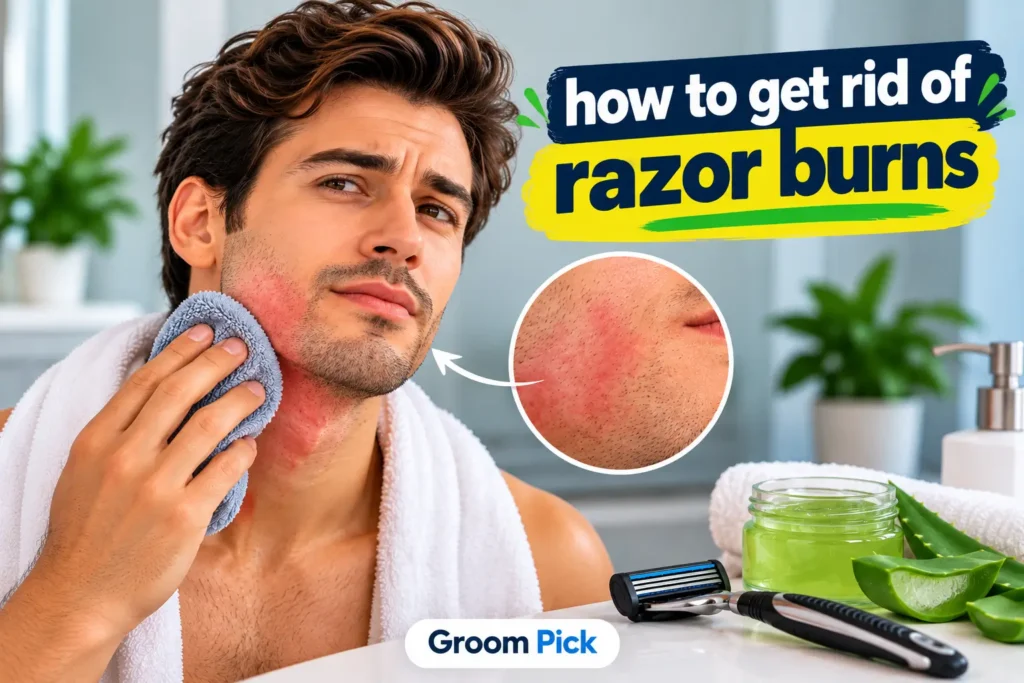
How to get rid of razor burns starts with giving irritated skin a break. Stop shaving the area, cool the skin with a clean damp cloth, and use a gentle fragrance-free moisturizer while it heals.
Razor burn is common after shaving, especially when you shave dry skin, use a dull blade, press too hard, or shave against the direction of hair growth. Mild cases usually improve within a few hours to several days.
Table of Contents
What Is Razor Burn?
Razor burn is skin irritation that appears soon after shaving and may cause redness, burning, itching, tenderness, or mild swelling.
It can affect the face, neck, legs, armpits, bikini area, or any other part of the body you shave.
Razor burn usually looks like a flat, blotchy rash. It is different from razor bumps, which tend to appear as small pimple-like bumps caused by hairs growing back into the skin.
Common causes include:
- Dry shaving
- Shaving too quickly
- Using a dull blade
- Pressing too hard
- Shaving against hair growth
- Repeatedly passing over the same area
- Using products that irritate sensitive skin
How to Get Rid of Razor Burns at Home
Simple home care can calm most mild cases of razor burn and give the skin time to repair itself.
The main goal is to reduce friction and avoid adding more irritation while the skin is already sensitive.
1. Stop Shaving the Irritated Area
Give your skin a break until the redness and burning settle down. Continuing to shave over irritated skin can make the problem last longer.
Avoid waxing or other hair-removal methods on the same area during recovery.
2. Apply a Cool Compress
Place a clean, cool, damp washcloth over the irritated skin for several minutes.
This can provide temporary relief from burning, itching, and discomfort.
Do not scrub the skin while applying the compress. Pat it dry gently afterward.
3. Use a Gentle Moisturizer
A fragrance-free moisturizer can help soothe dry, irritated skin and support the skin barrier.
Avoid products containing fragrance or alcohol if they sting or make the irritation worse.
A simple moisturizer is often all you need for mild razor burn.
4. Try Aloe Vera
Aloe vera can provide a cooling sensation and may make irritated skin feel more comfortable.
It does not remove the underlying irritation instantly, but it can be a useful soothing option.
Choose a simple product and stop using it if your skin burns, stings, or becomes more irritated.
Razor Burn vs Razor Bumps
Razor burn and razor bumps are often confused, but they are not exactly the same problem.
Knowing the difference can help you choose the right approach and avoid making the skin worse.
| Problem | Appearance | Common cause |
|---|---|---|
| Razor burn | Flat red or blotchy rash | Shaving irritation |
| Razor bumps | Small red or pimple-like bumps | Ingrown hairs |
| Folliculitis | Inflamed bumps around hair follicles | Inflamed or infected follicles |
| Ingrown hair | Raised bump with a trapped hair | Hair curls back into skin |
Razor bumps, also called pseudofolliculitis barbae, happen when short hairs curve back into the skin. They are more common with coarse or curly hair.
If you have itchy or painful bumps where you can see trapped hairs, you may be dealing with ingrown hairs rather than ordinary razor burn.
How to Prevent Razor Burn When Shaving
The easiest way to prevent razor burn is to improve your shaving technique before irritation starts.
A few small changes can reduce friction, tugging, and overly close shaving.
Soften the Hair Before Shaving
Wet your skin and hair before shaving. Shaving after a shower can help soften the hair and prepare the skin.
Apply shaving cream or gel, especially if your skin is dry or sensitive.
Shave in the Direction of Hair Growth
Shaving with the direction your hair grows can help reduce irritation and razor bumps.
Avoid repeatedly shaving against the grain simply to achieve a closer result.
Use short, light strokes instead of pressing the razor firmly against your skin.
Use a Sharp, Clean Razor
A dull razor can increase irritation because it may pull or tug at the hair.
The American Academy of Dermatology recommends replacing disposable razors or blades after about five to seven shaves.
Rinse the blade after each swipe and store it somewhere dry between shaves.
Avoid Going Over the Same Area
Repeated passes increase friction and can leave freshly shaved skin irritated.
Try to remove the hair with as few strokes as reasonably possible.
If you regularly experience razor burns or ingrown hairs, a single- or double-blade razor may be worth trying.
How to Prevent Ingrown Hairs After Shaving
Ingrown hairs happen when a hair grows back into the skin instead of growing outward.
They often appear as raised, itchy bumps and are especially common in areas that are frequently shaved.
To reduce the risk:
- Avoid extremely close shaving.
- Do not stretch the skin while shaving.
- Shave in the direction of hair growth.
- Use shaving cream or gel.
- Keep your razor sharp and clean.
- Avoid picking or squeezing bumps.
- Consider trimming instead of shaving completely smooth.
For more information about prevention and treatment, see this related guide from the NHS on ingrown hairs: Ingrown hairs: treatment and prevention
How to Get Rid of Razor Burns on the Face
Facial skin can become irritated quickly because shaving creates repeated friction across the same areas.
A gentle routine is usually better than trying several strong products at once.
Start by washing your face gently and avoiding scrubs. If the skin is already irritated, stop shaving until it improves.
When you shave again, wet the hair first, apply moisturizing shaving cream, and use light strokes in the direction of growth. Rinse after each swipe and avoid stretching the skin.
Finish with a gentle moisturizer rather than a product that causes burning or stinging.
How to Get Rid of Razor Burns on Legs and Body
Razor burn on the legs, underarms, or bikini area can often be managed with the same basic approach.
The key is to reduce friction and avoid shaving again before the skin has recovered.
Use warm water to soften the hair before shaving and apply shaving cream or gel. Afterward, rinse gently and moisturize with a fragrance-free product.
Loose clothing can also help reduce rubbing on freshly shaved skin, particularly around the bikini area.
Common Razor Burn Mistakes
Some popular shaving habits can actually make irritation worse.
Avoiding these mistakes can help your skin recover faster and reduce repeat flare-ups.
Dry shaving: Shaving without water or shaving cream creates more friction.
Using an old blade: Dull blades can tug at hair and irritate skin.
Shaving against the grain: This may produce a closer shave but can increase irritation and razor bumps.
Using strong aftershave: Alcohol or fragrance may sting irritated skin.
Shaving over razor burn: This adds more friction before the skin has healed.
Picking bumps: Scratching, squeezing, or plucking can further irritate the area and may increase the risk of complications.
When Should You See a Doctor?
Most mild razor burn improves on its own, but symptoms that persist or worsen deserve attention.
You should also get medical advice if the skin looks infected or the bumps are very painful.
Contact a healthcare professional if you notice:
- Pus-filled bumps
- Increasing pain
- Spreading redness
- Significant swelling
- Fever
- Large or painful lesions
- Symptoms that do not improve after several days
- Repeated outbreaks after shaving
Pus-filled or acne-like bumps can sometimes indicate folliculitis rather than simple razor burn. Some cases of folliculitis may require medical treatment.
Razor Burn Recovery Checklist
A simple routine can make recovery easier and help prevent another flare-up.
Use this checklist whenever your skin becomes irritated after shaving.
- Stop shaving the affected area.
- Apply a cool, damp washcloth.
- Use a fragrance-free moisturizer.
- Avoid alcohol and strong fragrances.
- Do not scratch or pick the skin.
- Wait until the irritation settles before shaving again.
- Wet the skin before your next shave.
- Apply shaving cream or gel.
- Shave in the direction of hair growth.
- Use a sharp, clean razor.
- Replace blades after about five to seven shaves.
Final Verdict: Simple Steps Can Calm Razor Burn
Razor burn usually improves when you stop irritating the skin and give it time to recover.
Cool compresses, gentle moisturizer, better shaving technique, and a clean sharp razor can help reduce both current irritation and future problems.
The most important step is not to chase a quick fix with harsh products. Treat your skin gently, avoid shaving until it settles, and pay attention to whether you have a flat rash or pimple-like bumps.
If symptoms keep returning or you develop pus, spreading redness, severe pain, or other signs of infection, speak with a healthcare professional.
Frequently Asked Questions
What is the fastest way to get rid of razor burn?
Stop shaving the area, apply a cool damp cloth, and use a gentle fragrance-free moisturizer. Mild razor burn commonly improves within several hours to a few days.
Is aloe vera good for razor burn?
Aloe vera can provide cooling and soothing relief for irritated skin. Use a simple product and stop if it causes stinging, burning, or additional irritation.
Can I shave over razor burn?
It is better to wait until the irritation has settled. Shaving over already irritated skin can add friction and make the problem last longer.
Should I use aftershave on razor burn?
Avoid strongly scented or alcohol-based products if they sting. A gentle, fragrance-free moisturizer is generally a better choice while irritated skin recovers.
Why do I get razor bumps instead of razor burn?
Razor bumps occur when short hairs curve back into the skin and cause inflammation. They are more common with coarse or curly hair and very close shaving.
Does razor burn go away on its own?
Yes. Mild razor burn commonly clears within hours or several days. Persistent or worsening irritation, painful bumps, or pus should be evaluated by a healthcare professional.