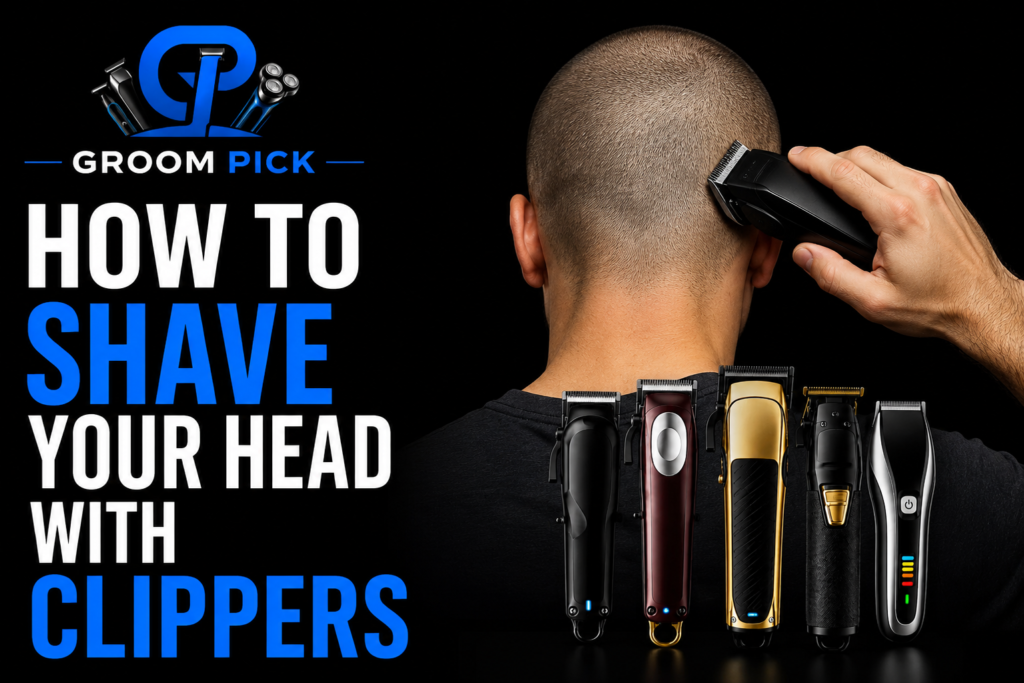
Learning how to shave your head with clippers is easier than it may seem. You do not need professional barber skills to get a short, even haircut at home. With clean clippers, the right guard, good lighting, and a little patience, you can create a neat buzzed look in less time than a typical trip to the barber.
The key is to avoid rushing. Start with a longer guard if you are unsure about the length. Work around the sides, back, top, and crown carefully. Then check your head from several angles before making the final passes.
What Is Shaving Your Head With Clippers?
Shaving your head with clippers means using electric hair clippers to cut the hair very short. Unlike a razor, clippers usually leave a small amount of hair on the scalp.
The final length depends on the guard you use. A longer guard leaves more hair, while a shorter guard creates a closer buzz cut.
If you want a completely smooth, bald scalp, you will usually need to follow the clipper cut with a razor. Clippers alone generally create a very short stubble rather than a completely smooth finish.
Table of Contents
Key Takeaways
- Start with a longer clipper guard if you are unsure about the length.
- Cut clean, dry hair unless your clipper manufacturer says the device can be used on wet hair.
- Work against the direction of hair growth for a close, even clipper cut.
- Pay extra attention to the crown because hair can grow in several directions there.
- Use a second mirror to check the back of your head.
- Do not press the clippers too hard against your scalp.
- Clean your clippers after every use according to the manufacturer’s instructions.
- If you later use a razor, follow basic shaving and skin-care practices to reduce irritation.
How to Shave Your Head at Home
Shaving your head at home becomes much easier when you follow a consistent order. Prepare your equipment first, then work through the head in sections.
1. Choose Your Clipper Guard
The guard determines how much hair remains after cutting.
Common choices include:
| Guard | General result |
|---|---|
| #3 | Short but clearly visible hair |
| #2 | Very short buzzed look |
| #1 | Extremely short hair |
| No guard | Very close cut, depending on the clipper |
Guard lengths can vary between manufacturers, so check the markings on your specific clippers.
If this is your first time, start with a #3 or #2. You can always go shorter. Starting too short gives you fewer options if you dislike the result.
2. Wash and Dry Your Hair
Wash your hair to remove oil, dirt, and styling products.
Dry it completely before using standard hair clippers unless the manufacturer specifically states that the device is designed for wet use.
Dry hair also makes it easier to see how much hair the clippers are actually removing.
3. Prepare the Clippers
Check the blades before you begin.
Make sure they are:
- Clean
- Properly attached
- Free of excess hair
- In good condition
- Suitable for the haircut you want
If your manufacturer recommends clipper oil, apply it as directed.
A clean, well-maintained clipper should move through the hair more smoothly than one clogged with old hair and product buildup.
4. Start With the Sides
Attach your chosen guard and start on one side of your head.
Move the clippers upward against the direction your hair grows. Use slow, controlled movements rather than trying to finish the entire side in one pass.
Work in small sections.
Once the first side looks even, repeat the process on the other side. Compare both sides before moving on.
This approach makes it easier to catch differences in length early.
5. Clip the Back of Your Head
The back of the head is usually the most difficult area to cut yourself.
Use a hand mirror together with your main mirror so you can see the back.
Start at the lower back of your head and move upward. Work slowly around the curve of the skull.
Pay close attention to:
- The lower back of the head
- Behind the ears
- The upper neck
- The area around the crown
Do not assume the back is even just because the sides look good.
6. Work Around the Crown
The crown can be tricky because hair often changes direction in this area.
Instead of moving the clippers in one direction repeatedly, inspect how the hair grows. Make controlled passes from different directions where necessary.
Do not keep running the clippers over the same spot without checking your progress. Too many passes can irritate the scalp.
7. Cut the Top of Your Head
Move to the top after completing the sides and back.
Run the clippers from the front toward the crown, working against the direction of hair growth.
Then make another careful pass in areas where the hair grows differently.
Keep your pressure light. You want the blades to move smoothly over the scalp rather than forcing them into the skin.
8. Check for Uneven Areas
This step can make a big difference.
Turn your head slowly and inspect your haircut from different angles.
Look for:
- Longer patches
- Missed hairs
- Uneven sides
- Longer areas around the crown
- Hair behind the ears
- Uneven areas around the neckline
Use your hand mirror to inspect the back.
If you find a longer section, correct that section instead of repeatedly cutting the entire head.
How to Cut the Back of Your Head With Clippers
Cutting the back of your head with clippers takes more patience than cutting the front.
The easiest approach is to divide the back into small areas.
Start low near the neckline. Move upward toward the crown. Then repeat on the opposite side.
Use a hand mirror to monitor your progress.
If you cannot see an area clearly, stop and reposition the mirror rather than guessing. Guessing is one of the easiest ways to create an uneven patch.
The back of the head also has natural curves. Keep the clippers moving smoothly instead of pushing them straight into the scalp.
How to Trim Around Your Ears
The hair around the ears requires extra care.
Use short movements and take your time. Keep the clipper under control when working around the ear because there is less room for error.
If your clipper allows safe use without a guard, follow the manufacturer’s instructions. If you are uncomfortable using exposed blades, keep an appropriate guard attached.
Do not rush this area just to finish the haircut faster.
How to Get an Even Buzz Cut
Getting an even buzz cut is mainly about consistency.
Use the same guard throughout the main haircut. Keep your movements steady and overlap each pass slightly.
You may need to change directions where hair growth changes, especially around the crown.
A simple method is:
- Cut both sides.
- Cut the back.
- Cut the top.
- Recheck the crown.
- Inspect behind the ears.
- Compare both sides.
- Correct only the longer areas.
This prevents you from repeatedly cutting hair that is already the correct length.
How to Shave Your Head Bald After Using Clippers
Clippers and a razor create different results.
Clippers leave short stubble. A razor can remove the remaining hair at the surface of the skin and create a smoother appearance.
If you want a bald head, first reduce the hair with clippers. This makes the later razor work easier.
For razor shaving, dermatologists recommend wetting the skin and hair first, using shaving cream or gel, and shaving in the direction of hair growth to help reduce irritation.
For more dermatologist-backed advice on shaving and reducing irritation, see the American Academy of Dermatology’s guide to how to shave.
If your scalp is already irritated, cut, or inflamed, avoid shaving over the affected area.
How to Care for Your Scalp After a Head Shave
A very short haircut exposes more of your scalp, so basic skin care becomes more noticeable.
After clipping, remove loose hair and gently clean your scalp.
If your scalp feels dry, a simple fragrance-free moisturizer can help. If you shave with a razor, avoid harsh products that make your skin sting or burn.
Sun protection also matters. A very short haircut leaves less hair to shield your scalp from sunlight. Consider a hat or suitable sunscreen when spending time outdoors.
Shaving can sometimes irritate hair follicles. The American Academy of Dermatology notes that shaving can contribute to folliculitis, an inflammation or infection involving hair follicles.
If you develop persistent painful, itchy, or infected-looking bumps, consider speaking with a dermatologist.
Clippers vs. Razor for a Shaved Head
| Feature | Clippers | Razor |
|---|---|---|
| Hair length | Leaves short stubble | Can create a smooth finish |
| Speed | Usually faster | Usually slower |
| Learning curve | Easier | Requires more care |
| Skin contact | Generally less aggressive | More direct |
| Maintenance | Easy for regular buzz cuts | More frequent for a smooth scalp |
| Best for | Buzzed or very short hair | Bald, smooth appearance |
For a first attempt, clippers are usually the simpler option.
If you like the short look but do not want to deal with razor irritation, you can maintain a very short clipper cut instead of shaving completely smooth.
Common Mistakes When Shaving Your Head
Avoiding common mistakes when shaving your head can help you get a cleaner, more even haircut. Simple issues like choosing the wrong guard, rushing, or missing the back can affect the final result.
Starting With the Shortest Guard
This is one of the most common beginner mistakes.
You may discover that the shortest length is not the look you expected.
Better approach: Start longer and shorten gradually.
Ignoring Hair Growth Direction
Hair does not always grow in the same direction.
The crown is particularly likely to have changing growth patterns.
Better approach: Change your clipper direction where necessary.
Cutting Too Fast
Fast movements can leave missed areas.
Better approach: Work in sections and inspect each area before moving on.
Pressing Too Hard
More pressure does not automatically mean a closer or better cut.
Better approach: Use light pressure and let the blades do the cutting.
Forgetting the Back
It is easy to focus on the front and sides while missing longer areas behind your head.
Better approach: Always use a hand mirror to inspect the back.
Using Dirty Clippers
Hair buildup can interfere with clipper performance.
Better approach: Clean the device after use and follow the manufacturer’s maintenance instructions.
How to Avoid Scalp Irritation
If you are only using clippers, irritation is often reduced by keeping the blades clean and avoiding excessive pressure.
If you move from clippers to a razor, technique becomes even more important.
The American Academy of Dermatology recommends shaving in the direction hair grows, using a moisturizing shaving cream, rinsing after each razor stroke, and keeping the razor clean and dry.
People who repeatedly develop razor bumps may need to change their shaving habits or speak with a dermatologist.
Head-Shaving Checklist
Before cutting:
- Choose the desired length.
- Wash and dry your hair.
- Clean the clippers.
- Check the blades.
- Attach the correct guard.
- Set up good lighting.
- Get a hand mirror.
During the haircut:
- Start with the sides.
- Work carefully around the back.
- Check the crown.
- Adjust your cutting direction as hair growth changes.
- Check behind the ears.
- Compare both sides.
After cutting:
- Remove loose hair.
- Check for missed patches.
- Clean your scalp.
- Moisturize if needed.
- Clean and store the clippers.
What to Do If Your Head Looks Uneven
Do not immediately cut everything shorter.
First, identify the longer section. Use the same guard and make a few controlled passes over that area.
If one section is already noticeably shorter, you may need to shorten the surrounding hair to make the overall cut look balanced.
Good lighting helps here. What looks uneven in a dark bathroom may look completely different under bright light.
Taking a photo from the front, sides, and back can also help you identify areas that are difficult to see in a mirror.
How Often Should You Shave Your Head?
There is no single schedule that works for everyone.
Your preferred length determines how often you need to use clippers.
Someone maintaining a very short buzz may cut their hair every few days or once a week. Someone who prefers slightly more length may wait longer.
The best schedule is simply the one that keeps your preferred length without irritating your scalp.
If you are using a razor for a completely smooth scalp, remember that frequent shaving can contribute to irritation for some people.
Is Shaving Your Head With Clippers Safe?
Using properly maintained hair clippers as directed is generally a straightforward grooming task.
The main concerns are minor cuts, pinching, skin irritation, and problems caused by damaged or poorly maintained blades.
To reduce the risk:
- Use clean equipment.
- Check the blades before use.
- Do not force the clippers.
- Avoid cutting over damaged skin.
- Take extra care around the ears.
- Follow the manufacturer’s instructions.
- Stop if the device becomes unusually hot or causes significant discomfort.
If you have a persistent scalp condition, painful bumps, open wounds, or signs of infection, consider getting medical advice before shaving over the area.
Frequently Asked Questions
What is the best clipper guard for shaving your head?
A #2 or #3 guard is a practical starting point for a first head shave with clippers. It leaves enough hair to soften the look while giving you room to go shorter if you want.
Is it better to shave your head wet or dry?
Standard hair clippers are generally used on dry hair unless the manufacturer specifically states that the device is designed for wet use. Always follow the instructions for your model.
Can you shave your head with regular hair clippers?
Yes. Regular hair clippers can create a short, even buzz cut. Use the appropriate guard and work carefully around the crown, ears, and back of the head.
Should you shave against the grain with clippers?
For a close clipper cut, moving against hair growth generally removes more hair. However, growth direction can change around the crown, so you may need to change directions there.
Why does my shaved head look uneven?
Uneven growth patterns, missed patches, different clipper directions, and poor lighting can make a short haircut look uneven. Inspect the head from several angles before making corrections.
Does shaving your head make hair grow back thicker?
No. Shaving cuts the hair shaft and does not change the hair follicle. New stubble can look or feel thicker because the freshly cut hair has a blunt end.
How to Shave Your Head With Clippers: Better Results at Home
Shaving your head with clippers does not have to be complicated. Start with the right guard, work slowly, follow the direction of hair growth where appropriate, and check your work from every angle.
The biggest improvement usually comes from taking your time. The sides and top are easy to see, but the back and crown require extra attention.
For most people, clippers are enough for a clean, low-maintenance buzzed style. If you want a completely smooth head, you can carefully follow the clipper cut with a razor while using proper shaving technique.
The goal is not to finish as quickly as possible. The goal is an even cut that feels comfortable and is easy to maintain.