Choosing the right razor can make shaving easier, smoother, and more comfortable. The different types of razors offer unique benefits, whether you want a clean-shaven face, sharp beard lines, or neatly maintained stubble.
Some razors are designed for quick daily grooming, while others provide greater precision or lower replacement costs. Understanding their differences will help you choose a razor that suits your facial hair, skin type, budget, and shaving routine.
Table of Contents
What Are the Different Types of Razors?
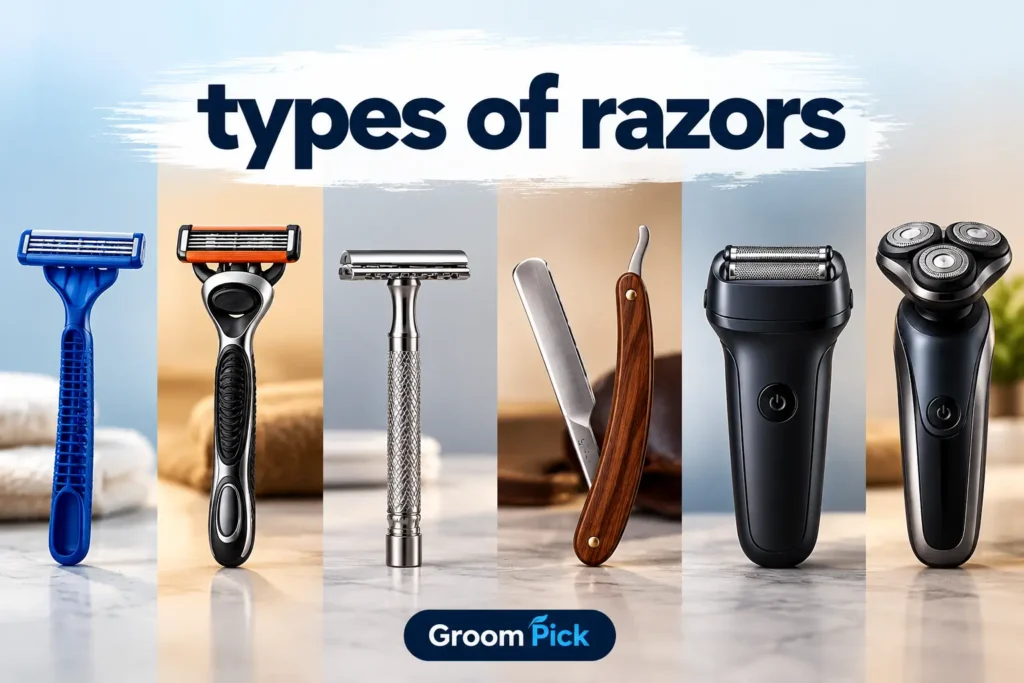
Razors are grooming tools that remove unwanted hair by cutting it close to the skin. They use manual blades or powered cutting systems, with each design offering different levels of comfort, precision, and convenience.
| Razor type | Best for | Main benefit |
|---|---|---|
| Disposable razor | Occasional shaving | Affordable and convenient |
| Cartridge razor | Everyday shaving | Easy to use |
| Safety razor | Traditional wet shaving | Affordable replacement blades |
| Straight razor | Precise traditional shaving | Greater control with practice |
| Electric foil razor | Short facial hair | Convenient daily grooming |
| Electric rotary razor | Curved facial areas | Flexible shaving heads |
| Single-blade razor | Men prone to razor bumps | Fewer blade passes may be needed |
| Precision razor | Beard lines and detailing | Controlled shaping |
Disposable Razors: Affordable and Convenient
Disposable razors are inexpensive grooming tools designed for limited use before replacement. They usually feature a plastic handle and a fixed head containing one or more blades.
Advantages
- Low initial cost.
- Lightweight and easy to carry.
- Simple to use.
- Useful for occasional shaving and travel.
Disadvantages
- Frequent replacement creates more waste.
- Basic models may have less flexible heads.
- Long-term costs can add up with regular use.
Best for: Men who want an affordable, straightforward shaving option.
Replace a disposable razor when it becomes dull, damaged, or uncomfortable. Rinse it after use and store it in a dry place.
Cartridge Razors: Best for Everyday Shaving
Cartridge razors have a reusable handle and a replaceable head containing multiple blades. Many models feature pivoting heads, lubrication strips, and textured grips to make shaving easier.
Advantages
- Easy for beginners to use.
- Suitable for regular facial shaving.
- Convenient for maintaining a clean-shaven look.
- Replacement heads are simple to install.
Disadvantages
- Replacement cartridges can be expensive.
- Multiple blades may irritate some skin types.
- Repeated passes can increase redness and discomfort.
Best for: Men who want a convenient manual razor for daily grooming.
More blades do not automatically produce a better shave. If you experience razor burn or bumps, use lighter pressure, reduce repeated passes, and shave in the direction your facial hair grows.
Safety Razors: A Traditional Shaving Choice
A safety razor holds a replaceable blade inside a protective head that limits how much of the cutting edge is exposed. Traditional models commonly use double-edge blades and appeal to men who prefer wet shaving.
Benefits
- Replacement blades are often inexpensive.
- Durable handles can last for years.
- Offers good control with proper technique.
- May reduce irritation for some users of multi-blade razors.
Drawbacks
- Requires practice to master the correct angle.
- Excessive pressure can cause cuts.
- The initial handle may cost more than a disposable razor.
Best for: Men who enjoy traditional shaving or want to reduce ongoing blade costs.
For a comfortable shave, soften your beard with warm water, apply shaving cream, and use short, gentle strokes. Let the razor’s weight guide the movement instead of pressing hard.
Straight Razors: Precision for Experienced Shavers
A straight razor is a traditional grooming tool with a long, exposed cutting blade that often folds into its handle. It is used for close shaving and precise facial hair detailing.
Advantages
- Offers precise control for experienced users.
- Can produce a close shave.
- Traditional models can last for many years.
- Useful for shaping clean beard lines.
Disadvantages
- Requires skill and careful handling.
- Can cause serious cuts if used incorrectly.
- Traditional blades need regular sharpening and maintenance.
- Takes longer to use than many modern razors.
Best for: Experienced shavers and trained barbers who value precision.
Beginners should consider a guarded razor before trying an exposed blade. A shavette uses replaceable blades but still requires careful handling and practice.
Electric Razors: Foil vs. Rotary Shavers
Electric razors use powered cutters to trim facial hair beneath a protective foil or rotating head. They are convenient for men who want a quick grooming routine without frequently replacing manual blades.
Electric foil razors
Foil razors use moving cutters beneath a thin metal screen with small openings. Hair enters through the openings and is cut beneath the protective surface.
Best for: Men who shave short facial hair regularly and prefer a controlled cutting surface.
Electric rotary razors
Rotary razors usually have circular shaving heads with rotating cutters beneath protective covers. Their flexible heads move across curved areas of the face.
Best for: Men who want a powered shaver that follows the contours of the chin, jawline, and neck.
| Feature | Foil razor | Rotary razor |
|---|---|---|
| Cutting system | Moving cutters beneath foil | Rotating cutters beneath circular heads |
| Head design | Straight or rectangular | Circular |
| Common use | Short facial hair | Curved facial areas |
| Maintenance | Clean foil and cutters | Clean rotating heads |
Neither type is universally better. Consider your beard thickness, skin sensitivity, preferred shaving style, and replacement-part costs before choosing.
Types of Razor Blades: Which Ones Do Men Need?
Razor blades differ in shape, edge design, and compatibility with particular shaving tools. Choosing the correct blade helps maintain performance and avoids problems caused by incompatible or damaged parts.
The main types of razor blades include:
- Double-edge blades: Replaceable blades designed for compatible safety razors.
- Single-edge blades: Blades with one primary cutting edge, used in compatible razors and some shavettes.
- Cartridge blades: Blades built into replaceable shaving heads.
- Disposable razor blades: Blades built into razors intended for limited use.
- Electric replacement cutters: Foils, cutters, or rotary heads made for specific electric shavers.
These blade types are not interchangeable, so check compatibility before buying replacements.
When should you replace razor blades?
A common guideline is to replace a manual blade or disposable razor after about five to seven shaves, or sooner if it becomes dull, damaged, or irritating. Actual blade life depends on beard thickness, shaving frequency, and maintenance.
Rinse the razor during shaving, let it dry between uses, and follow the manufacturer’s replacement instructions for electric shavers.
Types of Razors for Men With Sensitive Skin
The best razor for sensitive skin depends on how your skin responds to blade contact, shaving pressure, and repeated passes. Men who experience frequent razor burn, redness, or ingrown hairs may benefit from changing their razor or shaving technique.
| Skin concern | Razor to consider | Helpful approach |
|---|---|---|
| Frequent razor burn | Suitable electric shaver | Reduce repeated passes |
| Ingrown hairs | Single-blade safety razor | Avoid shaving too closely |
| Easily irritated skin | Gentle cartridge or electric razor | Use light pressure |
| Thick, curly facial hair | Single-blade or suitable electric razor | Follow hair growth direction |
| Frequent nicks | Guarded cartridge razor | Improve control and technique |
No razor guarantees irritation-free shaving. Blade sharpness, hair texture, technique, and skin condition all affect the result.
For additional advice, read the American Academy of Dermatology’s guide to shaving and skin care.
Types of Razors for Beard Shaping and Stubble
Men who maintain a beard or stubble may need a different grooming tool from someone who shaves every morning. The right choice depends on whether you want to remove facial hair, trim its length, or define clean edges.
- For clean beard lines: Use a precision trimmer or suitable manual razor.
- For short stubble: Choose an electric trimmer with adjustable length settings.
- For a clean-shaven face: Consider a cartridge razor, safety razor, or electric shaver.
- For detailed grooming: Use a precision tool to shape sideburns and mustache edges.
A razor cuts hair close to the skin, while a trimmer generally leaves hair at a selected length. Some electric grooming devices combine both functions.
Popular Razor Brands for Men’s Grooming
Razor brands offer different products for manual shaving, traditional wet shaving, and electric grooming. Comparing individual models, replacement parts, and maintenance costs is more useful than choosing by brand name alone.
Examples include Gillette and Schick for manual shaving products, BIC for disposable razors, Philips and Braun for electric shavers, and Merkur and Parker for traditional shaving tools.
Product availability and prices vary by location. Before purchasing, check blade compatibility, warranty coverage, and long-term replacement costs.
How to Choose the Best Type of Razor for Men
The right razor should match your beard, skin sensitivity, budget, and preferred shaving routine. Comparing these factors helps you choose a practical option instead of focusing only on blade count or price.
Follow these steps before making your decision.
- Identify your grooming goal. Decide whether you want a clean shave, beard detailing, or stubble maintenance.
- Consider your skin. If you experience bumps or redness, try gentler techniques or a different razor design.
- Choose manual or electric. Manual razors offer direct blade control, while electric shavers provide convenient powered grooming.
- Compare ongoing costs. Include replacement cartridges, blades, foils, cutters, and cleaning supplies.
- Check maintenance needs. Choose a razor you can clean and maintain consistently.
- Test your routine. Observe how your skin responds and adjust your technique if irritation develops.
Common shaving mistakes men should avoid
- Using a dull or damaged blade.
- Shaving dry skin with a manual razor.
- Applying too much pressure.
- Repeatedly shaving against the direction of hair growth.
- Sharing razors with other people.
- Leaving the razor wet between uses.
- Stretching the skin tightly while shaving.
For a more comfortable shave, soften your beard with warm water, apply shaving cream or gel, use gentle strokes, and moisturize afterward.
How to Choose the Best Razor for Men: Your Daily Shaving Routine!
The best razor is the one that removes facial hair comfortably and suits your budget, skin, and grooming habits. Different types of razors offer different benefits, so your choice should reflect how and where you shave.
Cartridge razors are convenient for everyday use, safety razors offer an affordable traditional shaving system, and electric razors suit men who prefer powered grooming. Straight razors are better suited to experienced users who want precision.
Choose a comfortable design, maintain the blade properly, and adjust your technique if irritation occurs. A consistent shaving routine can make grooming easier without requiring the most expensive razor.
Frequently Asked Questions
What are the most common types of razors for men?
The most common types include disposable razors, cartridge razors, safety razors, straight razors, electric foil razors, and rotary razors. Each offers a different balance of convenience, precision, cost, and maintenance.
Which type of razor is best for men’s sensitive skin?
A suitable electric shaver or single-blade safety razor may help reduce irritation. The best choice depends on your skin, beard texture, and shaving technique. Use light pressure and avoid repeated passes.
Is a safety razor better than a cartridge razor?
A safety razor may cost less to maintain because replacement blades are often inexpensive. Cartridge razors are generally easier for beginners. The better option depends on your technique, comfort, and preferences.
Can electric razors provide a close shave?
Yes. Many electric razors can provide a close shave, although results vary by model, beard thickness, and technique. Some men may notice more stubble than they would after manual shaving.
Why do men develop razor bumps after shaving?
Razor bumps develop when cut hairs grow back into the skin and trigger inflammation. Curly facial hair, close shaving, repeated passes, and shaving against the direction of growth can increase the risk.
When should men replace razor blades?
Replace a manual blade or disposable razor after about five to seven shaves as a general guideline, or sooner if it becomes dull, damaged, or irritating. Follow the manufacturer’s instructions for electric shaver parts.