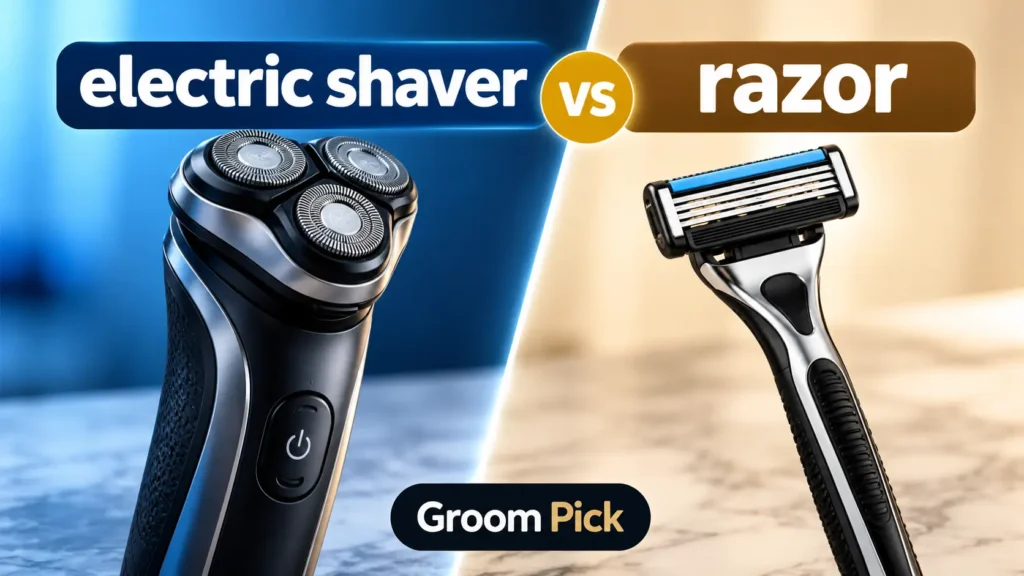
Choosing between an electric shaver and a traditional razor depends on how smooth you want your skin, how often you shave, and how your skin responds to hair removal. The electric shaver vs razor comparison comes down to shaving closeness, comfort, convenience, and long-term cost.
An electric shaver is often a convenient choice for regular grooming, while a traditional razor usually provides a closer finish. Understanding the advantages and disadvantages of each can help you choose the right tool for your face, legs, scalp, or sensitive areas.
Disclosure: This post contains affiliate links. If you purchase through these links, I may earn a small commission at no extra cost to you.
Table of Contents
What Is an Electric Shaver vs Razor?
An electric shaver uses powered cutters, usually protected by a foil or rotating head, to cut hair close to the skin. A traditional razor uses a blade that directly cuts hair at the skin’s surface.
Electric shavers may support dry shaving, wet shaving, or both, depending on the model. Traditional razors include disposable razors, cartridge razors, and safety razors.
Neither tool removes hair permanently. Hair grows back after shaving, and the time before regrowth becomes visible depends on your hair type and how closely the tool cuts.


Electric Shaver vs Razor: Key Differences
Electric shavers focus on convenience and can limit direct contact between cutting elements and the skin. Traditional razors generally provide a closer finish but require careful technique to reduce cuts and irritation.
| Feature | Electric shaver | Traditional razor |
|---|---|---|
| Shave closeness | Close, depending on the model | Usually closer |
| Convenience | Often quick for regular grooming | Requires more preparation |
| Skin irritation | May reduce direct blade irritation | Can cause cuts and razor burn |
| Shaving products | Optional for many models | Shaving gel is helpful |
| Initial cost | Usually higher | Usually lower |
| Maintenance | Cleaning and replacement heads | Blade replacement |
| Charging | May require a battery or power source | Not required |
| Best suited for | Convenient, frequent grooming | Smooth skin and precise shaving |
The better choice depends on your priorities. Choose a manual razor if maximum smoothness matters most, or consider an electric shaver if convenience and reduced direct blade contact are more important.
Electric Shaver vs Razor for Legs
A manual razor usually provides smoother legs, while an electric body shaver can make regular hair removal quicker and more convenient. Your skin sensitivity and preferred finish should guide your decision.
Is an Electric Shaver Better Than a Razor for Legs?
A manual razor is generally better if you want very smooth legs, especially before wearing shorts, dresses, or swimwear. Warm water, shaving gel, and a sharp blade can help reduce friction.
An electric body shaver may suit you better if you want quick touch-ups or often experience irritation after manual shaving. Some models leave slight stubble, so check the device’s intended use.
For a more comfortable leg shave:
- Soften the hair with warm water.
- Apply shaving gel when using a manual razor.
- Use gentle strokes without pressing hard.
- Rinse the blade regularly.
- Apply a mild moisturizer afterward.
If your legs develop bumps after shaving, avoid repeatedly passing over the same area. Allow irritated skin to recover before shaving again.
Razor vs Electric Shaver for Bald Head
An electric head shaver is convenient for frequent scalp maintenance, while a manual razor usually delivers a closer finish. The right choice depends on how often you shave and how comfortable you are using a blade around the scalp’s curves.
Which Is Better for a Completely Smooth Scalp?
A manual razor can provide a smooth, polished appearance with minimal stubble. However, areas around the ears, crown, and back of the head require careful handling.
An electric head shaver may be easier for regular maintenance, especially if you shave every few days. Choose a device designed for scalp shaving rather than assuming every facial shaver will work equally well.
Use gentle pressure and avoid shaving over cuts or inflamed bumps. Protect your exposed scalp from sunlight after shaving.
Electric Shaver vs Razor for Men
For men, an electric shaver is often convenient for everyday grooming, while a manual razor generally offers a closer, clean-shaven finish. Beard thickness, skin sensitivity, and styling preferences all affect the best choice.
Which Is Better for Thick Facial Hair?
A quality electric shaver designed for coarse hair can handle thick facial hair, particularly when you shave regularly. If your beard is long, use a trimmer to shorten it before using a close-cutting shaver.
A manual razor may be preferable when you want a smooth finish or precise beard edges. However, close shaving can worsen ingrown hairs for people prone to razor bumps.
Consider these options:
- Daily grooming: Electric shaver.
- Very smooth facial finish: Manual razor.
- Beard maintenance: Trimmer.
- Recurring razor bumps: Consider a shaver that leaves slight stubble.
If your beard pulls during shaving, shorten it first and reassess your technique rather than applying more pressure.
Is an Electric Shaver Better Than a Razor for Women?
An electric shaver can simplify body-hair removal and may help some women reduce irritation from manual shaving. A traditional razor is often preferable when a very close finish is the main goal.
The best option depends on the body area, hair texture, and skin sensitivity rather than gender alone.
Which Is Better for Underarms and Bikini Lines?
An electric shaver may make underarm grooming easier, while a manual razor can provide a closer finish. Because underarm hair can grow in several directions, use light pressure and avoid repeatedly shaving the same patch.
For bikini lines, a guarded electric body groomer can shorten hair without requiring a close shave. A manual razor removes hair more closely but may increase the risk of cuts and ingrown hairs.
Use a clean tool designed for the area, and avoid shaving over existing bumps or broken skin.
Is an Electric Shaver Better Than a Razor for Pubic Hair?
A guarded electric body groomer is often a practical choice for pubic hair because it can shorten hair without requiring a close shave. A manual razor provides a smoother result but can increase the risk of cuts, irritation, and ingrown hairs.
Pubic hair removal is a personal choice, and there is no medical need to remove it for cleanliness.
How Can You Groom Pubic Hair Safely?
Choose a tool specifically designed for the area you want to groom. Take your time and avoid shaving over irritated skin.
- Use a guard if you want to leave some hair.
- Work slowly in a well-lit area.
- Keep the tool clean and never share it.
- Avoid shaving over sores, cuts, or inflamed bumps.
- Stop if you experience pain or bleeding.
Do not use an ordinary electric shaver on delicate genital tissue unless the manufacturer explicitly confirms that it is suitable for that area.
Electric Shaver vs Razor for Sensitive Skin
An electric shaver may suit sensitive skin because its protective head can limit direct blade contact. However, both electric and manual shaving can cause irritation if the technique is too aggressive or the tool is unsuitable.
Why Do Shaving Bumps and Razor Burn Occur?
Razor burn causes redness, stinging, or a burning sensation after shaving. Razor bumps occur when cut hairs curl back into the skin or grow beneath its surface, causing inflammation.
People with curly or coarse hair may be more prone to ingrown hairs. Shaving too closely, pressing hard, and making repeated passes can increase the problem.
To reduce irritation:
- Soften hair before wet shaving.
- Shave in the direction of hair growth when possible.
- Use a sharp blade and gentle strokes.
- Avoid stretching the skin.
- Apply a gentle moisturizer afterward.
- Clean electric shaver heads according to the manufacturer’s instructions.
For more information, consult the American Academy of Dermatology’s guide to preventing razor bumps. If you experience persistent pain, worsening redness, or pus-filled bumps, seek medical advice.
Shaver vs Trimmer: What Is the Difference?
An electric shaver removes hair close to the skin, while a trimmer mainly shortens hair to a selected length. Choose a shaver for a close finish and a trimmer when you want to keep some hair.
| Grooming goal | Suitable tool |
|---|---|
| Clean-shaven face | Razor or close-cutting shaver |
| Beard maintenance | Trimmer |
| Quick daily grooming | Electric shaver |
| Shortening body hair | Body trimmer |
| Reducing pubic hair length | Guarded body trimmer |
| Precise beard edges | Detail trimmer or razor |
A guarded trimmer is often a sensible option if you want to control hair length without removing it completely. For a smooth finish, choose a razor or an electric shaver designed for close shaving.
Razor vs Blade: Are They Different?
A razor is the tool used for shaving, while a blade is the cutting component that removes hair. They are related terms rather than two separate types of shaving tools.
Disposable razors generally have built-in blades, cartridge razors use replaceable heads, and safety razors commonly use replaceable double-edge blades.
Replace blades when they become dull, damaged, or difficult to use smoothly. A worn blade can tug at hair and increase friction.
How to Get a Close Shave Without Irritation
A comfortable shave starts with skin preparation, gentle technique, and proper tool maintenance. These steps can improve your results with either an electric shaver or a traditional razor.
Step 1: Prepare Your Skin
Wash the area and soften the hair with warm water before using a manual razor. Apply shaving gel or cream to help the blade glide across your skin.
For electric shaving, follow the manufacturer’s instructions because some models are designed for dry use while others support wet shaving.
Step 2: Trim Long Hair First
If your facial or body hair is long, shorten it with a trimmer before using a close-cutting shaver or razor. This can help prevent pulling and make shaving easier.
Step 3: Use Gentle Strokes
Avoid pressing hard or repeatedly shaving the same area. With a manual razor, start in the direction of hair growth; with an electric shaver, follow the recommended movements for your model.
Step 4: Moisturize After Shaving
Rinse away shaving products, pat your skin dry, and apply a gentle moisturizer. Give irritated skin time to recover before shaving the same area again.
Step 5: Maintain Your Tools
Clean your electric shaver after use and replace its foil or cutters according to the manufacturer’s instructions. Replace manual razor blades when they become dull or damaged.
Electric Shaver vs Razor: Pros and Cons
Electric shavers offer convenience and may reduce direct blade contact, but they usually cost more initially. Traditional razors are often affordable and provide a close shave, but they require careful technique to limit cuts and irritation.
Pros of Electric Shavers
- Convenient for frequent grooming.
- Often suitable for quick dry shaving.
- May reduce cuts caused by direct blade contact.
- Reusable with proper maintenance.
- Some models are designed for specific areas, such as the face or scalp.
Cons of Electric Shavers
- Usually have a higher initial cost.
- May leave slight stubble.
- Require cleaning and replacement parts.
- Need charging or batteries, depending on the model.
- Can still cause irritation if used with excessive pressure.
Philips Norelco i9000 Prestige Ultra Electric Shaver, Face & Body
Pros of Traditional Razors
- Usually provide a closer, smoother finish.
- Basic disposable razors are generally inexpensive.
- Do not require charging.
- Offer good control for precise shaving.
- Replacement blades are widely available.
Cons of Traditional Razors
- Can cause cuts, nicks, and razor burn.
- Often benefit from shaving cream or gel.
- Blades need regular replacement.
- Close shaving may worsen ingrown hairs in susceptible people.
- Require careful technique around curved or sensitive areas.
Schick Hydro Sensitive 5-Blade Razors for Men, 1 Handle & 17 Refills
Which Option Offers the Best Value?
An electric shaver may be worth the higher initial cost if you shave frequently and value convenience. A traditional razor may offer better value if you want a close shave without buying an electric device.
The right choice depends on your shaving frequency, replacement costs, skin sensitivity, and preferred results.
Is an Electric Shaver Cheaper Than a Razor?
A traditional razor usually costs less initially, while an electric shaver requires a larger upfront investment. The more economical option over time depends on replacement blades, shaving products, maintenance, and how often you shave.
For a fair comparison, estimate the cost of replacement parts over a year. A manual razor may be more economical for occasional shaving, while an electric shaver may provide greater convenience for frequent grooming.
Electric Shaver vs Razor: Which Should You Choose?
A traditional razor is generally better for maximum smoothness, while an electric shaver is often more convenient for regular grooming. Your skin sensitivity, hair type, and preferred results should guide the decision.
Choose an electric shaver if you value convenience or want to reduce direct blade contact. Choose a traditional razor if you prefer a closer finish, or a guarded trimmer if you mainly want to shorten hair in sensitive areas.
There is no universal winner. The most suitable tool is the one that meets your grooming needs while allowing you to shave comfortably and maintain healthy skin.
Frequently Asked Questions
What is the main difference between an electric shaver and a razor?
An electric shaver uses powered cutters behind a protective head, while a traditional razor uses an exposed blade. Manual razors generally provide a closer finish, while electric shavers offer convenience.
Is an electric shaver better than a razor for sensitive skin?
An electric shaver may help reduce irritation caused by direct blade contact. However, careful manual shaving with a sharp blade and suitable shaving gel can also work well for sensitive skin.
Can an electric shaver give you completely smooth skin?
Some electric shavers provide a very close finish, but others leave slight stubble. A traditional razor is generally better when you want the smoothest possible result.
Should you use an electric shaver or razor for legs?
Choose a manual razor for a closer shave or an electric body shaver for convenient maintenance. Your skin sensitivity and preferred results should guide your choice.
Why do electric shavers sometimes cause razor bumps?
Electric shavers can cause bumps through friction, excessive pressure, or repeated passes. They may reduce irritation for some users but cannot completely prevent ingrown hairs.
Does an electric shaver work better than a razor for pubic hair?
A guarded electric body groomer can reduce hair with less direct blade contact. A manual razor offers a closer finish but may increase the risk of cuts, irritation, and ingrown hairs.