Shaving should not feel like a daily battle with your bathroom mirror. Yet, choosing between a beard trimmer, electric shaver, and manual razor can make a simple routine complicated.
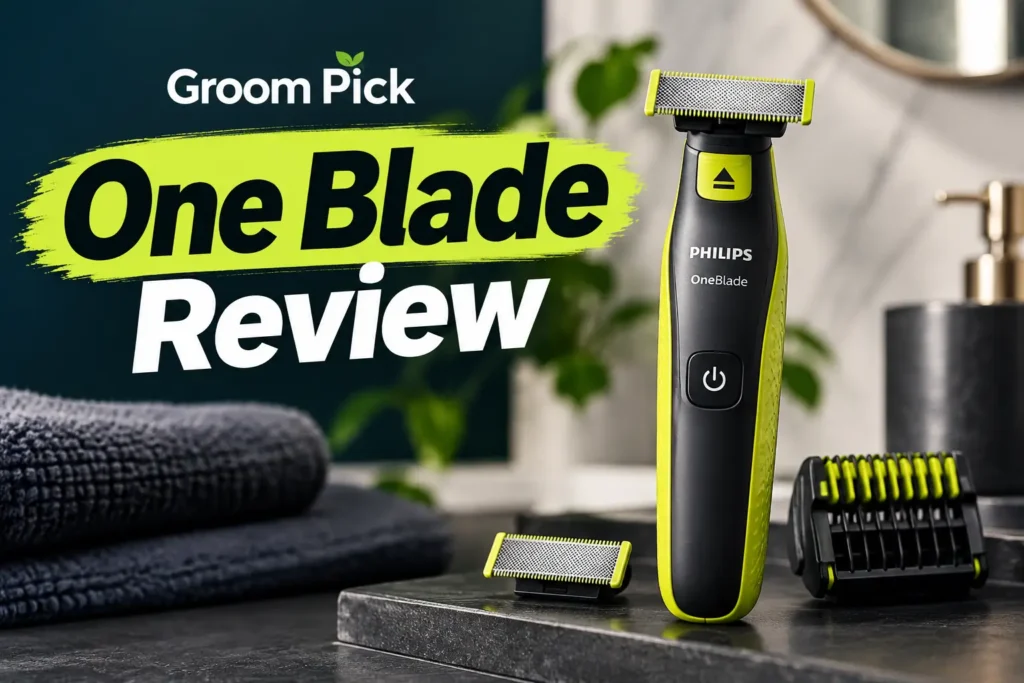
The Philips OneBlade aims to make things easier. It combines trimming, edging, and shaving in one compact device. You can keep a short beard, clean up your cheeklines, or remove unwanted stubble without switching between several tools.
But is this hybrid electric trimmer worth your money? In this One Blade Review, we will look at its features, performance, comfort, battery life, replacement blades, and long-term value. We will also explore which version may suit your grooming routine best.
I replaced “Philips One Blade review” in the last paragraph with the exact keyword, “One Blade Review”. I used it once because the text is short, and a second use would feel forced. If you want it earlier, you could open the second paragraph with “Our One Blade Review starts with a simple question: can one device really replace three?” Remove the bold before publishing.
Disclosure: This post contains affiliate links. If you purchase through these links, I may earn a small commission at no extra cost to you.
Table of Contents
TL;DR: The Best Philips OneBlade Options
Different OneBlade models suit different grooming needs. Here are the main options to consider before buying.
- Best for everyday grooming: Philips OneBlade Original, especially if you want a simple tool for trimming and shaving.
- Best for easier facial contouring: Philips OneBlade 360, with a flexible blade design intended to follow facial curves.
- Best for adjustable trimming: Philips One Blade Pro Face + Body QP6542/10, with additional length settings.
- Best for stubble maintenance: OneBlade with a suitable trimming comb.
- Best for beard detailing: The dual-sided blade, which helps create clean edges around the mustache and sideburns.
The bottom line: Choose the Original for basic grooming, consider the 360 for contour-following convenience, and look at the Pro if you want more control over trimming lengths.

Philips Norelco OneBlade 360 Hybrid Face Trimmer and Shaver, 5 Length Comb
Philips One Blade Comparison Table
Different OneBlade versions share the same general idea, but their accessories, charging systems, and trimming controls can vary. Check the exact model number before buying.
| Product | Best For | Key Features | Pros | Cons | Recommendation |
|---|---|---|---|---|---|
| Philips OneBlade Original | Everyday grooming | Trimming, edging, shaving | Simple and compact | Basic models may have limited accessories | Best for simple routines |
| Philips OneBlade 360 | Facial contouring | Flexible 360 blade design on supported models | Easier contact with curved areas | Blade design does not guarantee a closer shave | Consider for regular face grooming |
| Philips OneBlade Pro Face + Body QP6542/10 | Adjustable trimming | 12-length comb, wet and dry use, battery indicator | More length choices and useful accessories | Higher purchase cost may apply | Best for added control |
The Original and 360 are product families, so their exact specifications depend on the model. The Pro details above refer specifically to the QP6542/10 listed by Philips Personal Care Pakistan.
Philips One Blade Review: Features and Performance
The One Blade is designed to handle three jobs with one device. It works best when you understand what each job involves and what the tool is not designed to do.
The sections below explain how its design, blades, battery, and wet and dry features affect everyday grooming.
The One Blade has a slim handle and a small cutting head. This makes it easier to guide around the mustache, chin, and sideburns than a bulky grooming tool might be.
Think of it like using a small paintbrush instead of a large roller. A roller covers a broad wall quickly, while a brush gives you more control around corners. The One Blade’s compact head helps with detailed facial hair grooming.
The exact grip, display, and accessories depend on the model. If you travel often, its compact design can also help simplify your grooming kit.
Philips uses a fast-moving cutter and a protective design intended to make shaving more comfortable. The dual-sided blade on supported models also lets you work in either direction while keeping the cutting edge visible.
That visibility matters when shaping a beard. You can see where the blade meets your cheekline instead of guessing around the edge.
However, the One Blade is not a traditional close-shaving razor. Philips explains that it leaves a little more distance between the cutting action and the skin, which is part of its comfort-focused design. Your results will depend on hair thickness, growth direction, technique, and blade condition.
Battery performance varies considerably across the range. For example, Philips lists 30 minutes of runtime after an eight-hour charge for the One Blade QP2510/49, while the Pro Face + Body QP6542/10 offers up to 90 minutes after a one-hour charge.
These are model-specific manufacturer specifications, not results from independent testing.
If you groom every morning, charging time can make a real difference. Check the battery type, runtime, charging method, and included cable before choosing a model.
Many One Blade models support wet and dry grooming. Depending on the model, you can shave dry, use shaving foam or gel, or clean the device under running water.
This flexibility is useful when you want a quick shave before work or prefer grooming in the shower. Still, confirm the waterproof rating and care instructions for your exact model rather than assuming every version has identical features.
Philips One Blade Pros and Cons
The One Blade offers convenience, but it is not perfect for every beard or shaving preference. These advantages and drawbacks can help you decide whether it fits your routine.
Philips One Blade Original
The Original is a practical choice for everyday grooming. It suits people who want basic trimming, edging, and shaving without paying for features they may not use.
Pros
- Combines trimming, edging, and shaving in one device.
- Compact design makes it easy to handle.
- Suitable for maintaining short facial hair with compatible combs.
Cons
- Basic versions may include fewer accessories.
- Does not provide the closest possible shave.
- Replacement blades add to long-term ownership costs.
Philips OneBlade 360
The OneBlade 360 is designed to follow facial contours with a flexible blade. This may help maintain contact around areas such as the chin and jawline.
Pros
- Flexible blade design can help follow facial curves.
- Dual-sided cutting edge supports beard detailing.
- Useful for regular facial hair maintenance.
Cons
- Does not guarantee a closer shave than other OneBlade versions.
- Features and included accessories vary by model.
- Replacement blade costs remain part of ownership.
Philips OneBlade Pro Face + Body QP6542/10
The Pro Face + Body is worth considering if you want more control over trimming length. Its listed features include a 12-length precision comb, a battery indicator, and up to 90 minutes of runtime.
Pros
- More trimming length choices.
- Battery indicator helps you monitor charge.
- Supports wet and dry grooming according to the model specifications.
Cons
- Extra features may increase the purchase price.
- May be unnecessary if you always maintain the same short stubble length.
- Replacement blades and compatible accessories add ongoing costs.
Is Philips OneBlade Worth It?
The device makes the most sense if you regularly switch between stubble, beard shaping, and shaving. It can reduce the number of tools you need on your bathroom shelf.
If you always want a completely smooth face, however, you may prefer a traditional razor or a suitable electric shaver. The OneBlade is a convenience-focused grooming tool, not a replacement for every shaving method.
Philips OneBlade Shaving Performance
A grooming device can look impressive on its packaging but still struggle with your everyday routine. The best way to judge the OneBlade is to consider common grooming tasks and the results you need.
For short beard styles, the OneBlade’s trimming comb helps keep facial hair at a more consistent length. Some models offer fixed combs, while others include adjustable options.
Imagine maintaining a short beard before a meeting. Instead of removing all your facial hair, you can use a suitable comb to tidy the length and then remove stray hairs around the edges.
Start with a longer setting if you are unsure how short you want your beard. You can always trim a little more, but you cannot put the hair back once it is cut.
The dual-sided blade helps you see the edge you are creating. This is useful when cleaning up the cheekline, mustache, and sideburns.
Use slow, controlled movements rather than pressing hard. Short strokes can help you follow the natural shape of your beard without removing too much hair.
For a cleaner result, use a mirror with good lighting. It is easier to spot uneven lines before leaving the bathroom than after you have stepped outside.
Philips designed the OneBlade to cut hair without shaving as closely as a traditional blade. That can appeal to people who find close shaving uncomfortable, but it does not guarantee irritation-free results for everyone.
Sensitive skin may react to pressure, repeated passes, dry skin, or a worn blade. Keep your skin clean, use light pressure, and stop if you notice pain or persistent irritation.
If you often experience shaving bumps, try changing your technique before assuming the device itself is the problem. Persistent skin trouble is worth discussing with a qualified healthcare professional.
The OneBlade can trim and shave different lengths of facial hair, but a very thick beard may require more time and repeated passes. A dedicated beard trimmer may be more practical when you need to remove a large amount of hair before shaping it.
The OneBlade is better suited to everyday beard maintenance than to replacing a professional barber’s full toolkit. For the best results, avoid forcing the blade through dense hair.
A cartridge razor is designed to deliver a close shave. The OneBlade focuses more on versatility, visible detailing, and trimming.
If your goal is a smooth finish for a special occasion, the razor may be the better choice. If you want to maintain stubble, shape a goatee, or tidy your neckline, the OneBlade can be more convenient.
Philips OneBlade vs. Razor: Which Should You Choose?
A OneBlade and a traditional razor solve related problems in different ways. Your choice depends on whether you value closeness, comfort, convenience, or precise beard styling.
The OneBlade is useful for trimming and detailing without changing tools. A cartridge razor is generally better when you want a very close finish.
The trade-off is straightforward. The OneBlade uses replaceable grooming blades and may leave a little visible stubble, while a cartridge razor uses replaceable cartridges and can shave closer to the skin.
A dedicated beard trimmer is often the practical choice for maintaining a fuller beard or removing lots of hair. The OneBlade combines trimming with shaving and edging, so it can simplify a shorter grooming routine.
If you regularly maintain a long beard, check the available comb lengths before purchasing. Do not assume every OneBlade model can replace a full-size beard trimmer.
A foil or rotary electric shaver is built primarily for shaving. The OneBlade places more emphasis on trimming and shaping as well.
For frequent close shaves, a dedicated shaver may suit you better. For stubble maintenance and beard detailing, the OneBlade’s small head and dual-sided cutting edge may be more useful.
The standard OneBlade is worth considering if you want basic grooming functions. The Pro Face + Body QP6542/10 adds a 12-length precision comb, a battery indicator, and a stated 90-minute runtime.
The extra features may be worthwhile if you change beard lengths often. If you use only one short stubble setting, the simpler model may offer enough functionality.
Philips One Blade Review for Men: Buying Guide
Choosing the right grooming tool is about more than buying the newest model. Consider your beard, skin, daily routine, and the ongoing cost of replacement blades.
Start with your main grooming goal. If you maintain short stubble, check the included combs. If you shape a mustache or goatee, look for a blade design that gives you clear visibility. If you travel often, consider runtime and charging time.
Wet and dry use can also be helpful, but verify that your chosen model supports the way you plan to use it. Accessories and specifications are not identical across the range.
A more expensive model may offer extra comb settings, a better battery, or more accessories. Those features are valuable only if you use them.
For example, someone who trims a beard to the same length every few days may not need many adjustment settings. Someone who switches between short stubble and a longer beard may benefit from greater control.
Compare the purchase price with replacement blade costs before deciding. A cheap device can become less attractive if its required consumables are expensive or difficult to find locally.
The OneBlade is a sensible option for beginners, people who prefer short facial hair, and anyone who wants one device for trimming, edging, and shaving.
It can also help simplify a travel kit. Instead of packing separate tools for basic beard maintenance, you may be able to manage most facial grooming with one device and its compatible accessories.
Consider another tool if you want a very close shave every day, maintain a long and thick beard, or need a device specifically designed for scalp hair.
You should also check local blade availability before buying. If compatible replacement blades are hard to find where you live, maintaining the device could become inconvenient.
Philips OneBlade Replacement Blades and Maintenance
Even a good grooming tool needs basic care. Cleaning it after use and replacing worn blades helps maintain performance and keeps your routine simple.
Philips states that supported OneBlade replacement blades can last up to four months, based on two full shaves per week. Actual life varies with how often you shave, the amount of hair you remove, and the condition of the blade.
Watch for the model’s replacement indicator where available. If the blade becomes damaged or no longer cuts effectively, replace it rather than pressing harder against your skin.
Switch off the device and follow its manual. For compatible waterproof models, rinse the blade and cutting area under running water after use. Allow the parts to dry as instructed before storing the device.
Avoid using harsh cleaners or taking apart components that are not meant to be removed. If you use a body-specific blade or skin guard, follow the hygiene instructions for those accessories.
The purchase price is only one part of the cost. You should also consider replacement blades, compatible accessories, and the time needed to charge and clean the device.
Buy blades that fit your exact model and compare genuine replacement options from reliable sellers. A replacement that looks similar may not be compatible with your handle.
Is Philips OneBlade Worth It? Key Takeaways
The OneBlade can simplify everyday grooming, but its value depends on the results you expect. Keep these points in mind before making your choice.
- Best overall use: Short beard maintenance, stubble trimming, and facial hair detailing.
- Main advantage: One device handles trimming, edging, and shaving.
- Main drawback: It does not shave as close as a traditional razor.
- Best upgrade reason: Choose a Pro model if you will use its extra trimming settings and battery features.
- Long-term cost: Remember to budget for replacement blades.
- Before buying: Confirm the model number, accessories, battery specifications, and local blade availability.
Is Philips OneBlade Worth Buying for Daily Grooming?
The Philips OneBlade is a practical choice for men who want to keep their grooming routine simple. It can trim stubble, shape beard edges, and shave facial hair without requiring several separate tools.
Its biggest strength is versatility. Its biggest limitation is shaving closeness. You will still need another option if your priority is a completely smooth finish or if you regularly remove large amounts of thick beard hair.
For most people considering a first hybrid grooming device, the Original is a sensible starting point. Choose the 360 for its contour-following design or the Pro if you will use its extra controls.
Our recommendation: Buy the Philips OneBlade for convenience and beard detailing, not for the closest possible shave. Compare replacement blade costs and model-specific features before making your final decision.
Frequently Asked Questions
Does Philips One Blade Shave Completely Smooth?
No. Philips states that the One Blade does not shave as close as a traditional blade. It is designed to trim, edge, and shave facial hair while prioritizing a more comfortable cutting approach.
Is Philips One Blade Good for Sensitive Skin?
It may suit some people who find close shaving uncomfortable, but results vary. Use light pressure, avoid excessive passes, keep the blade clean, and stop if irritation develops.
How Often Should You Replace a One Blade Blade?
Philips recommends replacement at around four months for supported blades under its stated usage conditions. Actual life varies, so check the blade’s condition and follow the instructions for your model.
Can Philips One Blade Be Used in the Shower?
Many One Blade models are waterproof and support wet use. Confirm the specifications of your exact model before showering with it, and follow the manufacturer’s cleaning and charging instructions.
Is Philips One Blade Suitable for Thick Beards?
It can handle facial hair, but trimming a very thick beard may take longer than using a dedicated beard trimmer. Check the available comb lengths and consider your beard’s density before buying.
Is Philips One Blade Worth the Price?
It can be worth the price if you value trimming, shaving, and edging in one device. If you only want a close shave or need to cut long beard hair, another grooming tool may be a better fit.